

Class: Senior Secondary School 1 (SS1, SS 1, SSS1, SSS 1)
Term: First Term
Week: 3
Age: 15 years
Duration: 45 minutes
Subject: Geography
Curriculum Theme: Geography
Previous Lesson: Tools of Geography, Atlas, Globe, Compass and Geographic Information Systems.
Topic: Climate and Vegetation of FCT
Subject Matter: Climate of FCT (temperature, rainfall, humidity), vegetation types in FCT (human and natural), population and people of FCT.
Specific Objectives
By the end of the lesson, pupils should be able to:
Cognitive Domain:
- Define climate and describe the characteristics of temperature, rainfall, and humidity in the FCT.
- Identify and differentiate between natural and human-influenced vegetation types found in the FCT.
- Describe the key characteristics of the population and people of the FCT.
Affective Domain:
- Appreciate the unique climatic conditions and vegetation diversity of the FCT.
- Participate actively in discussions and observations related to the FCT’s environment and people.
Psychomotor Domain:
- Observe and identify features of climate, vegetation, and human settlement using maps, pictures, and simple fieldwork tools.
- Record simple observations about the environment of the FCT.
Social Domain:
- Collaborate with peers to share observations and findings during guided activities.
- Communicate their understanding of the FCT’s geography clearly.
Reference Materials
The following resources were used in planning this lesson:
- 9 Years Basic Education Curriculum for Senior Secondary Schools.
- State Unified Scheme of Work for Geography (SSS 1).
- Adeleke, B.O. & Leong, G.C. (2012). Certificate Physical and Human Geography for Senior Secondary Schools. Africana First Publishers Plc.
- https://www.nigeriainfopedia.com/fct-geography/
- https://www.researchgate.net/publication/322864319_Climate_Change_and_Vulnerability_in_the_Federal_Capital_Territory_FCT_Abuja_Nigeria
Instructional Materials
The teacher will teach this lesson with the aid of:
- Pictures showing different vegetation types in Nigeria and FCT.
- Maps of Nigeria and the Federal Capital Territory (FCT).
- Simple fieldwork tools such as thermometers (for demonstration), rainfall charts, and population density maps.
Rationale for the Lesson
This lesson helps pupils understand the natural environment and human aspects of Nigeria’s capital city, the FCT. Learning about its climate, vegetation, and people provides insight into the geographical setting and development of this important region. It also enables pupils to connect geographical concepts to a real-world, familiar location.
Prerequisite/Previous Knowledge
Pupils have basic knowledge of climate elements, different types of vegetation, and general population concepts from their earlier studies in Geography.
Lesson Content/Board Summary
Climate and Vegetation of the Federal Capital Territory (FCT)
Climate of FCT
The FCT experiences a tropical wet and dry (savanna) climate. This climate is characterized by distinct wet and dry seasons.
The key elements of FCT’s climate are:
- Temperature: Generally high throughout the year, with average annual temperatures ranging between 28°C and 30°C. There are slight variations, with cooler temperatures during the harmattan season.
- Rainfall: Marked by a single rainy season, typically from April to October, and a dry season from November to March. Annual rainfall varies, but is generally moderate to high, ranging from 1100mm to 1600mm.
- Humidity: High during the rainy season due to increased moisture in the air. It is lower during the dry season, especially when the dry harmattan winds blow from the Sahara Desert.
Vegetation Types in FCT
Vegetation refers to the plant life found in a particular area. The FCT is predominantly within the Guinea Savanna belt of Nigeria.
The vegetation types in FCT include:
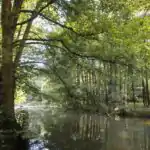
- Natural Vegetation: This primarily consists of Guinea Savanna, characterized by tall grasses and scattered trees (e.g., shea butter trees, locust bean trees). Gallery forests can be found along river courses.
- Human Vegetation (Modified/Cultivated Vegetation): This refers to vegetation that has been altered or introduced by human activities. Examples include:
- Farmlands: Areas cleared for cultivation of crops like maize, yam, cassava.
- Plantations: Forested areas established by humans, though less common on a large scale in FCT compared to other regions.
- Urban Green Spaces: Parks, gardens, and street trees planted within the city for aesthetic and environmental purposes.
- Settlement areas: Areas cleared for housing and infrastructure development.
Population and People of FCT
The FCT has experienced rapid population growth since its establishment as Nigeria’s capital.
Key characteristics of the population and people of FCT are:
- Rapid Growth: Due to migration from all parts of Nigeria seeking economic opportunities and government services.
- Heterogeneous Nature: Comprising diverse ethnic groups from across Nigeria, reflecting the FCT’s status as a federal capital.
- High Population Density: Especially in the urban areas of Abuja, leading to pressure on infrastructure and resources.
- Predominantly Young Population: A significant proportion of the population is young, driven by migration patterns.
- Economic Activities: Primarily government administration, services, commerce, and construction.
Teaching Methods/Instructional Techniques
Discussion, Lecture, Demonstration, Question and Answer, Visual Aids
Instructional Procedures
Step 1: Introduction
Time: 5 minutes
Teaching Skill: Set Induction
Teacher’s Activity: The teacher greets the pupils and asks them what they know about the Federal Capital Territory (FCT). The teacher then introduces the topic, “Climate and Vegetation of FCT,” explaining its importance as the nation’s capital.
Pupils’ Activity: Pupils respond to the teacher’s questions and listen attentively to the introduction.
Learning Point: Pupils are introduced to the topic and its relevance.
Step 2: Climate of FCT
Time: 10 minutes
Teaching Skill: Explanation/Illustration
Teacher’s Activity: The teacher explains the climatic characteristics of the FCT, focusing on temperature, rainfall, and humidity. The teacher uses maps and charts to illustrate the patterns of these elements and asks pupils to identify the seasons.
Pupils’ Activity: Pupils listen, take notes, and answer questions about the seasons and climate elements.
Learning Point: Pupils understand the climatic features of the FCT.
Step 3: Vegetation Types in FCT
Time: 10 minutes
Teaching Skill: Explanation/Visualisation
Teacher’s Activity: The teacher explains the concept of natural and human vegetation. Using pictures and maps, the teacher guides pupils to identify the predominant natural vegetation (Guinea Savanna) and examples of human-modified vegetation in the FCT.
Pupils’ Activity: Pupils observe the pictures and maps, identify different vegetation types, and ask questions for clarification.
Learning Point: Pupils can differentiate between natural and human vegetation in the FCT.
Step 4: Population and People of FCT
Time: 7 minutes
Teaching Skill: Description/Discussion
Teacher’s Activity: The teacher describes the key characteristics of the population of the FCT, including its rapid growth, diverse ethnic composition, and economic activities. The teacher encourages pupils to discuss why people move to the FCT.
Pupils’ Activity: Pupils listen, contribute to the discussion, and identify reasons for FCT’s population growth.
Learning Point: Pupils understand the demographic and social aspects of the FCT’s population.
Step 5: Observation and Discussion of Fieldwork Findings (Simulated)
Time: 8 minutes
Teaching Skill: Guided Observation/Analysis
Teacher’s Activity: The teacher presents various pictures, maps, and simple charts (e.g., daily temperature readings, rainfall data, population density map) as if they were collected during fieldwork. The teacher guides pupils to observe and discuss what these resources tell them about the climate, vegetation, and people of the FCT.
Pupils’ Activity: Pupils examine the provided resources, share their observations, and discuss their interpretations with the class.
Learning Point: Pupils develop observation and analytical skills using geographical data and imagery.
Step 6: Evaluation/Review
Time: 5 minutes
Teaching Skill: Questioning/Assessment
Teacher’s Activity: The teacher evaluates the learning by asking the following questions:
- Define climate and mention two elements of FCT’s climate.
- List two natural vegetation types found in the FCT.
- State two ways human activities have influenced vegetation in the FCT.
- Mention two characteristics of the population of the FCT.
Pupils’ Activity: Pupils answer orally and in writing.
Learning Point: Pupils demonstrate understanding of the lesson.
Step 7: Conclusion
Time: 2 minutes
Teaching Skill: Summarization
Teacher’s Activity: The teacher summarizes the main points of the lesson, reiterating the unique geographical features of the FCT. The teacher then assigns homework: “Draw a sketch map of the FCT and indicate areas of natural and human vegetation.”
Pupils’ Activity: Pupils listen to the summary and copy down the homework.
Learning Point: Pupils consolidate their learning and prepare for further study.
Lesson Keywords
- Climate – The average weather conditions in a place over a long period.
- Temperature – The degree of hotness or coldness of a place.
- Rainfall – The amount of water falling from the atmosphere as rain, snow, or hail.
- Humidity – The amount of water vapour in the air.
- Vegetation – The plant life in a particular area.
- Savanna – A grassland ecosystem characterized by grasses and scattered trees.
- Population – The total number of people living in a specific area.
Differentiation
For pupils who grasp concepts quickly, the teacher can ask them to research specific environmental challenges in the FCT. For those needing extra support, the teacher can provide simplified diagrams and allow peer-assisted learning during observation activities.
Note for teachers using this lesson plan
Teachers should ensure that maps and pictures used are clear and relevant to the FCT. Encourage active participation, especially during the simulated fieldwork discussion, to help pupils connect theoretical knowledge with practical observation. Emphasize the unique role of the FCT as Nigeria’s capital in shaping its human geography.



Community Join the conversation Open discussion +