

Class: Primary 3
Term: 2nd Term
Week: 10
Age: 8 years
Duration: 45 minutes
Subject: Mathematics
Curriculum Theme: Measurement
Previous Lesson: Perimeter and Area of Plane.
Topic: Capacity
Subject Matter: Capacity as a measurement of how much an object can contain – volume, Measuring liquid, Determining the quantity of water in a cup.
Specific Objectives
By the end of the lesson, pupils should be able to:
Cognitive Domain:
- Identify litre as a standard unit of measurement for capacity.
- State the relationship between different units of capacity (millilitre, centilitre, decilitre, litre, kilolitre).
- Understand the importance of accurate measurement of liquids.
- Determine the quantity of liquid measured using appropriate tools.
Affective Domain:
- Appreciate the importance of accuracy when measuring liquids in daily life.
- Show willingness to participate in practical measurement activities.
Psychomotor Domain:
- Accurately measure liquids using a graduated cylinder.
- Measure liquids using different containers (e.g., 1-litre into 4-litre) and record findings.
Social Domain:
- Collaborate effectively with peers during practical measurement exercises.
Reference Materials
The following resources were used in planning this lesson:
- 9 Years Basic Education Curriculum
- State Unified Scheme of Work
- New General Mathematics for Primary Schools 3
Instructional Materials
The teacher will teach this lesson with the aid of:
- Various empty containers (e.g., cups, bottles, buckets)
- Water
- Graduated cylinder
- 1-litre container
- 4-litre container
- Examples of liquids like kerosene, groundnut oil (for discussion)
Rationale for the Lesson
This lesson helps pupils understand how much liquid a container can hold and introduces them to standard units of measurement for capacity. This knowledge is important for everyday tasks such as cooking, buying liquids, and understanding quantities in the home and market.
Prerequisite/Previous Knowledge
Pupils can identify different types of containers and have a basic understanding of measurement concepts like “more” or “less” volume.
Lesson Content/Board Summary
Capacity
What is Capacity?
Capacity is the amount of liquid or substance that a container can hold. It tells us how much a container can contain.
Examples of things measured by capacity include water in a bottle, milk in a carton, fuel in a tank, and oil in a can.
Units of Capacity
The standard unit for measuring capacity is the litre (L).
Other units of capacity include:
- Millilitre (ml): A very small unit, used for small amounts of liquid (e.g., medicine).
- Centilitre (cl): A small unit.
- Decilitre (dl): A unit larger than centilitre but smaller than a litre.
- Kilolitre (kl): A very large unit, used for large amounts of liquid (e.g., water in a tank).
Conversion of Units of Capacity
It is important to know how to convert between different units of capacity:
- 10 millilitres (ml) = 1 centilitre (cl)
- 10 centilitres (cl) = 1 decilitre (dl)
- 10 decilitres (dl) = 1 litre (L)
- 1000 litres (L) = 1 kilolitre (kl)
NOTE: When converting from smaller units to larger units divide, but when converting from larger units to smaller units multiply.
Measuring Liquids
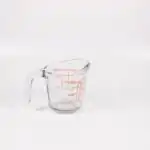
Liquids can be measured using tools like a graduated cylinder or by pouring between containers with known capacities.
- Graduated Cylinder: This tool has markings (graduations) that show different volumes, allowing for accurate measurement of liquids.
- Using Containers: We can determine the capacity of a larger container by pouring liquid from a smaller, known-capacity container into it multiple times. For example, pouring a 1-litre container of water into a 4-litre container four times will fill it.
It is important to measure liquids accurately to get the correct quantity.
Teaching Methods/Instructional Techniques
Discussion, Lecture, Demonstration, Question and Answer, Visual Aids
Instructional Procedures
Step 1: Introduction
Time: 5 minutes
Teaching Skill: Set Induction
Teacher’s Activity: The teacher displays various containers (cups, bottles, jugs) and asks pupils what they are used for. The teacher then asks which container holds more or less water.
Pupils’ Activity: Pupils identify the containers and discuss which holds more or less.
Learning Point: Pupils recall prior knowledge about containers and quantity.
Step 2: Explanation of Capacity
Time: 5 minutes
Teaching Skill: Explanation/Illustration
Teacher’s Activity: The teacher defines capacity as the amount a container can hold and gives examples of liquids measured by capacity (e.g., water, kerosene, groundnut oil).
Pupils’ Activity: Pupils listen, ask questions, and suggest other examples of liquids.
Learning Point: Pupils understand the meaning of capacity.
Step 3: Introduction to Units of Capacity
Time: 7 minutes
Teaching Skill: Naming/Listing
Teacher’s Activity: The teacher introduces the litre (L) as the standard unit for capacity and mentions other units like millilitre (ml), centilitre (cl), decilitre (dl), and kilolitre (kl), explaining when each is used.
Pupils’ Activity: Pupils listen and repeat the names of the units.
Learning Point: Pupils identify litre as a unit of measurement and know other related units.
Step 4: Conversion of Units
Time: 8 minutes
Teaching Skill: Explanation/Writing
Teacher’s Activity: The teacher writes the conversion relationships between ml, cl, dl, L, and kl on the board and explains how to convert from one unit to another.
Pupils’ Activity: Pupils copy the conversion table into their notebooks and ask clarifying questions.
Learning Point: Pupils learn the conversion rates between different units of capacity.
Step 5: Practical Measurement (Graduated Cylinder)
Time: 8 minutes
Teaching Skill: Demonstration/Practical Activity
Teacher’s Activity: The teacher demonstrates how to measure water using a graduated cylinder, showing how to read the markings accurately. The teacher then guides pupils to measure different quantities of water.
Pupils’ Activity: Pupils observe the demonstration and then take turns measuring water with the graduated cylinder.
Learning Point: Pupils practice measuring liquids accurately with a graduated cylinder.
Step 6: Practical Measurement (Containers)
Time: 7 minutes
Teaching Skill: Demonstration/Guided Practice
Teacher’s Activity: The teacher demonstrates determining the capacity of a larger container (e.g., a 4-litre container) by pouring water from a 1-litre container multiple times, recording the findings.
Pupils’ Activity: Pupils observe and then participate in pouring and recording the amount of water needed to fill the larger container.
Learning Point: Pupils determine the quantity of water a container can hold and understand the need for accuracy.
Step 7: Evaluation/Review
Time: 5 minutes
Teaching Skill: Questioning/Assessment
Teacher’s Activity: The teacher evaluates the learning by asking the following questions:
- What is capacity?
- Name two units used to measure capacity.
- How many millilitres make 1 centilitre?
- If you fill a 1-litre bottle twice into an empty container, how much liquid is in the container?
Pupils’ Activity: Pupils answer orally and in writing.
Learning Point: Pupils demonstrate understanding of the lesson.
Step 8: Conclusion
Time: 2 minutes
Teaching Skill: Summarizing
Teacher’s Activity: The teacher summarizes the lesson by reiterating the definition of capacity, its units, and the importance of accurate measurement. The teacher assigns homework: list five items in their homes that are measured by capacity.
Pupils’ Activity: Pupils listen to the summary and copy the homework.
Learning Point: Pupils consolidate their understanding of capacity.
Home Task: Solve three new exercises on Capacity. Show each step and check each answer.
Lesson Keywords
- Capacity – The amount of liquid or substance a container can hold.
- Litre (L) – The standard unit of measurement for capacity.
- Millilitre (ml) – A smaller unit of capacity, 1000 ml = 1 L.
- Graduated cylinder – A tool used for accurately measuring liquid volumes.
- Volume – The amount of space an object occupies, often used interchangeably with capacity for liquids.
Differentiation
For struggling learners, the teacher will provide simplified examples and more hands-on guidance during practical activities, focusing on identifying the litre. Advanced learners will be encouraged to convert between different units mentally and to estimate the capacity of various containers before measuring.
Note for teachers using this lesson plan
Ensure all instructional materials are available and in good working condition before the lesson. Emphasize safety during practical activities, especially if using liquids other than water. Encourage active participation from all pupils, providing positive reinforcement for their efforts.
Community Join the conversation Open discussion +