

Class: Primary 3
Term: Third Term
Week: 1
Age: 8 years
Duration: 45 minutes
Subject: Mathematics
Curriculum Theme: Measurement and Geometry
Previous Lesson: .
Topic: Weight
Subject Matter: Introducing grams and kilograms as standard units of measurement of weight, Finding and recording weights of objects, Finding weights of small objects, Comparison of weights of different objects – light and heavy objects.
Specific Objectives
By the end of the lesson, pupils should be able to:
Cognitive Domain:
- Define the concept of weight.
- Identify grams (g) and kilograms (kg) as standard units of weight.
- State examples of objects measured in grams and kilograms.
Affective Domain:
- Appreciate the importance of using standard units to measure weight.
- Show interest in measuring and comparing the weights of various objects.
Psychomotor Domain:
- Use a mass balance or spring balance to find the weight of objects.
- Record the weights of given objects in appropriate units (grams or kilograms).
- Compare the weights of different objects and identify which are lighter or heavier.
Social Domain:
- Work cooperatively with peers when measuring and comparing objects.
Reference Materials
The following resources were used in planning this lesson:
- 9 Years Basic Education Curriculum (Primary 3)
- State Unified Scheme of Work
- New General Mathematics for Primary Schools, Book 3
Instructional Materials
The teacher will teach this lesson with the aid of:
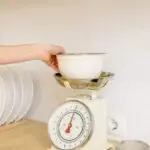
- Mass balance or spring balance
- Assorted objects for weighing (e.g., stones, packet of sugar, tin of milk, textbook, pencil, small bag)
- Charts showing units of weight (grams and kilograms)
Rationale for the Lesson
This lesson helps pupils understand how to measure and compare the weight of objects they encounter daily. Learning about grams and kilograms enables them to use appropriate units for different objects, which is important for practical situations and buying items.
Prerequisite/Previous Knowledge
Pupils can identify and compare objects based on their size and can count numbers up to 1000.
Lesson Content/Board Summary
Weight
What is Weight?
Weight is a measure of how heavy an object is. We use weight to compare how heavy or light different objects are.
Standard Units of Weight
The standard units for measuring weight are grams (g) and kilograms (kg).
- Gram (g): Used for measuring the weight of light objects.
- Examples: A packet of sugar, a tin of milk, a pencil, a small fruit.
- Kilogram (kg): Used for measuring the weight of heavy objects.
- Examples: A bag of rice, a gas cylinder, a travel box, a person.
Relationship between grams and kilograms:
- 1 kilogram (kg) = 1000 grams (g)
Measuring Weight
We use a scale or a balance (like a mass balance or spring balance) to find the weight of objects. The scale shows us the weight in grams or kilograms.
Comparing Weights
After finding the weights of different objects, we can compare them to know which is lighter or heavier.
- An object is heavier if its weight is more than another object.
- An object is lighter if its weight is less than another object.
Example: If a textbook weighs 500g and a pencil weighs 10g, the textbook is heavier than the pencil, and the pencil is lighter than the textbook.
Teaching Methods/Instructional Techniques
Discussion, Lecture, Demonstration, Question and Answer, Visual Aids
Instructional Procedures
Step 1: Introduction
Time: 5 minutes
Teaching Skill: Set Induction
Teacher’s Activity: The teacher greets the pupils, checks attendance, and asks pupils to mention objects they think are heavy or light. The teacher then introduces the topic “Weight.”
Pupils’ Activity: Pupils respond to greetings, mention objects, and pay attention to the new topic.
Learning Point: Pupils recall previous knowledge and are introduced to the lesson topic.
Step 2: Introducing Grams and Kilograms
Time: 10 minutes
Teaching Skill: Explanation/Demonstration
Teacher’s Activity: The teacher explains what weight is and introduces grams (g) and kilograms (kg) as standard units of weight. The teacher shows examples of objects typically measured in grams (e.g., packet of sugar, tin of milk) and kilograms (e.g., bag of rice, gas cylinder) using real objects or pictures.
Pupils’ Activity: Pupils listen, observe the objects, and identify the units used for each.
Learning Point: Pupils understand the concept of weight and the appropriate units for measuring different objects.
Step 3: Measuring Weight
Time: 10 minutes
Teaching Skill: Demonstration/Practical
Teacher’s Activity: The teacher demonstrates how to use a mass balance or spring balance to measure the weight of various objects (e.g., a textbook, a stone, a packet of sugar). The teacher reads out the weight shown on the balance.
Pupils’ Activity: Pupils observe carefully how the balance is used and how to read the weight.
Learning Point: Pupils learn the practical skill of using a balance to find weight.
Step 4: Recording Weights
Time: 5 minutes
Teaching Skill: Guided Practice
Teacher’s Activity: The teacher guides pupils to record the weights of the objects measured in Step 3 on the board, ensuring they use the correct units (grams or kilograms).
Pupils’ Activity: Pupils copy the recorded weights into their notebooks, paying attention to the units.
Learning Point: Pupils practice recording weights accurately with correct units.
Step 5: Comparing Weights
Time: 5 minutes
Teaching Skill: Questioning/Discussion
Teacher’s Activity: The teacher uses the recorded weights to ask pupils to compare objects, asking questions like, “Which object is heavier?” or “Which object is lighter?” The teacher explains the meaning of “heavier” and “lighter” in terms of weight.
Pupils’ Activity: Pupils answer the comparison questions orally and explain their reasoning.
Learning Point: Pupils develop the ability to compare the weights of different objects.
Step 6: Class Activity/Practice
Time: 5 minutes
Teaching Skill: Group Work/Practical
Teacher’s Activity: The teacher divides pupils into small groups and provides each group with a balance and a few objects to weigh and compare. The teacher moves around to assist and supervise.
Pupils’ Activity: Pupils work in groups to weigh objects, record their weights, and compare them.
Learning Point: Pupils apply their knowledge and skills in a hands-on activity.
Step 7: Evaluation/Review
Time: 5 minutes
Teaching Skill: Questioning/Assessment
Teacher’s Activity: The teacher evaluates the learning by asking the following questions:
- What is weight?
- Mention two standard units for measuring weight.
- Give an example of an object measured in grams.
- Give an example of an object measured in kilograms.
- If a book weighs 300g and a pen weighs 15g, which one is heavier?
Pupils’ Activity: Pupils answer orally and in writing.
Learning Point: Pupils demonstrate understanding of the lesson.
Step 8: Conclusion
Time: 5 minutes
Teaching Skill: Summarization
Teacher’s Activity: The teacher summarizes the main points of the lesson, emphasizing the standard units of weight and their uses. The teacher gives homework, asking pupils to find the weights of 3 objects at home and record them.
Pupils’ Activity: Pupils listen to the summary, ask questions if any, and note down the homework.
Learning Point: Pupils consolidate their understanding and are given tasks to reinforce learning.
Home Task: Solve three new exercises on Weight. Show each step and check each answer.
Lesson Keywords
- Weight – How heavy an object is.
- Gram (g) – A unit of weight for light objects.
- Kilogram (kg) – A unit of weight for heavy objects.
- Balance – A tool used to measure weight.
- Lighter – Having less weight.
- Heavier – Having more weight.
Differentiation
For pupils who are struggling, the teacher will provide more one-on-one guidance during practical sessions and use simpler objects for weighing. For advanced learners, the teacher can challenge them to estimate weights before actual measurement or convert between grams and kilograms for simple whole numbers.
Note for teachers using this lesson plan
Ensure you have a functional mass balance or spring balance and a variety of objects of different weights. Allow pupils sufficient time for hands-on practice to solidify their understanding of weight measurement and comparison.

Community Join the conversation Open discussion +