

Class: Primary 5
Term: 2nd Term
Week: 10
Age: 10 years
Duration: 45 minutes
Subject: General Mathematics
Curriculum Theme: Measurement
Previous Lesson: Capacity, Litres, Cm³ Relationship and Comparing Containers.
Topic: CAPACITY
Subject Matter: Identifying types of containers that hold water, identifying number of litres a container can hold, revising relationship between litres and cm³, word problems on capacity, quantitative aptitude relating to capacity
Specific Objectives
By the end of the lesson, pupils should be able to:
Cognitive Domain:
- Identify various types of containers that can hold water.
- State the number of litres a given container can hold.
- Explain the relationship between litres and cubic centimetres (cm³).
- Solve word problems involving capacity.
- Solve quantitative aptitude problems related to capacity.
Affective Domain:
- Appreciate the importance of understanding capacity in everyday life.
- Participate actively in practical activities involving measuring capacity.
Psychomotor Domain:
- Accurately measure the capacity of different containers using appropriate units.
- Correctly solve calculations involving capacity and conversions.
Social Domain:
- Work cooperatively with peers to complete tasks related to capacity measurement.
Reference Materials
The following resources were used in planning this lesson:
- 9 Years Basic Education Curriculum (Primary 4-6)
- State Unified Scheme of Work (Primary 5 Mathematics)
- Primary Mathematics for Nigerian Schools, Book 5
- https://www.youtube.com/watch?v=Jm009kP917U
- https://www.youtube.com/watch?v=s5R-1L7-Y4A
Instructional Materials
The teacher will teach this lesson with the aid of:
- Chart showing various containers (e.g., bucket, cup, bottle, drum)
- Actual containers of different sizes (e.g., bucket, cup, bottle, jug)
- Water
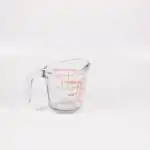
- Measuring jug (calibrated in litres and millilitres)
- Quantitative aptitude questions related to capacity
Rationale for the Lesson
This lesson helps pupils understand how much liquid different containers can hold, which is important for daily activities like cooking, buying liquids, and understanding quantities. It enables them to apply mathematical concepts to real-life situations involving liquids.
Prerequisite/Previous Knowledge
Pupils have prior knowledge of basic measurements such as length and mass, and can perform simple arithmetic operations.
Lesson Content/Board Summary
CAPACITY
Meaning of Capacity
Capacity is the amount of liquid a container can hold. It tells us how much space is inside a container for liquids.
Containers that Hold Water
The following are common containers that hold water:
- Buckets
- Cups
- Bottles
- Jugs
- Drums
- Tanks
- Bowls
Units of Capacity
The standard unit for measuring capacity is the litre (L). Smaller quantities are measured in millilitres (mL).
The relationship between litres and millilitres, and cubic centimetres (cm³) is:
- 1 litre (L) = 1000 millilitres (mL)
- 1 millilitre (mL) = 1 cubic centimetre (cm³)
- Therefore, 1 litre (L) = 1000 cm³
NOTE: When converting from a smaller unit to a larger unit, divide. When converting from a larger unit to a smaller unit, multiply.
Word Problems on Capacity
Word problems on capacity involve applying the concept of capacity and unit conversions to solve real-life scenarios.
Example 1: A bucket holds 5 litres of water. How many millilitres of water can it hold?
Solution:
- Step 1: Identify the given capacity and the required unit.
Given: 5 litres. Required: millilitres. - Step 2: Recall the conversion factor.
We know that 1 litre = 1000 millilitres. - Step 3: Convert the litres to millilitres.
Since we are converting from a larger unit (litre) to a smaller unit (millilitre), we multiply.
5 litres = 5 × 1000 mL = 5000 mL.
So, the bucket can hold 5000 millilitres of water.
Example 2: A water tank has a capacity of 20000 cm³. How many litres of water can it hold?
Solution:
- Step 1: Identify the given capacity and the required unit.
Given: 20000 cm³. Required: litres. - Step 2: Recall the conversion factor.
We know that 1 cm³ = 1 mL, and 1000 mL = 1 L.
Therefore, 1000 cm³ = 1 L. - Step 3: Convert the cm³ to litres.
Since we are converting from a smaller unit (cm³) to a larger unit (L), we divide.
20000 cm³ = 20000 ÷ 1000 L = 20 L.
So, the water tank can hold 20 litres of water.
Quantitative Aptitude on Capacity
Quantitative aptitude questions on capacity test logical reasoning and problem-solving skills using capacity concepts.
Example: If a bottle contains 750 mL of juice and a glass holds 250 mL, how many glasses can be filled from the bottle?
Solution:
- Step 1: Identify the total volume of juice and the volume per glass.
Total juice = 750 mL. Volume per glass = 250 mL. - Step 2: Determine the operation needed.
To find out how many glasses can be filled, we divide the total juice by the volume of one glass. - Step 3: Perform the division.
Number of glasses = Total juice ÷ Volume per glass
Number of glasses = 750 mL ÷ 250 mL = 3.
Therefore, 3 glasses can be filled from the bottle.
Teaching Methods/Instructional Techniques
Discussion, Lecture, Demonstration, Question and Answer, Visual Aids
Instructional Procedures
Step 1: Introduction
Time: 5 minutes
Teaching Skill: Set Induction
Teacher’s Activity: The teacher greets the pupils and asks them to mention things they drink or use daily that come in liquid form (e.g., water, milk, kerosene, engine oil). The teacher then introduces the topic “Capacity” as how much liquid these containers can hold.
Pupils’ Activity: Pupils respond to the teacher’s questions and listen attentively to the introduction.
Learning Point: Pupils are introduced to the concept of capacity and its relevance to everyday liquids.
Step 2: Identifying Types of Containers
Time: 7 minutes
Teaching Skill: Demonstration/Discussion
Teacher’s Activity: The teacher displays various containers (e.g., bucket, cup, bottle, jug) and guides pupils to identify them and discuss which ones can hold water. The teacher writes the identified containers on the board.
Pupils’ Activity: Pupils identify the containers and discuss their ability to hold water. They also copy the names of containers from the board.
Learning Point: Pupils can identify different containers that hold liquids.
Step 3: Identifying Number of Litres a Container Can Hold
Time: 8 minutes
Teaching Skill: Demonstration/Practical Activity
Teacher’s Activity: The teacher uses a measuring jug and water to demonstrate how to find the capacity of a smaller container (e.g., a bottle or a cup) by filling it and pouring the water into the measuring jug. The teacher guides pupils to read the measurement in litres or millilitres.
Pupils’ Activity: Pupils observe the demonstration and, where possible, participate in measuring the capacity of different containers.
Learning Point: Pupils understand how to practically determine the capacity of containers.
Step 4: Revising Relationship Between Litres and cm³
Time: 7 minutes
Teaching Skill: Explanation/Questioning
Teacher’s Activity: The teacher explains the standard units of capacity (litre, millilitre) and their relationship with cubic centimetres (cm³). The teacher writes the conversion facts (1 L = 1000 mL, 1 mL = 1 cm³, 1 L = 1000 cm³) on the board and explains how to convert between these units.
Pupils’ Activity: Pupils listen, ask questions, and copy the conversion facts into their notebooks.
Learning Point: Pupils learn the conversion relationships between litres, millilitres, and cubic centimetres.
Step 5: Solving Word Problems on Capacity
Time: 8 minutes
Teaching Skill: Guided Practice
Teacher’s Activity: The teacher presents word problems involving capacity and guides pupils through the steps to solve them, emphasizing identifying given information, conversion factors, and calculation. The teacher solves Example 1 and 2 from the board summary.
Pupils’ Activity: Pupils follow the teacher’s steps, ask questions, and attempt to solve the problems in their notebooks.
Learning Point: Pupils develop skills in solving word problems related to capacity and unit conversions.
Step 6: Solving Quantitative Aptitude on Capacity
Time: 5 minutes
Teaching Skill: Problem Solving
Teacher’s Activity: The teacher presents a quantitative aptitude question related to capacity and guides pupils on how to approach and solve it, focusing on logical reasoning. The teacher solves the example from the board summary.
Pupils’ Activity: Pupils attempt to solve the quantitative aptitude problem and discuss their reasoning.
Learning Point: Pupils improve their quantitative reasoning skills in the context of capacity.
Step 7: Evaluation/Review
Time: 5 minutes
Teaching Skill: Questioning/Assessment
Teacher’s Activity: The teacher evaluates the learning by asking the following questions:
- What is capacity?
- Mention three containers that can hold water.
- How many millilitres are in 1 litre?
- Convert 3 litres to cm³.
- If a jug holds 2 litres of water, and a cup holds 250 mL, how many cups can be filled from the jug?
Pupils’ Activity: Pupils answer orally and in writing.
Learning Point: Pupils demonstrate understanding of the lesson.
Step 8: Conclusion
Time: 5 minutes
Teaching Skill: Recap/Summarization
Teacher’s Activity: The teacher summarizes the main points of the lesson, reiterating the definition of capacity, types of containers, units of measurement, and how to solve capacity-related problems. The teacher gives homework.
Pupils’ Activity: Pupils listen to the summary and copy the assigned homework.
Learning Point: Pupils consolidate their understanding of capacity.
Home Task: Solve three new exercises on CAPACITY. Show each step and check each answer.
Lesson Keywords
- Capacity – The amount of liquid a container can hold.
- Litre (L) – The standard unit of capacity.
- Millilitre (mL) – A smaller unit of capacity; 1 L = 1000 mL.
- Cubic Centimetre (cm³) – A unit of volume equal to 1 mL.
- Container – An object used for holding something.
Differentiation
For pupils who grasp concepts quickly, the teacher will provide more complex word problems and multi-step conversions. For pupils who need additional support, the teacher will provide simpler problems, use more visual aids, and offer one-on-one guidance during practical activities, focusing on basic identification and simple conversions.
Note for teachers using this lesson plan
Teachers should ensure they have all the practical materials ready before the lesson to facilitate effective demonstrations and hands-on activities. Encourage pupils to participate actively in measuring and discussing their findings. Emphasize the practical application of capacity in daily life to make the lesson more relatable and engaging.

Community Join the conversation Open discussion +