

Class: Senior Secondary School 2 (SS2 / SSS2)
Term: 1st Term
Week: 10
Age: 16 years
Duration: 45 minutes
Subject: Building Construction
Curriculum Theme: Site Preparation and Foundations
Previous Lesson: Plants and Equipments Used for Excavation and Earth Work: Functions of plants and equipments.
Topic: EXCAVATION
Subject Matter: Meaning of EXCAVATION (removal of earth to form foundations and trenches), Definition of excavation (definition), Excavation problems (wet ground, loose soil, water logged site) (site challenges)
Specific Objectives
By the end of the lesson, pupils should be able to:
Cognitive Domain:
- Define excavation.
- Explain the purpose of excavation in building construction.
- Identify common problems associated with excavation.
Affective Domain:
- Appreciate the importance of proper excavation for building stability.
- Recognize the need for safety measures during excavation work.
Psychomotor Domain:
- Draw a simple sketch showing an excavated trench.
- Suggest practical solutions to common excavation problems.
Social Domain:
- Discuss the potential environmental impact of excavation.
Reference Materials
The following resources were used in planning this lesson:
- Senior Secondary Schools Education Curriculum
- State Unified Scheme of Work
- Oyebade, O. A. (2018). Building Construction for Senior Secondary Schools. Ibadan: Evans Brothers (Nigeria Publishers) Limited.
Instructional Materials
The teacher will teach this lesson with the aid of:
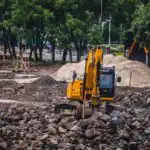
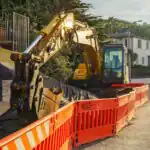
- Pictures of various excavation sites and equipment.
- Charts showing different types of excavation and safety precautions.
Rationale for the Lesson
This lesson helps pupils understand the initial crucial stage of any building project. It enables them to grasp why earth is removed and the potential challenges that can arise, preparing them for practical construction knowledge and problem-solving on a building site.
Prerequisite/Previous Knowledge
Pupils should have basic knowledge of building components and the initial stages of site preparation.
Lesson Content/Board Summary
Excavation
Meaning of Excavation
Excavation is the process of removing earth, soil, rock, or other materials from the ground to create a hole, trench, or cavity. In building construction, it is primarily done to prepare the ground for foundations, basements, and underground services.
Purpose of Excavation
The following are the main purposes of excavation in building construction:
- To create a stable base for foundations that will support the structure.
- To provide space for basements and underground rooms.
- To dig trenches for services such as water pipes, drainage systems, and electrical cables.
- To level the site or create slopes as required by the building design.
Common Problems Associated with Excavation
Excavation work can encounter several challenges that can affect safety, cost, and project timeline. Some common problems include:
- Wet Ground: This occurs when the soil contains a high amount of moisture, making it soft and unstable. It can lead to trench collapse, difficulty in compacting the soil, and machinery getting stuck.
- Loose Soil: Loose or granular soils (like sand or gravel) have poor cohesion and can easily collapse into an excavated area, posing a significant safety risk to workers and requiring extensive shoring or sloping.
- Waterlogged Site: A waterlogged site is saturated with water, often due to a high water table, heavy rainfall, or underground springs. This makes excavation extremely difficult, requiring dewatering methods (like pumping) to keep the trench dry, which adds to cost and time.
- Underground Obstructions: Encountering large rocks, old foundations, utility lines, or tree roots during excavation can cause delays and damage to equipment.
- Contaminated Soil: Discovering contaminated soil (e.g., from previous industrial use) requires special handling and disposal procedures, increasing project complexity and cost.
Teaching Methods/Instructional Techniques
Discussion, Lecture, Demonstration, Question and Answer, Visual Aids
Instructional Procedures
Step 1: Introduction
Time: 5 minutes
Teaching Skill: Set Induction
Teacher’s Activity: The teacher greets the pupils and asks them to imagine how a building starts, especially how the ground is prepared before any block is laid. The teacher then introduces the topic of excavation.
Pupils’ Activity: Pupils respond to the teacher’s questions and listen attentively to the introduction.
Learning Point: Pupils are introduced to the concept of preparing the ground for building.
Step 2: Meaning of Excavation
Time: 10 minutes
Teaching Skill: Explanation/Definition
Teacher’s Activity: The teacher explains the meaning of excavation, defining it as the removal of earth to form foundations and trenches, using simple terms and examples.
Pupils’ Activity: Pupils listen, ask questions, and define excavation in their own words.
Learning Point: Pupils understand the definition and basic concept of excavation.
Step 3: Purpose of Excavation
Time: 7 minutes
Teaching Skill: Explanation/Elaboration
Teacher’s Activity: The teacher further explains why excavation is necessary in building construction, highlighting its role in creating stable foundations and accommodating services.
Pupils’ Activity: Pupils state the purposes of excavation and relate it to building stability.
Learning Point: Pupils grasp the importance and functions of excavation.
Step 4: Problems of Excavation – Wet Ground
Time: 7 minutes
Teaching Skill: Discussion/Problem Identification
Teacher’s Activity: The teacher explains the challenges posed by excavating in wet ground, discussing potential dangers like trench collapse and difficulties in construction.
Pupils’ Activity: Pupils identify the problems associated with wet ground excavation and discuss possible safety measures.
Learning Point: Pupils learn about wet ground as an excavation problem.
Step 5: Problems of Excavation – Loose Soil
Time: 7 minutes
Teaching Skill: Discussion/Problem Identification
Teacher’s Activity: The teacher explains the difficulties encountered when excavating in loose soil, such as sand or gravel, emphasizing the risk of collapse and the need for support.
Pupils’ Activity: Pupils explain why loose soil is a problem and suggest ways to stabilize it.
Learning Point: Pupils understand the challenges of loose soil excavation.
Step 6: Problems of Excavation – Waterlogged Site
Time: 7 minutes
Teaching Skill: Discussion/Problem Identification
Teacher’s Activity: The teacher describes the issues of a waterlogged site, including the need for dewatering and the impact on the construction schedule and cost.
Pupils’ Activity: Pupils identify the problems of waterlogged sites and discuss methods for water removal.
Learning Point: Pupils recognize waterlogged sites as a significant excavation challenge.
Step 7: Evaluation/Review
Time: 5 minutes
Teaching Skill: Questioning/Assessment
Teacher’s Activity: The teacher evaluates the learning by asking the following questions:
- Define excavation in your own words.
- State two main purposes of excavation in building construction.
- Mention three common problems that can arise during excavation.
- Briefly explain why excavating in wet ground can be problematic.
Pupils’ Activity: Pupils answer orally and in writing.
Learning Point: Pupils demonstrate understanding of the lesson.
Step 8: Conclusion
Time: 2 minutes
Teaching Skill: Summarization
Teacher’s Activity: The teacher summarizes the key points of the lesson, reiterating the definition of excavation, its purpose, and the challenges faced. The teacher then gives pupils homework to research methods used to overcome excavation problems.
Pupils’ Activity: Pupils listen to the summary and copy down their homework.
Learning Point: Pupils consolidate their learning and are given tasks for further study.
Lesson Keywords
- Excavation – The process of removing earth or other materials from the ground.
- Foundation – The lowest load-bearing part of a building, typically below ground level.
- Trench – A long, narrow ditch dug in the ground, often for foundations or utilities.
- Wet ground – Soil containing a high amount of moisture, making it soft and unstable.
- Loose soil – Granular soil with poor cohesion that can easily collapse.
- Waterlogged site – A construction site where the ground is saturated with water.
Differentiation
For pupils who grasp concepts quickly, the teacher can encourage them to research and present solutions to excavation problems. For those needing more support, the teacher can provide simplified diagrams and allow peer-assisted learning during discussions.
Note for teachers using this lesson plan
It is advisable to bring actual pictures or short video clips of excavation sites to enhance pupils’ understanding. If possible, a supervised visit to a nearby construction site during the excavation phase would provide invaluable practical experience, linking theoretical knowledge to real-world application.


Community Join the conversation Open discussion +