

Class: Senior Secondary School 2 (SS2 / SSS 2)
Term: Second Term
Week: 1
Age: 16 years
Duration: 45 minutes
Subject: Building Construction
Curriculum Theme: Site Preparation and Foundation
Previous Lesson: .
Topic: EXCAVATION PROBLEMS
Subject Matter: Meaning of EXCAVATION PROBLEMS (common problems during excavation), Solution to excavation problems (wet ground, loose soil, water logged) (how problems are handled)
Specific Objectives
By the end of the lesson, pupils should be able to:
Cognitive Domain:
- Define excavation problems.
- Identify common problems encountered during excavation.
- Explain solutions to various excavation problems.
Affective Domain:
- Appreciate the importance of addressing excavation problems for site safety.
- Show interest in learning about different solutions for excavation challenges.
Psychomotor Domain:
- Discuss practical ways to handle excavation problems like wet ground and loose soil.
- Suggest appropriate solutions for specific excavation challenges.
Social Domain:
- Collaborate with peers to identify and propose solutions for excavation problems.
Reference Materials
The following resources were used in planning this lesson:
- Senior Secondary Schools Education Curriculum
- State Unified Scheme of Work
- Building Construction for Senior Secondary Schools, Book 2
- https://www.theconstructor.org/construction/excavation-problems-solutions/12061/
- https://www.youtube.com/watch?v=J661WvQ22-g
Instructional Materials
The teacher will teach this lesson with the aid of:
- Pictures of drawings showing excavation problems and solutions
- Chalkboard/Whiteboard
- Markers/Chalk
- Building Construction textbooks
Rationale for the Lesson
Understanding excavation problems and their solutions is important for pupils because it helps them recognize potential dangers on construction sites. This knowledge enables them to contribute to safer and more efficient construction practices in the future.
Prerequisite/Previous Knowledge
Pupils have a basic understanding of excavation and site preparation from previous lessons or general knowledge.
Lesson Content/Board Summary
EXCAVATION PROBLEMS
Meaning of Excavation Problems
Excavation problems refer to the various difficulties or challenges that arise during the process of digging or removing earth from a site. These problems can affect the safety of workers, the stability of the structure, and the overall progress of a construction project.
Common Problems During Excavation
The following are common problems encountered during excavation:
- Wet Ground: Occurs when the soil has a high moisture content, making it difficult to dig and unstable.
- Loose Soil: Soil that lacks cohesion and can easily collapse, posing a risk to workers and nearby structures.
- Waterlogged Ground: When the excavation area is filled or surrounded by standing water, often due to high water tables or heavy rainfall.
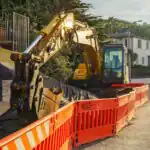
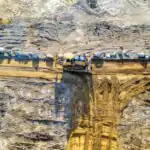
- Rock Excavation: Encountering hard rock formations that require specialized equipment and techniques for removal.
- Underground Services: Damage to existing underground pipes, cables, or utility lines during digging.
- Collapse of Excavation Sides: The walls of the trench or pit giving way due to unstable soil, heavy loads nearby, or insufficient support.
- Access and Egress Issues: Difficulty for workers and machinery to enter and exit the excavation site safely.
- Soil Contamination: Discovery of hazardous materials or contaminated soil during excavation.
Solutions to Excavation Problems
The following are solutions to common excavation problems:
- For Wet Ground and Waterlogged Ground:
- Dewatering: Removing water from the excavation site using pumps, wellpoints, or sumps.
- Ground Freezing: Freezing the ground to stabilize it and prevent water ingress (for specific conditions).
- Chemical Grouting: Injecting chemicals into the soil to solidify it and reduce permeability.
- For Loose Soil and Collapse of Excavation Sides:
- Shoring/Timbering: Installing temporary supports (timber, steel, or hydraulic) to hold the excavation walls in place.
- Sloping/Benching: Creating gradual slopes or steps in the excavation sides to improve stability, rather than vertical cuts.
- Sheet Piling: Driving interlocking steel or concrete sheets into the ground to form a continuous wall.
- Soil Nailing: Reinforcing existing ground by installing steel bars or rods into a drilled hole and grouting them.
- For Rock Excavation:
- Blasting: Using explosives to break up hard rock formations.
- Rock Hammers/Breakers: Mechanical tools mounted on excavators for breaking smaller rock formations.
- Rippers: Attachments on bulldozers used to loosen softer rock.
- For Underground Services:
- Site Investigation: Thoroughly surveying and locating all existing underground services before excavation begins.
- Hand Digging: Carefully hand digging around known service lines to prevent damage.
- Utility Locators: Using specialized equipment to detect the presence and depth of services.
Teaching Methods/Instructional Techniques
Discussion, Lecture, Demonstration, Question and Answer, Visual Aids
Instructional Procedures
Step 1: Introduction
Time: 5 minutes
Teaching Skill: Set Induction
Teacher’s Activity: The teacher greets the pupils, reviews the previous lesson briefly, and then introduces the new topic, “Excavation Problems,” by asking pupils if they know what excavation is and what challenges might arise during it.
Pupils’ Activity: Pupils respond to the teacher’s greetings and questions, sharing their ideas about excavation and potential difficulties.
Learning Point: Pupils are prepared for the lesson and connect with the topic.
Step 2: Meaning of Excavation Problems
Time: 7 minutes
Teaching Skill: Explanation
Teacher’s Activity: The teacher explains the meaning of excavation problems, emphasizing that these are difficulties encountered while digging. The teacher highlights how these problems can affect safety and project progress.
Pupils’ Activity: Pupils listen attentively, take notes, and ask clarifying questions about the definition.
Learning Point: Pupils understand what excavation problems are.
Step 3: Common Problems During Excavation (Wet Ground, Loose Soil, Waterlogged)
Time: 10 minutes
Teaching Skill: Discussion/Illustration
Teacher’s Activity: The teacher discusses common excavation problems such as wet ground, loose soil, and waterlogged areas. The teacher uses pictures to illustrate these conditions and explains why they pose challenges.
Pupils’ Activity: Pupils observe the pictures, identify the problems, and contribute to the discussion by sharing their observations or experiences.
Learning Point: Pupils can identify and describe problems like wet ground, loose soil, and waterlogged conditions.
Step 4: Other Common Problems (Rock, Underground Services, Collapse)
Time: 8 minutes
Teaching Skill: Explanation/Examples
Teacher’s Activity: The teacher continues by explaining other common problems like encountering rock, damaging underground services, and the collapse of excavation sides. The teacher provides examples of how these issues occur.
Pupils’ Activity: Pupils listen, take notes on the additional problems, and ask questions to deepen their understanding.
Learning Point: Pupils recognize a wider range of excavation problems.
Step 5: Solutions to Wet Ground and Waterlogged Problems
Time: 5 minutes
Teaching Skill: Problem-solving
Teacher’s Activity: The teacher explains solutions for wet ground and waterlogged conditions, focusing on dewatering techniques like using pumps and wellpoints. The teacher clarifies why these methods are effective.
Pupils’ Activity: Pupils listen, understand the solutions, and note down the methods for managing water in excavations.
Learning Point: Pupils learn how to manage wet and waterlogged excavation sites.
Step 6: Solutions to Loose Soil and Collapse Problems
Time: 5 minutes
Teaching Skill: Demonstration/Explanation
Teacher’s Activity: The teacher explains solutions for loose soil and preventing collapses, such as shoring, timbering, sloping, and benching. The teacher may use simple diagrams or gestures to illustrate these support methods.
Pupils’ Activity: Pupils observe the illustrations, understand the purpose of each solution, and record the methods for stabilizing excavation walls.
Learning Point: Pupils know how to prevent soil collapse and stabilize loose soil.
Step 7: Evaluation/Review
Time: 5 minutes
Teaching Skill: Questioning/Assessment
Teacher’s Activity: The teacher evaluates the learning by asking the following questions:
- What are excavation problems?
- Mention three common problems encountered during excavation.
- State two solutions for excavation in wet ground.
- How can loose soil in an excavation be managed?
Pupils’ Activity: Pupils answer orally and in writing.
Learning Point: Pupils demonstrate understanding of the lesson.
Step 8: Conclusion
Time: 3 minutes
Teaching Skill: Summarizing/Assignment
Teacher’s Activity: The teacher summarizes the key points of the lesson, reiterating the importance of identifying and solving excavation problems. The teacher then gives pupils an assignment to research other advanced dewatering techniques.
Pupils’ Activity: Pupils listen to the summary and copy the assignment into their notebooks.
Learning Point: Pupils consolidate their learning and are given a task to extend their knowledge.
Lesson Keywords
- Excavation – The process of digging or removing earth from a site.
- Wet Ground – Soil with high moisture content.
- Loose Soil – Unstable soil that lacks cohesion and can easily collapse.
- Waterlogged – Ground saturated with water.
- Dewatering – The process of removing water from an excavation.
- Shoring – Temporary support system used to hold up excavation walls.
- Timbering – A method of shoring using timber planks and struts.
- Sloping – Creating gradual inclines on excavation sides for stability.
Differentiation
For pupils who are struggling, the teacher will provide simplified diagrams and re-explain concepts using more basic language. Advanced pupils will be challenged to research and present on complex excavation techniques or case studies of major excavation projects.
Note for teachers using this lesson plan
Teachers should ensure they have clear visual aids, such as pictures or short video clips, to illustrate the various excavation problems and their solutions, as this topic benefits greatly from visual learning. Encourage pupils to relate the concepts to real-world construction sites they may have seen.

Community Join the conversation Open discussion +