

Class: Primary Six
Term: First Term
Subject: National Values Education
Curriculum Theme: Civic Education
Previous Lesson:
topic: Definition Of National Honours Awards
Content/learning area: Definition of national honours awards, Importance of national Honours, Examples of National Honours
Time Allocation: 40 minutes
Performance Objectives
By the end of the lesson, pupils should be able to:
- Cognitive Domain:
1. Define what national honours awards are and list at least three examples.
- Affective domain:
1. Appreciate the importance of national honours awards in recognizing achievements.
- Psychomotor Domain:
1. Practice writing and pronouncing the names of different national honours.
- Social Domain:
1. Discuss the importance of national honours in promoting unity and pride among citizens.
Reference Materials
- 9 – Years Basic Education Curriculum
- Abuja Educational Resource Center Scheme of work
- NAPPS National Unified Scheme of work
- Online Data from Nairaland – Nigerian National honours & Their meaning – Politics – Nigeria
- Relevant Textbooks
Instructional Materials
To deliver this lesson, the teacher will use the following materials:
- National flag
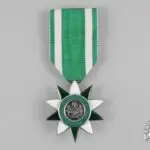
- Pictures of National Honours Awards (e.g., MFR, GCFR)
- Flashcards
- Chalkboard and chalk
Rationale for the Lesson
Understanding national honours helps pupils appreciate recognizing contributions to national advancement, fostering national pride and good citizenship.
prerequisite/Previous Knowledge
The teacher begins by asking pupils about awards they’ve received in school or sports, connecting familiar concepts to the lesson’s topic of national honours.
lesson Content
Definition Of national Honours Awards
National honours awards are special recognitions given by the government to individuals who have made outstanding contributions to the country. These awards recognize efforts in various fields, including public service, sports, education, and the military. This recognition is meaningful for national progress.
Importance of National Honours
National honours are critically important as they recognize and celebrate the achievements of individuals who have made significant contributions to the country.They promote a sense of national pride and unity by highlighting the positive impact of these individuals on society. They also serve as an inspiration for others to strive for excellence and contribute to the betterment of the nation.
The following are some of the reasons why national honours are important:
- Recognizing outstanding achievements: National honours acknowledge and celebrate the extraordinary contributions of individuals in various fields.
- Promoting national pride: By honoring those who have excelled, national honours foster a sense of pride and patriotism among citizens.
- Encouraging excellence: National honours serve as an incentive for others to strive for greatness and contribute to national development.
- inspiring future generations: The stories of national honorees can inspire young people to pursue their dreams and make a positive impact on society.
- Fostering national unity: By recognizing individuals from diverse backgrounds and fields, national honours promote a sense of unity and shared identity.
- Preserving national values: National honours often recognize individuals who have upheld and promoted critically important national values, such as integrity, hard work, and dedication.
Examples of National Honours
National honours are specific awards conferred by a nation to recognize individuals’ contributions.
Some examples of national honours in Nigeria include:
- GCFR (Grand Commander of the Federal Republic): Awarded to the President.
- GCON (Grand Commander of the Order of the Niger): awarded to the Vice President.
- CFR (Commander of the Order of the Federal Republic): Conferred on individuals who have rendered distinguished service to the nation.
- CON (Commander of the Order of the Niger): Awarded to individuals for their outstanding contributions in various fields.
- OFR (Officer of the Order of the Federal Republic): Awarded to individuals for their meritorious service to the country.
- OON (Officer of the Order of the Niger): Awarded to individuals for their significant contributions to national development.
- MFR (Member of the Order of the Federal Republic): Awarded to individuals for outstanding contributions.
- MON (Member of the Order of the niger): Awarded to individuals for their valuable service to the nation.
Teaching Methods
To deliver this lesson, the teacher will adopt the following methods: Discussion, Clarification, Visual Learning, and Guided Note-taking.
Instructional Procedures
To deliver this lesson,the teacher will adopt the following steps:
Step 1: Introduction (Set Induction)
Time: 5 mins
Teaching Skill: Set Induction
Teacher’s Activity: the teacher introduces the concept of awards by asking pupils about awards they have seen in school or sports.
Pupils’ Activity: Pupils respond with examples of awards they know (e.g., sports, academic awards).
Step 2: Definition of National Honours Awards
Time: 10 mins
Teaching Skill: Clarification
Teacher’s Activity: The teacher defines national honours awards, using examples like GCFR, MFR, etc.
Pupils’ Activity: Pupils listen and note down key terms.
Step 3: Importance of National Honours
Time: 7 mins
Teaching Skill: Explanation
Teacher’s Activity: Teacher explains the significance of national honours and how they promote unity and pride.
Pupils’ Activity: Pupils ask questions and engage in the discussion.
Step 4: Examples of National Honours
Time: 5 mins
Teaching Skill: Visual learning
Teacher’s Activity: Teacher shows pictures of different national honours and writes their names on the board.
Pupils’ Activity: Pupils observe and practice pronouncing the names of the awards.
Step 5: Note-Taking
Time: 5 mins
Teaching Skill: Writing
Teacher’s Activity: Teacher dictates key points about the national honours for pupils to copy.
Pupils’ Activity: Pupils write down the notes in their notebooks.
Step 6: Evaluation/Review
Time: 5 mins
Teaching Skill: Oral Questioning
Teacher’s Activity: Teacher asks pupils questions based on the lesson objectives.
Pupils’ Activity: Pupils answer the teacher’s questions orally.
Step 7: Conclusion
Time: 3 mins
Teaching Skill: Recap
Teacher’s Activity: Teacher summarizes the lesson by emphasizing the key points and their relevance to national pride.
Pupils’ Activity: Pupils listen and participate in a brief review of the lesson.
Lesson Keywords
- National Honours – Special recognitions given by the government to individuals for outstanding contributions.
- GCFR – Grand Commander of the Federal Republic, an honour awarded to the President.
- GCON – Grand Commander of the Order of the Niger, an honor awarded to the Vice president.
- MFR – Member of the Order of the Federal Republic, an honor awarded for outstanding contributions.
- National Pride – A feeling of satisfaction and respect for one’s country.
- Unity – The state of being united or joined as a whole.
Lesson Evaluation
To evaluate the learning, the teacher asks pupils to:
- Define national honours awards.
- list three examples of national honours in Nigeria.
- Explain why national honours are critically important to the country.
- Mention two ways national honours promote national unity and pride.
- Pronounce the name of one national honor correctly.
Assignment/Homework
- Research and write about a recipient of a national honour in Nigeria.
- List five importance of National Honours in Nigeria.
- Mention five National Honours in Nigeria and who they are awarded to.
Differentiation
- For slower learners: The teacher will provide additional support through one-on-one assistance and simplified explanations.
- for advanced learners: The teacher will encourage independent research on additional national honours and their recipients.
- For visual/auditory/kinesthetic learners: Use visual aids, discussions, and hands-on activities to cater to different learning styles.
Note for Teachers
Ensure to use visual aids and real-life examples to make the lesson engaging and relatable for the pupils. Encourage active participation and discussion to enhance understanding.



Community Join the conversation Open discussion +