

Class: Primary Three
Term: Second Term
Subject: Basic Science and Technology
Curriculum Theme: Physical & Health Education
Previous Lesson: Meaning And Examples of Indigenous And Modern Indoor Games
Topic: Track Event – Sprint Techniques
Content/Learning Area: What are Sprints?, examples of Sprints, Techniques In Sprints, importance of Proper Sprint Techniques
Time allocation: 40 minutes
Performance Objectives
By the end of the lesson, pupils should be able to:
- Cognitive Domain:
1. Define sprints.
2. List examples of sprints.
3. identify techniques used in sprints.
4. Explain the importance of proper sprint techniques.
- Psychomotor Domain:
1. Demonstrate the starting position for a sprint.
2. Show correct arm and leg movements during a sprint.
- Affective Domain:
1. Appreciate the importance of proper sprint techniques.
2. Show enthusiasm for participating in sprint events.
- Social Domain:
1. Work cooperatively wiht peers during practise activities.
Reference Materials
- 9 – Years Basic Education Curriculum
- Abuja Educational Resource Center Scheme of Work
- NAPPS National Unified Scheme of Work
- Online Details
- Relevant Textbooks
Instructional Materials
To deliver this lesson,the teacher will use the following materials:
- Whiteboard or chart paper
- Markers or pens
- Pictures or videos of sprint techniques
Rationale for the Lesson
Understanding sprint techniques is crucial for participation in track and field events. Proper technique improves speed, prevents injuries, and enhances overall performance.
Prerequisite/Previous Knowledge
Pupils have basic knowledge of running and sports.
Lesson Content
What are Sprints?
Sprints are short, fast runs over a specific distance. They need speed, power, and good technique.
examples of Sprints
These include:
- 100 meters
- 200 meters
- 400 meters
- Relay races
- Hurdles
- Short distance cross country
Techniques In Sprints
Sprinting techniques are specific actions and positions that athletes use to maximize their speed and efficiency during a sprint. They are:
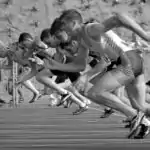
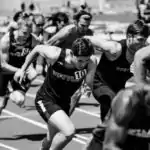
- Start Position: Begin in a low, explosive stance with one foot forward for a powerful start. This helps you quickly move forward.
- Arm Action: Use coordinated arm movements to help you move forward and stay balanced. Swing your arms rhythmically, keeping your elbows high and hands relaxed.
- Stride length: Focus on long,powerful strides while maintaining control for optimal speed. extend your legs fully, but don’t overextend.
- Foot placement: Land on the balls of your feet for fast and efficient ground contact.This helps you keep moving and avoid slowing down.
- Body Lean: Maintain a slight forward lean to help you accelerate. This uses gravity to help you move forward with more power.
- Breathing Control: Develop a rhythmic breathing pattern to keep your energy up. Inhale deeply and exhale forcefully, coordinating your breathing with your stride.
- Head Position: Keep your head aligned with your body, looking straight ahead to stay balanced and reduce air resistance.
- Pacing: Gauge your speed and energy to maintain consistency.Start strong, but don’t tire yourself out too early. aim for a smooth, controlled pace.
- Finish Line Technique: Lean forward slightly as you approach the finish line to extend your torso and cross the line first.
- Relaxation: Stay relaxed throughout the sprint to avoid needless tension that can slow you down.
Importance of Proper Sprint techniques
Proper sprint techniques are essential for maximizing speed, efficiency, and safety during a sprint. They are:
- Speed Boost: Good techniques help you run faster by improving your form.
- Stay Injury-Free: Using the right techniques reduces the risk of injuries.
- Save energy: Proper biomechanics make your stride more efficient, saving energy.
- Strategic Racing: Mastering sprint techniques helps you control your pace and compete effectively.
- Improved Performance: proper techniques lead to better overall performance in sprint events.
- Enhanced Coordination: Practicing sprint techniques improves coordination and body awareness.
Teaching Methods
To deliver this lesson, the teacher will adopt the following methods: Discussion, Presentation, Practical Activity
Instructional Procedures
To deliver this lesson, the teacher will adopt the following steps:
Step 1: introduction
Time: 5 minutes
Teaching Skill: Set Induction
Teacher’s Activity: Introduces the topic, asks questions about sprinting.Pupils’ Activity: Respond to questions, listen attentively.
Step 2: Clarification of Key Concepts
Time: 10 minutes
Teaching Skill: Explaining, illustrating
Teacher’s Activity: Explains what sprints are, gives examples.
Pupils’ Activity: Listen, take notes.
Step 3: Demonstration/Guided Practice
Time: 15 minutes
Teaching Skill: Demonstrating, guiding
Teacher’s Activity: Demonstrates sprint techniques, guides pupils in practice.
Pupils’ Activity: Observe, practice techniques.
Step 4: Independent Practice
Time: 5 minutes
Teaching Skill: Monitoring, providing feedback
Teacher’s Activity: Monitors pupils’ practice, provides feedback.
Pupils’ Activity: Practice sprint techniques independently.
Step 5: Note-Taking
Time: 2 minutes
Teaching Skill: Guiding note-taking
Teacher’s Activity: Guides pupils in summarizing key points.
Pupils’ Activity: Take notes.
Step 6: Evaluation/Review
Time: 3 minutes
Teaching Skill: Questioning, summarizing
Teacher’s Activity: Asks review questions, summarizes the lesson.
Pupils’ Activity: answer questions, participate in summary.
Objective-aligned checks:
- Define sprints.
- List examples of sprints.
- identify techniques used in sprints.
Step 7: Conclusion
Time: 2 minutes
Teaching Skill: Summarizing, Encouraging
Teacher’s Activity: Summarizes key points and encourages further practice.
Pupils’ Activity: Listen and ask questions.
Lesson Keywords
- Sprints – Short, fast runs over a specific distance.
- Technique – The specific actions and positions used to maximize speed and efficiency.
- Stride Length – The distance covered in one step while running.
- Arm Action – The coordinated movement of the arms to aid balance and propulsion.
- start Position – The initial stance taken before beginning a sprint.
Lesson Evaluation
To evaluate the learning, the teacher asks pupils to:
- what are sprints?
- Give two examples of sprint races.
- Name three sprint techniques.
- Why are proper sprint techniques critically important?
Assignment/Homework
- Research and write about a famous Nigerian sprinter.
- Practice the starting position for a sprint at home.
- List five benefits of using proper sprint techniques.
Differentiation
- For slower learners: Provide one-on-one assistance during practice.
- For advanced learners: Encourage them to experiment with different pacing strategies.
- For visual/auditory/kinesthetic learners: Use visual aids, verbal cues, and hands-on practice to cater to different learning styles.
note for Teachers
Ensure adequate space for practical activities and provide clear demonstrations of sprint techniques. Emphasize safety and proper form to prevent injuries. Encourage pupils to ask questions and provide constructive feedback during practice.


Community Join the conversation Open discussion +