

Class: Primary One
Term: Third Term
Subject: Basic Science and Technology
Curriculum Theme: computer Studies
Previous Lesson: Common I.T Devices, Pager
Topic: Common I.T devices: wristwatches
Content/Learning Area: Identifying and naming different types of Wristwatches, Listing 2 uses of a wristwatch
Time Allocation: 40 minutes
Performance Objectives
By the end of the lesson, pupils should be able to:
- Cognitive Domain:
1. Identify and name different types of wristwatches.
2. List at least two uses of a wristwatch.
3. Differentiate between analog and digital wristwatches.
- Affective Domain:
1. Show interest in learning about different types of wristwatches.
- Psychomotor Domain:
1. Demonstrate the ability to read the time on an analog wristwatch.
- Social Domain:
1. Participate actively in class discussions.
Reference Materials
- 9 – Years basic Education Curriculum
- Abuja Educational Resource Centre Scheme of Work
- NAPPS National Unified Scheme of Work
- Relevant Textbooks
Instructional Materials
To deliver this lesson, the teacher will use the following materials:
- Pictures of different types of wristwatches (analog, digital, smart).
- A real wristwatch (if possible).
- Whiteboard or chart paper.
- Markers.
Rationale for the Lesson
Understanding wristwatches helps pupils learn about time and technology. This knowledge is useful in daily life and builds a foundation for future learning about more complex technologies.
Prerequisite/Previous Knowledge
The teacher will start by asking pupils what they wear on their wrists. The teacher will then introduce the topic of wristwatches as a common device worn on the wrist.
Lesson Content
Common I.T Devices – Wristwatches
Wristwatches are devices worn on the wrist to tell time.
Types of Wristwatches
Wristwatches come in various forms, each with unique features and functionalities. These include:
- Analog wristwatch: Uses hands to show the time on a circular dial with numbers or markings for hours, minutes, and seconds.
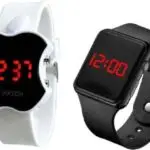
- Digital wristwatch: Displays the time using numbers on a digital screen. often has extra features like alarms, stopwatches, and timers.
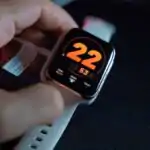
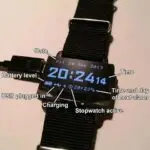
- Smart wristwatch: Advanced wristwatches that connect to smartphones. They can track fitness,send messages,make calls,and control music,in addition to telling time.
- Chronograph Wristwatch: Features additional stopwatch functions with multiple subdials for measuring elapsed time.
- Diving Wristwatch: Designed for underwater use, featuring high water resistance and a rotating bezel to track dive time.
Uses of Wristwatches
Wristwatches serve multiple purposes beyond just telling time. They are:
- Time telling: The main purpose of a wristwatch is to tell the time.
- Setting alarms: Many have alarms to remind you of things at specific times.
- Tracking fitness: Smartwatches can track steps, distance, heart rate, and more.
- Making calls and sending messages: Some smartwatches let you make calls and send texts without your phone.
- Controlling music: Some smartwatches can control music playing on your phone.
- Navigation: Some smartwatches have GPS capabilities, allowing users to navigate without their phones.
- Health Monitoring: Certain smartwatches can monitor heart rate, sleep patterns, and other health metrics.
Teaching Methods
To deliver this lesson, the teacher will adopt the following methods: Discussion, Question and Answer, Show and Tell
Instructional Procedures
To deliver this lesson, the teacher will adopt the following steps:
Step 1: Introduction
Time: 5 minutes
Teaching Skill: Set Induction
teacher’s Activity: Asks pupils what they wear on their wrists and introduces the topic of wristwatches.
Pupils’ Activity: Respond to the teacher’s questions and listen attentively.
Step 2: Description of Key Concepts
Time: 10 minutes
Teaching Skill: Explaining
Teacher’s Activity: Explains what a wristwatch is and its primary function (telling time).
Pupils’ Activity: Listen attentively and ask clarifying questions.
Step 3: Presentation/Guided Practice
Time: 10 minutes
Teaching Skill: Demonstrating
Teacher’s Activity: shows pictures of different types of wristwatches (analog, digital, smart) and explains their features.
Pupils’ Activity: Observe the pictures and listen to the teacher’s explanation.
Step 4: Self-reliant Practice
Time: 5 minutes
Teaching Skill: Monitoring
Teacher’s Activity: Asks pupils to name the different types of wristwatches and list their uses.
Pupils’ Activity: Answer the teacher’s questions.
Step 5: Note-Taking
Time: 5 minutes
Teaching Skill: Guiding
Teacher’s Activity: Guides pupils in taking notes on the key concepts.
Pupils’ activity: write down key points in their notebooks.
Step 6: Evaluation/Review
Time: 5 minutes
Teaching Skill: assessing
Teacher’s Activity: Asks evaluation questions to assess pupils’ understanding.
Pupils’ Activity: Answer the evaluation questions.
Objective-aligned checks:
- Identify and name different types of wristwatches.
- List at least two uses of a wristwatch.
- Show interest in learning about different types of wristwatches.
Step 7: Conclusion
Time: 5 minutes
Teaching Skill: Summarizing
Teacher’s Activity: Summarizes the key points about wristwatches and assigns homework.
Pupils’ Activity: Listen to the summary and note the homework assignment.
Lesson Keywords
- Wristwatch – A device worn on the wrist to tell time.
- Analog – A type of wristwatch that uses hands to display time.
- Digital – A type of wristwatch that displays time using numbers.
- Smartwatch – An advanced wristwatch with additional features like fitness tracking and smartphone connectivity.
Lesson Evaluation
To evaluate the learning, the teacher asks pupils to:
- What is a wristwatch?
- Name three types of wristwatches.
- What are two uses of a wristwatch?
- Can you think of any other uses for a wristwatch?
- What is the difference between an analog and a digital wristwatch?
Assignment/Homework
- Draw your favorite type of wristwatch.
- Write a short paragraph describing your favorite type of wristwatch and why you like it.
Differentiation
- For slower learners: Provide one-on-one assistance and use simpler language.
- For advanced learners: Encourage them to research and present information on other types of wristwatches.
- For visual/auditory/kinesthetic learners: Use visual aids, verbal explanations, and hands-on activities to cater to different learning styles.
Note for Teachers
ensure to bring real-life examples or pictures of different types of wristwatches to make the lesson more engaging. Encourage pupils to share their experiences with wristwatches or other similar devices.
Community Join the conversation Open discussion +