

Class: Primary Two
Term: Third Term
Subject: Pre-vocational Studies
Curriculum Theme: Home Economics
Previous Lesson: Care of Food
Topic: Reasons for Food Preservation
Content/Learning Area: Prevent Spoilage, Extend Shelf Life, Maintain Nutritional Value, Ensure Food Availability, Save Money
Time Allocation: 40 minutes
Performance Objectives
By the end of the lesson, pupils should be able to:
- Cognitive Domain:
1. list and explain at least three reasons for food preservation.2. Explain how preservation methods prevent food spoilage.
- Psychomotor Domain:
1. Describe one way to store food in a refrigerator.
- Affective Domain:
1. Appreciate the importance of preserving food to avoid wastage.
- Social Domain:
1. Discuss with peers the benefits of food preservation in their families.
Reference Materials
- 9 – Years Basic Education Curriculum
- Abuja Educational Resource center Scheme of Work
- NAPPS National Unified Scheme of Work
- Online Details
- Relevant Textbooks
Instructional Materials
To deliver this lesson, the teacher will use the following materials:
- Whiteboard or chart
- Markers or chalk
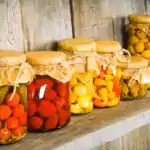
- pictures of preserved foods
Rationale for the Lesson
Understanding food preservation is crucial for reducing food waste, maintaining nutrition, and managing household budgets. This lesson provides a foundation for future learning about food safety and healthy eating habits.
Prerequisite/Previous Knowledge
The teacher will start by asking pupils what they had for breakfast and how their families store leftover food. This will lead into a discussion about keeping food fresh for longer.
Lesson Content
Reasons for Food preservation
Food preservation is treating food to stop or slow down spoilage, making it last longer. We preserve food for several reasons:
Prevent Spoilage
Food spoilage is caused by bacteria and microorganisms. Preservation methods slow or stop their growth.
These include:
- Using preservatives like salt or vinegar
- Storing food at low temperatures
- Sealing food to prevent air exposure
Extend Shelf Life
Extending shelf life means making food last longer. Preserved foods can last for weeks, months, or even years.
Examples are:
- Canned tomatoes can last for over a year
- dried beans can be stored for several months
- Smoked fish can last longer than fresh fish
Maintain Nutritional Value
Maintaining nutritional value involves keeping the vitamins and nutrients in food. Preservation helps keep vitamins and nutrients.
for example:
- Frozen vegetables retain vitamins
- Canned fruits keep sweetness and color
- Properly dried grains retain their fiber content
Ensure Food Availability
Ensuring food availability means having access to food even when it is not in season. preservation allows access to food out of season.
For example:
- Preserved mangoes can be eaten year-round
- Canned corn can be used when fresh corn is unavailable
- Dried yam can be rehydrated and eaten anytime
Save Money
Saving money is a key benefit of food preservation. Buying in bulk and preserving can be cheaper than frequent small purchases.
For example:
- Drying beans is more cost-effective than buying small bags regularly
- Making jam from seasonal fruits is cheaper than buying jam year-round
- Freezing meat when it’s on sale saves money compared to buying it fresh each time
Teaching Methods
To deliver this lesson, the teacher will adopt the following methods: Discussion, Question and answer, Use of visuals
Instructional Procedures
To deliver this lesson, the teacher will adopt the following steps:
Step 1: Introduction (Set Induction)
Time: 5 minutes
Teaching Skill: Questioning
Teacher’s Activity: Ask pupils about their breakfast and how their families store food.
Pupils’ Activity: Respond to the teacher’s questions.
Step 2: Description of Key Concepts
Time: 10 minutes
teaching Skill: explaining
teacher’s Activity: Define food preservation and explain its importance.
Pupils’ Activity: Listen attentively and ask clarifying questions.
Step 3: Exhibition/Guided Practice
Time: 10 minutes
Teaching Skill: Demonstrating
teacher’s Activity: Show pictures of different preservation methods (refrigeration, canning, drying, pickling).
Pupils’ Activity: Observe and participate in discussions.
step 4: Independent practice
Time: 5 minutes
Teaching Skill: Monitoring
Teacher’s Activity: Pupils work individually to answer questions about food preservation.
Pupils’ activity: Answer questions independently.
Step 5: Note-Taking
Time: 5 minutes
Teaching Skill: Guiding
Teacher’s Activity: guide pupils in taking notes on key concepts.
Pupils’ Activity: Take notes on key concepts.
Step 6: Evaluation/Review
Time: 5 minutes
Teaching Skill: Assessing
Teacher’s Activity: Review key concepts and answer pupils’ questions.
Pupils’ Activity: Participate in the review and ask questions.
Objective-aligned checks:
- list and explain at least three reasons for food preservation.
- Explain how preservation methods prevent food spoilage.
- Describe one way to store food in a refrigerator.
Step 7: Conclusion
Time: 5 minutes
Teaching Skill: Summarizing
Teacher’s Activity: Summarize the lesson and assign homework.
Pupils’ Activity: Listen and note the homework.
Lesson Keywords
- Preservation – Treating food to prevent spoilage.
- Spoilage – The process by which food becomes unfit to eat.
- Shelf life – The length of time food can be stored and remain safe to eat.
- Nutritional value – The vitamins, minerals, and other nutrients in food.
- Refrigeration – Storing food in a refrigerator to keep it cold.
Lesson Evaluation
To evaluate the learning, the teacher asks pupils to:
- List two reasons for preserving food.
- Explain how preservation prevents food spoilage.
- Describe one way to store food in a refrigerator.
- Discuss why food preservation is critically important for your family.
Assignment/homework
- List three foods commonly preserved in your home and how they are preserved.
- Write a short paragraph on the importance of food preservation in your family.
Differentiation
- For slower learners: Provide one-on-one assistance and simplified explanations.
- for advanced learners: Encourage them to research additional preservation methods and share their findings with the class.
- For visual/auditory/kinesthetic learners: Use visual aids, discussions, and hands-on activities to cater to different learning styles.
Note for Teachers
Ensure to use real-life examples familiar to the pupils to enhance understanding. Encourage active participation by creating a supportive and interactive classroom environment.



Community Join the conversation Open discussion +