

Class: Primary Two
Term: First term
Subject: Pre-vocational Studies
Curriculum Theme: Home economics
Previous Lesson: Eating Good Food
Topic: Eating Good Food
Content/Learning Area: What is a Balanced Diet?, Importance of a Balanced Diet, Examples of a Balanced Diet
Time Allocation: 40 minutes
Performance Objectives
By the end of the lesson, pupils should be able to:
- Cognitive Domain:
1.Explain the meaning of a balanced diet.
2. List two importance of a balanced diet.
3. State two examples of a balanced diet.
- Psychomotor Domain:
1. Identify examples of balanced diets from pictures.
- Affective Domain:
1. Show appreciation for the importance of a balanced diet.
- Social Domain:
1. Discuss the benefits of a balanced diet with peers.
Reference Materials
- 9 – years Basic Education Curriculum
- Abuja Educational Resource Centre Scheme of Work
- NAPPS National unified Scheme of Work
- Relevant Textbooks
Instructional Materials
To deliver this lesson, the teacher will use the following materials:
- Whiteboard or chart paper
- Markers or crayons
- Pictures of different foods
- Relevant textbooks
Rationale for the Lesson
This lesson is crucial for establishing healthy eating habits from a young age. Understanding balanced diets promotes physical and mental well-being, impacting their health and academic performance positively.
Prerequisite/Previous Knowledge
Pupils have prior knowledge of different types of food.
Lesson Content
What is a Balanced Diet?
A balanced diet is like a recipe for a healthy body. It means eating different healthy foods every day.
Importance of a Balanced Diet
A balanced diet is essential for maintaining good health and well-being. The following are some reasons why a balanced diet is important:
- Healthy Growth: A balanced diet helps you grow properly, making your bones strong and helping you become taller and stronger.
- Energy: It gives you energy to play and be active.
- Stronger Immune system: Eating good food helps your body fight off germs and illnesses.
- Happy Tummy: A balanced diet keeps your stomach feeling good and agreeable.
- Brain Function: It supports better concentration and memory.
- Weight Management: It helps maintain a healthy weight.
Examples of a Balanced Diet
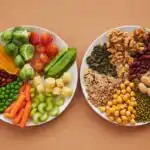
A balanced diet includes a variety of food groups. Examples are:
- Fruits: Apples, oranges, bananas, strawberries, mangoes, and pawpaw.
- Vegetables: Carrots, spinach, broccoli, tomatoes, cucumbers, and bell peppers.
- Grains: Bread, rice, pasta, oats, maize, and millet.
- Protein foods: meat, fish, eggs, beans, groundnuts, and tofu.
- Dairy products: Milk, yogurt, cheese, and other milk products.
Teaching Methods
To deliver this lesson, the teacher will adopt the following methods: Discussion, Question and answer, Visual aids
Instructional Procedures
To deliver this lesson, the teacher will adopt the following steps:
Step 1: Introduction
Time: 5 minutes
Teaching Skill: Set Induction
Teacher’s Activity: Ask pupils what thay ate for breakfast and initiate a discussion about healthy eating.
Pupils’ Activity: Share their breakfast experiences and participate in the discussion.
Step 2: Explanation of Key Concepts
Time: 10 minutes
Teaching Skill: Explanation
Teacher’s Activity: Explain the concept of a balanced diet using simple language and examples.
Pupils’ Activity: Listen attentively and ask clarifying questions.
Step 3: Presentation/Guided Practice
Time: 10 minutes
Teaching Skill: Presentation
Teacher’s Activity: Show pictures of balanced meals and discuss the different food groups.
Pupils’ Activity: Identify the food groups in the pictures and participate in the discussion.
Step 4: Autonomous Practice
Time: 5 minutes
Teaching Skill: Guided Practice
Teacher’s Activity: Ask pupils to list examples of balanced meals.
Pupils’ Activity: List examples of balanced meals.
Step 5: Note-Taking
Time: 5 minutes
Teaching Skill: Note-Taking
Teacher’s Activity: Guide pupils in taking notes on the key concepts.
Pupils’ Activity: Take notes on the key concepts.
Step 6: Evaluation/Review
time: 5 minutes
Teaching Skill: Questioning
Teacher’s Activity: Ask evaluation questions to assess understanding.
Pupils’ Activity: Answer the evaluation questions.
Objective-aligned checks:
- Explain the meaning of a balanced diet.
- List two importance of a balanced diet.
- State two examples of a balanced diet.
Step 7: Conclusion
Time: 2 minutes
Teaching Skill: Summarizing
Teacher’s Activity: Summarize the key concepts and encourage pupils to practice eating a balanced diet.
pupils’ Activity: Listen to the summary and ask any remaining questions.
Lesson Keywords
- Balanced Diet – Eating a variety of foods from different food groups.
- nutrients – Substances in food that help the body grow and stay healthy.
- Food Groups – Categories of food that provide similar nutrients.
- Healthy Eating – Choosing foods that are good for your body.
Lesson Evaluation
To evaluate the learning, the teacher asks pupils to:
- What does a balanced diet mean?
- Why is eating a balanced diet critically important?
- Give an example of a food from each food group in a balanced diet.
- what are some other benefits of eating a balanced diet?
- How can you make sure you are eating a balanced diet?
Assignment/Homework
- List three balanced meals you can eat in a day.
- Draw pictures of foods from each food group.
- Explain to your parents the importance of eating a balanced diet.
Differentiation
- For slower learners: Provide one-on-one assistance and use simpler language.
- For advanced learners: Encourage them to research and present additional examples of balanced diets.
- For visual/auditory/kinesthetic learners: Use visual aids, discussions, and hands-on activities to cater to different learning styles.
Note for Teachers
Ensure to use real-life examples and relatable scenarios to explain the concepts. Encourage pupils to share their own experiences with food and healthy eating.



Community Join the conversation Open discussion +