

Class: Primary three
term: Third Term
Subject: Pre-vocational Studies
Curriculum Theme: Agricultural Science
Previous Lesson: Methods of Food Preservation
Topic: Importance of Food Preservation
Content/Learning Area: Importance of Food Preservation
Time Allocation: 40 minutes
Performance Objectives
By the end of the lesson, pupils should be able to:
- Cognitive Domain:
1. List the importance of food preservation.
2. Explain how food preservation works.
- Affective Domain:
1. Appreciate the necessity of preserving food.
- Psychomotor Domain:
1. Participate actively in class discussions.
- Social Domain:
1. Discuss the importance of food preservation with peers.
Reference Materials
- 9 – Years Basic Education Curriculum
- Abuja Educational Resource Center Scheme of Work
- NAPPS National Unified Scheme of Work
- Relevant Textbooks
Instructional Materials
To deliver this lesson, the teacher will use a whiteboard or chart paper, markers, and relevant pictures or visuals.
Rationale for the Lesson
Understanding food preservation is crucial for reducing food waste and ensuring access to nutritious food throughout the year. This knowledge is valuable for both personal and community well-being.
Prerequisite/Previous Knowledge
Pupils are familiar with different types of food and their sources.
Lesson content
Importance Of Food Preservation
Food preservation is the process of treating food to prevent spoilage and extend its lifespan. This involves stopping or slowing down the growth of microorganisms that cause food to rot.
reasons for Food Preservation
Food preservation is essential for several reasons, ensuring food remains safe, nutritious, and available for longer periods. The following are reasons for food preservation:
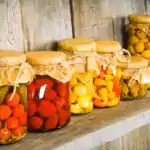
- Prevents Spoilage: Food preservation methods like drying,canning,and freezing prevent food from spoiling quickly,allowing for longer storage.
- Extends Shelf Life: Preserved foods last longer, making seasonal fruits and vegetables available year-round.
- Maintains Nutritional Value: Proper preservation helps retain the nutrients in food, ensuring it remains healthy to eat.
- Ensures Food Availability: Preservation ensures food is available all year, improving food security, especially in areas with seasonal production.
- Saves Money: Buying in bulk and preserving food can save money in the long run due to lower per-unit costs.
- Reduces Food Waste: By extending the shelf life of food, preservation helps to minimize the amount of food that is thrown away due to spoilage.
- Facilitates Transportation: Preserved foods are easier to transport over long distances without spoiling, making them accessible to more people.
Teaching Methods
To deliver this lesson, the teacher will adopt the following methods: Discussion, Question and Answer, Visual Aids.
Instructional Procedures
To deliver this lesson, the teacher will adopt the following steps:
step 1: introduction
Time: 5 minutes
Teaching Skill: Set Induction
Teacher’s Activity: Ask pupils about their understanding of food preservation.
Pupils’ Activity: Respond to the teacher’s questions.
Step 2: Clarification of Key Concepts
Time: 10 minutes
Teaching Skill: Explaining
Teacher’s Activity: Explain the concept of food preservation and its importance.
Pupils’ Activity: listen attentively and ask clarifying questions.
Step 3: Exhibition/Guided Practice
Time: 10 minutes
Teaching Skill: Demonstrating
Teacher’s Activity: Show pictures or videos of different food preservation methods.
Pupils’ Activity: Observe and participate in discussions.
Step 4: Self-reliant Practice
Time: 5 minutes
Teaching Skill: Monitoring
Teacher’s Activity: Guide pupils as they work individually or in pairs to answer questions.
Pupils’ Activity: Answer questions related to the lesson.
Step 5: Note-Taking
Time: 5 minutes
Teaching Skill: Summarizing
Teacher’s Activity: Summarize the key points of the lesson.
Pupils’ Activity: Take notes.
Step 6: Evaluation/Review
time: 5 minutes
Teaching Skill: Assessing
Teacher’s Activity: Review the lesson and answer any remaining questions.
Pupils’ Activity: Participate in the review.
Objective-aligned checks:
- List the importance of food preservation.
- Explain how food preservation works.
Step 7: Conclusion
Time: 2 minutes
Teaching Skill: Summarizing
Teacher’s activity: Conclude the lesson by re-emphasizing the importance of food preservation.
Pupils’ Activity: Listen and summarize the key points.
Lesson Keywords
- Preservation – The process of keeping food safe and edible for a longer time.
- Spoilage – The process by which food becomes unfit to eat.
- Shelf Life – The length of time food can be stored and remain safe to consume.
- Nutritional Value – The amount of nutrients in food.
Lesson Evaluation
To evaluate the learning,the teacher asks pupils to:
- Name three reasons why preserving food is crucial.
- How does food preservation stop spoilage?
- Describe a food preservation method and its advantages.
- Discuss with a partner why food preservation is necessary.
Assignment/Homework
- List five different methods of food preservation.
- Explain how preserving food can help reduce food waste in your home.
- Ask your parents or guardians about the types of food they preserve at home and why.
Differentiation
- For slower learners: Provide one-on-one assistance and simplified explanations.
- For advanced learners: Encourage them to research additional food preservation methods.
- For visual/auditory/kinesthetic learners: Use visual aids, discussions, and hands-on activities to cater to different learning styles.
Note for teachers
ensure to use real-life examples and visual aids to make the lesson engaging and understandable for the pupils. Encourage active participation and discussion to reinforce learning.


Community Join the conversation Open discussion +