

Class: Primary Two
Term: Third Term
Subject: Pre-vocational Studies
Curriculum theme: home Economics
Previous Lesson:
topic: Home furnishing
Content/Learning Area: What is Furniture?, furnitures in the Bedroom, Furnitures in the Sitting Room
Time Allocation: 40 minutes
Performance Objectives
by the end of the lesson, pupils should be able to:
- Cognitive Domain:
1. Identify and name furniture items made of wood and those used in different rooms of the home.
2. Explain the purpose of different furniture items.
- Psychomotor Domain:
1. Show thankfulness for the aesthetics and functionality of different types of home furniture.
- Affective Domain:
1. Discuss the use of different furniture items in a home setting with peers.
- Social Domain:
1. Work collaboratively with peers during group activities.
Reference Materials
- 9 – Years basic Education Curriculum
- Abuja Educational Resource Center Scheme of Work
- NAPPS national Unified scheme of Work
- relevant textbooks
Instructional Materials
To deliver this lesson, the teacher will use the following materials:
- Pictures of different furniture items
- Whiteboard or chart paper
- Markers
Rationale for the Lesson
Understanding home furnishing helps pupils appreciate the functionality and aesthetics of their homes. This knowledge is valuable for organizing their belongings and creating a cozy living space. It also lays a foundation for future studies in design and home economics.
Prerequisite/previous knowledge
Pupils are familiar with common household items.
Lesson Content
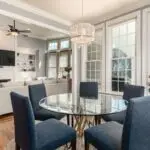
What is Furniture?
Furniture are things we use to make our homes useful and agreeable. They are made to do specific jobs, like giving us places to sit, store things, or for support.
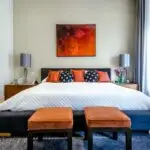
furnitures in the Bedroom
Furniture in the bedroom are essential for comfort,storage,and relaxation.
The following are examples of furniture commonly found in the bedroom:
- Bed: The most crucial piece; where we sleep.It comes in different sizes and styles.
- wardrobe: A tall cabinet to store clothes and other things.
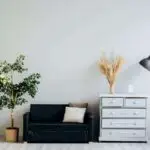
- Dresser: A smaller cabinet with drawers, often with a mirror, for storing smaller items.
- Nightstand: A small table next to the bed for things we need nearby.
- Bookshelf: For storing and organizing books.
- Mirror: used for grooming and personal care.
- Chair: Provides a place to sit while dressing or reading.
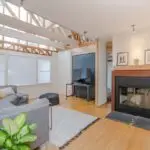
Furnitures in the Sitting Room
Furniture in the sitting room are designed for comfort, entertainment, and socializing.
These include:
- Sofa: A large, comfy seat for many peopel.
- Coffee Table: A low table in the centre for drinks and things.
- TV stand: Holds the television and other electronics.
- Armchair: A comfortable single-seat chair.
- Side Table: A small table next to a sofa or armchair.
- Bookshelves: For storing books and decorative items.
- Display Cabinet: Used to showcase decorative items and valuables.
Teaching Methods
To deliver this lesson, the teacher will adopt the following methods: Discussion, Question and Answer, Picture identification
Instructional Procedures
To deliver this lesson, the teacher will adopt the following steps:
Step 1: Introduction
Time: 5 minutes
Teaching Skill: Set Induction
Teacher’s Activity: Asks pupils to name furniture items they see at home.
Pupils’ Activity: Respond to the teacher’s questions.
Step 2: explanation of Key Concepts
Time: 10 minutes
Teaching Skill: Explaining
Teacher’s Activity: Explains the meaning of home furnishing and furniture.
pupils’ Activity: Listen attentively and ask clarifying questions.
Step 3: Presentation/Guided Practice
Time: 10 minutes
teaching Skill: Demonstrating
Teacher’s Activity: Shows pictures of furniture items in different rooms and discusses their uses.
Pupils’ Activity: Identify and name the furniture items.
Step 4: Independent Practice
time: 5 minutes
Teaching Skill: Monitoring
Teacher’s Activity: Asks pupils to draw their favorite furniture item.
Pupils’ Activity: draw their favorite furniture item.
Step 5: Note-Taking
Time: 5 minutes
Teaching Skill: Guiding
Teacher’s Activity: Guides pupils in writing short notes on the lesson.Pupils’ activity: Write short notes on the lesson.
Step 6: Evaluation/Review
Time: 5 minutes
Teaching Skill: Questioning
Teacher’s Activity: Asks review questions.Pupils’ Activity: answer review questions.
Objective-aligned checks:
- Identify and name furniture items made of wood and those used in different rooms of the home.
- Explain the purpose of different furniture items.
- Show thankfulness for the aesthetics and functionality of different types of home furniture.
Step 7: Conclusion
Time: 5 minutes
Teaching Skill: Summarizing
Teacher’s Activity: Summarizes the key points of the lesson and assigns homework.
Pupils’ Activity: Listen to the summary and note the homework assignment.
Lesson Keywords
- furniture – Items used to make homes comfortable and functional.
- Bedroom – A room for sleeping and resting.
- Sitting room – A room for relaxing and entertaining guests.
- Bed – A piece of furniture used for sleeping.
- Sofa – A comfortable seat for multiple people.
Lesson Evaluation
To evaluate the learning, the teacher asks pupils to:
- What is the main reason we have furniture in our homes?
- name two furniture items in the bedroom and two in the sitting room.
- Why is furniture significant?
- What’s the difference between a sofa and an armchair?
- How can furniture make our homes prettier?
Assignment/Homework
- Draw your bedroom and label the furniture items.
- List three furniture items found in your sitting room and explain their uses.
Differentiation
- For slower learners: Provide one-on-one assistance and use simpler language.
- For advanced learners: Encourage them to research different furniture styles and materials.
- For visual/auditory/kinesthetic learners: Use visual aids, verbal explanations, and hands-on activities.
Note for Teachers
Ensure to use real-life examples and relatable scenarios to explain the concepts. Encourage pupils to share their experiences with different furniture items at home to make the lesson more engaging.
Community Join the conversation Open discussion +