

Class: Primary Two
Term: First Term
Subject: Pre-vocational Studies
Curriculum Theme: Home Economics
Previous Lesson:
Topic: Exercise
Content/Learning Area: What is Exercise?,Types of Exercise
time Allocation: 40 minutes
Performance Objectives
By the end of the lesson,pupils should be able to:
- Cognitive Domain:
1. Define exercise.
2. List at least five types of exercise.
3. explain the benefits of exercise.
- Affective Domain:
1.Appreciate the importance of regular exercise.
2. Show enthusiasm for participating in physical activities.
- Psychomotor Domain:
1. demonstrate at least two types of exercise.
- Social Domain:
1. Participate actively in group exercises.
Reference Materials
- 9 – Years Basic Education Curriculum
- Abuja Educational Resource Center Scheme of Work
- NAPPS National Unified Scheme of Work
- Online Details
- Relevant textbooks
Instructional Materials
To deliver this lesson, the teacher will use the following materials:
- Whiteboard or chart paper
- Markers or crayons
- optional: Jump ropes
Rationale for the Lesson
This lesson introduces exercise and its importance for physical health. Understanding exercise early encourages healthy habits for life.
Prerequisite/Previous Knowledge
Pupils are familiar with basic physical activities like running and playing.
lesson Content
What is Exercise?
Exercise is any physical activity that helps keep our bodies strong and healthy. It’s like giving our bodies a workout to make them better at moving and doing things. There are many different types of exercise, each with its own benefits.
Types of Exercise
Exercise encompasses various physical activities that contribute to overall health and fitness. These include:
The following are examples of types of exercise:
- Jumping Jacks: Jumping jacks are a fun and simple exercise where you jump while spreading your arms and legs wide apart, then return to a standing position.This improves cardiovascular health and coordination.
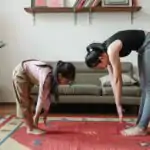
- Stretching: Stretching exercises involve reaching high, bending to touch your toes, or stretching your legs. Stretching keeps muscles flexible and prevents injuries.
- Running in Place: Running in place is like jogging without moving. It increases your heart rate and improves cardiovascular fitness.
- Bicycle Kicks: While lying on your back, pedal your legs in the air like riding a bicycle. This strengthens leg muscles and core strength.
- Skipping Rope: skipping rope improves coordination and cardiovascular health. you can use a real rope or imagine one. It’s a fun way to burn calories.
- Sit-ups: Sit-ups involve lying on your back and lifting your upper body towards your knees. This strengthens abdominal muscles and improves core stability.
- push-ups: Push-ups involve lying face down and pushing your body up with your arms. This strengthens chest, shoulder, and arm muscles.
- Squats: Squats involve bending your knees and lowering your hips as if sitting in a chair. This strengthens leg and gluteal muscles.
Teaching Methods
To deliver this lesson, the teacher will adopt the following methods: Exhibition, Clarification, Question and Answer, and Discussion.
Instructional Procedures
To deliver this lesson,the teacher will adopt the following steps:
Step 1: Introduction
Time: 5 minutes
Teaching Skill: Set Induction
teacher’s Activity: Briefly review the previous lesson and introduce the topic of exercise. Ask pupils what they think exercise is.
Pupils’ Activity: Participate in the discussion and share their ideas about exercise.
Step 2: Explanation of Key Concepts
Time: 10 minutes
Teaching Skill: Explanation,Definition
Teacher’s Activity: Define exercise and explain its importance for health. Explain that exercise is any physical activity that keeps our bodies strong and healthy.
Pupils’ Activity: Listen attentively and ask clarifying questions.
Step 3: Demonstration/Guided Practice
time: 15 minutes
Teaching Skill: Demonstration, Guided Practice
Teacher’s Activity: Demonstrate different types of exercise, such as jumping jacks, stretching, running in place, bicycle kicks, and skipping rope. Guide pupils in performing each exercise.
Pupils’ Activity: Observe the demonstrations and participate in the guided practice.
Step 4: Autonomous Practice
Time: 5 minutes
Teaching Skill: Monitoring, Feedback
Teacher’s Activity: Allow pupils to practice the exercises independently. Monitor their progress and provide feedback.
Pupils’ Activity: Practice the exercises independently.
Step 5: Note-Taking
Time: 2 minutes
Teaching Skill: Note-Taking
Teacher’s Activity: Guide pupils in taking notes on the different types of exercise and their benefits.
Pupils’ Activity: Take notes on the lesson.
Step 6: Evaluation/Review
Time: 3 minutes
Teaching Skill: Questioning, Feedback
Teacher’s Activity: Ask evaluation questions to assess pupils’ understanding.
Pupils’ Activity: Answer the evaluation questions.
Objective-aligned checks:
- Define exercise.
- List at least five types of exercise.
- explain the benefits of exercise.
Step 7: Conclusion
Time: 2 minutes
Teaching Skill: Summarizing
Teacher’s Activity: Summarize the key points about exercise and its benefits.
Pupils’ Activity: Listen to the summary and ask any remaining questions.
Lesson Keywords
- Exercise – Physical activity that keeps our bodies strong and healthy.
- Jumping Jacks – A cardiovascular exercise involving jumping and spreading arms and legs.
- Stretching – Exercises that keep muscles flexible and prevent injuries.
- Running in Place – Jogging without moving, improving cardiovascular fitness.
- Bicycle Kicks – Leg exercise that strengthens leg muscles and core strength.
Lesson evaluation
To evaluate the learning, the teacher asks pupils to:
- What is exercise?
- Name two types of exercise.
- Why is exercise important?
- Can you think of other types of exercise?
- How can you make exercise fun?
Assignment/Homework
- List three additional types of exercise not discussed in class.
- Explain how regular exercise can help you stay healthy.
- Perform one type of exercise for 5 minutes each day and record how you feel.
Differentiation
- For slower learners: Provide one-on-one assistance during guided practice.
- For advanced learners: Encourage them to think of additional types of exercise and their benefits.
- For visual/auditory/kinesthetic learners: Use visual aids, verbal instructions, and hands-on demonstrations to cater to different learning styles.
Note for Teachers
Ensure to demonstrate each exercise clearly and provide ample time for pupils to practice. Encourage pupils to ask questions and provide positive reinforcement throughout the lesson. Emphasize the importance of making exercise a fun and regular part of their daily routine.



Community Join the conversation Open discussion +