

Class: Primary 5
Term: 3rd Term
Subject: basic Science And Technology
Curriculum Theme: Physical And Health Education
Previous Lesson: Meaning And Examples Of Diseases
Topic: Meaning Of Sickness And Differences Between sicknesses And Diseases
Content/Learning Area: Meaning of sickness,differences between sicknesses and diseases
Time Allocation: 40 minutes
Performance Objectives
By the end of the lesson,pupils should be able to:
- Cognitive domain: Explain the meaning of sickness and state differences between sickness and disease
- Affective domain: Show concern for classmates who are sick or unwell
- Psychomotor Domain: Role-play scenarios of a healthy and a sick person
- Social Domain: Discuss the importance of helping people who are sick
Reference Materials
The following resources were used in planning this lesson:
- 9 years Basic education Curriculum
- Abuja Educational Resource Center Scheme of Work
- NAPPS National Unified Scheme of Work
- Online Details from: Britannica – Sickness Definition & Meaning
- Relevant Textbooks
Instructional Materials
To deliver this lesson, the teacher will use the following materials:
- Flashcards showing sick and healthy individuals
- Charts showing symptoms of sickness
- storybooks or short skits on health
- Whiteboard and marker
- Real-life examples or role-playing kits
Rationale for the Lesson
Understanding the difference between sickness and disease helps pupils care better for themselves and others, and avoid spreading infections.
Prerequisite/Previous Knowledge
Pupils have basic understanding of what it means to feel unwell or visit a hospital when sick.
Lesson Content
Meaning of Sickness And Differences Between Sicknesses And Diseases
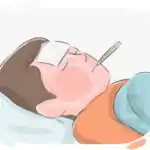
Sickness is the feeling of not being well or healthy. It means something is wrong in the body. It can make someone feel weak, tired, or unable to do normal things.
The following are examples of sickness:
- Headache
- Cough
- Stomach pain
- Fever
- Body weakness
- Fatigue
- Dizziness
- Nausea
Differences Between Sicknesses and diseases
Sickness and disease are not the same. They have some differences.
They are:
- sickness is a general feeling of not being well, while Disease is a clear health problem that can be tested
- Sickness may go away quickly but Disease may last longer
- Sickness may not always show signs, but Disease often has signs and causes
Sickness and Disease
Sickness is the personal feeling or experience of being unwell. Disease is a condition that disrupts normal body structure or function and may be diagnosed from signs, symptoms and tests. A person can carry some diseases before feeling sick, and tiredness alone does not prove a particular disease.
Report persistent or severe symptoms to a responsible adult and qualified health worker. Pupils should not diagnose classmates, share medicine or mock anyone who is ill.
Teaching Methods
To deliver this lesson, the teacher will adopt the following methods: Discussion, lecture, storytelling, clarification, visual aids, group work
Instructional Procedures
To deliver this lesson, the teacher will adopt the following steps:
Step 1: Introduction
Time: 5 mins
Teaching Skill: Set Induction
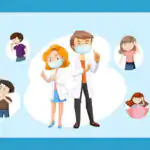
Teacher’s Activity: The teacher shows pictures of sick and healthy children, asks pupils what they see and how the children might potentially be feeling
Pupils’ Activity: Pupils observe, listen and respond to questions
Step 2: Meaning of sickness
Time: 8 mins
Teaching Skill: Explanation
Teacher’s Activity: Teacher explains what sickness means with examples and describes how it makes people feel
Pupils’ Activity: Pupils listen, give examples of when they felt sick
Step 3: Meaning of Disease
time: 7 mins
Teaching Skill: explanation
Teacher’s Activity: Teacher defines disease, gives examples like malaria and typhoid, and explains how they affect the body
Pupils’ activity: Pupils listen, mention known diseases
Step 4: Differences Between sickness and Disease
Time: 8 mins
Teaching Skill: Comparison
Teacher’s Activity: Teacher uses a chart to compare sickness and disease, lists their differences and asks pupils to say more differences
Pupils’ Activity: Pupils observe the chart, answer questions and give examples
Step 5: Note-Taking
Time: 4 mins
Teaching Skill: Reinforcement
Teacher’s Activity: Teacher dictates the note on the board clearly and slowly for pupils to copy
Pupils’ Activity: Pupils write down the note in their exercise books
Step 6: Evaluation/Review
Time: 4 mins
Teaching Skill: Assessment
Teacher’s Activity: Teacher asks pupils questions on sickness and disease, and asks them to name differences between them
Pupils’ Activity: Pupils answer the questions orally
Objective-aligned checks:
- Explain the meaning of sickness and state differences between sickness and disease.
- Show concern for classmates who are sick or unwell.
Step 7: Conclusion
Time: 4 mins
Teaching Skill: Instructional, Cognitive, Social
Teacher’s Activity: Teacher summarises the lesson, reminds pupils to stay clean and healthy, and encourages them to help those who are sick
Pupils’ Activity: Pupils listen and ask final questions if needed
Lesson Keywords
- Sickness – not feeling well
- Disease – a serious health problem
- Symptoms – signs of sickness or disease
- Healthy – feeling well and strong
- Infection – spread of harmful germs in the body
- Illness – a state of being sick
Lesson Evaluation
To evaluate the learning, the teacher asks pupils to:
- What is sickness?
- Mention three examples of sickness
- Say two differences between sickness and disease
- Role-play a sick person and a healthy person
Assignment/Homework
- List five ways to prevent sickness.
- Explain the difference between a communicable and non-communicable disease.
- Write a short paragraph on why it is indeed crucial to take care of our health.
Differentiation
- For slower learners: The teacher will pair pupils for peer explanation and give extra support to those who need help understanding with visual aids and repetition.
- For advanced learners: Encourage them to research different types of diseases and their symptoms.
- For visual/auditory/kinesthetic learners: Use visual aids, discussions, and role-playing activities to cater to different learning styles.
Note for Teachers
Use real-life examples and ask pupils to share their experiences with being sick.Make use of pictures or simple dramatization for better understanding.


Community Join the conversation Open discussion +