

Class: Primary Two
Term: Third Term
Subject: National Values Education
Curriculum Theme: Social Studies
Previous Lesson: Drug Abuse, Ways Of Preventing Drug Abuse
Topic: Harmful Substances
Content/Learning Area: Meaning of Harmful Substances, Identification of Harmful Substances, Avoidance of harmful Substances, Collaboration in Avoiding harmful Substances
Time Allocation: 40 minutes
Performance Objectives
By the end of the lesson, pupils should be able to:
- Cognitive Domain:
– Identify and define harmful substances.
– Explain the dangers of harmful substances.
- psychomotor Domain:
– Demonstrate ways to avoid harmful substances.
- Affective Domain:
– Develop a negative attitude towards the use of harmful substances.
- Social Domain:
– collaborate with peers to share strategies for avoiding harmful substances.
Reference Materials
- 9 – Years Basic Education Curriculum
- abuja Educational Resource Center Scheme of Work
- NAPPS national Unified Scheme of Work
- Relevant Textbooks
Instructional Materials
To deliver this lesson, the teacher will employ the help of the following materials:
- Whiteboard or chart paper
- Markers or crayons
- Pictures of harmful substances
Rationale for the Lesson
Understanding harmful substances is crucial for children’s safety and well-being. This lesson provides a foundation for making informed decisions about their health and avoiding risky situations.
Prerequisite/Previous Knowledge
The teacher will begin by asking pupils what they remember from the previous lesson on drugs. A brief review will be conducted, followed by introducing the topic of harmful substances and asking pupils to share any prior knowledge they have.
Lesson Content
Meaning Of Harmful Substances
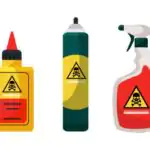
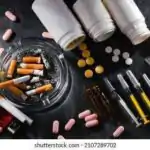
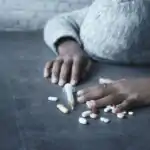
Harmful substances are things that can harm our bodies or make us sick if we touch, eat, or smell them. They are unsafe to use without adult permission. Harmful substances include:
Examples of Harmful Substances
Harmful substances come in various forms and can be found in different places.These include:
- Drugs: Substances that change how your body and mind work. Some are legal (like medicine), but others are illegal and hazardous.
- Alcohol: A drink that can make you feel dizzy and sleepy. Children should not drink alcohol.
- Household Chemicals: Chemicals like bleach can be harmful if touched or smelled. Always ask an adult before using them.
- poisons: Substances that can make you very sick or kill you if ingested.
- Tobacco: Products like cigarettes contain nicotine, which is addictive and harmful to health.
- Aerosols: Sprays that contain chemicals that can be harmful if inhaled.
Avoiding Harmful Substances
It’s crucial to avoid harmful substances. Always ask a grown-up before touching or using anything unfamiliar. Harmful substances can be found in many places, so it’s crucial to be careful and aware of your surroundings.
Teaching Methods
To deliver this lesson, the teacher will adopt the following methods: Discussion, Question and answer, Group work
Instructional Procedures
To deliver this lesson, the teacher will adopt the following steps:
Step 1: Introduction
Time: 5 minutes
Teaching Skill: Set Induction
Teacher’s Activity: Review previous lesson on drugs. Introduce the topic of harmful substances.pupils’ Activity: Participate in review, listen attentively to introduction.
Step 2: Clarification of Key Concepts
Time: 10 minutes
Teaching Skill: Explaining
Teacher’s Activity: Define harmful substances and give examples.
Pupils’ activity: Listen attentively, ask clarifying questions.
Step 3: Exhibition/Guided Practice
Time: 10 minutes
Teaching Skill: Modeling
Teacher’s Activity: Show pictures of harmful substances and discuss ways to avoid them.
Pupils’ Activity: Observe, participate in discussion.
Step 4: Self-Reliant Practice
Time: 5 minutes
Teaching Skill: Monitoring
Teacher’s Activity: Facilitate group work on strategies for avoiding harmful substances.
Pupils’ Activity: Work in groups,share ideas.
Step 5: Note-Taking
Time: 5 minutes
Teaching Skill: Summarizing
Teacher’s Activity: summarize key points on the board.
Pupils’ Activity: take notes.
Step 6: Evaluation/Review
Time: 5 minutes
Teaching Skill: Questioning
Teacher’s Activity: Ask review questions.
Pupils’ Activity: Answer questions.
Step 7: Conclusion
Time: 5 minutes
Teaching Skill: Summarizing
teacher’s Activity: Conclude the lesson by reviewing the key points and emphasizing the importance of staying safe from harmful substances.
Pupils’ Activity: Listen attentively and ask any final questions.
Lesson Keywords
- Harmful Substances – Things that can harm our bodies or make us sick.
- Drugs – Substances that change how your body and mind work.
- Alcohol – A drink that can make you feel dizzy and sleepy.
- Poisons – Substances that can make you very sick or kill you if ingested.
- Household Chemicals – Substances used at home that can be dangerous if not used properly.
Lesson Evaluation
To evaluate the learning, the teacher asks pupils to:
- What are harmful substances?
- Give two examples of harmful substances.
- Why should we avoid harmful substances?
- How would you politely refuse a harmful substance offered by a friend?
- What are some ways to stay safe from harmful substances?
Assignment/Homework
- List five examples of harmful substances you might find at home.
- Write a short paragraph explaining why it is important to ask an adult before using any unfamiliar substance.
- Draw a picture showing a safe way to store harmful substances at home.
Differentiation
- for slower learners: Provide one-on-one assistance and use simpler language.
- For advanced learners: Encourage them to research additional examples of harmful substances and share their findings with the class.
- For visual/auditory/kinesthetic learners: Use visual aids, discussions, and hands-on activities to cater to different learning styles.
Note for Teachers
Ensure to use real-life examples and scenarios to make the lesson relatable and engaging for the pupils. Emphasize the importance of seeking help from trusted adults when faced with possibly harmful substances.
Community Join the conversation Open discussion +