

Class: Primary Two
Term: First Term
Subject: National Values Education
Curriculum Theme: Social Studies
Previous Lesson:
Topic: Greeting And Respecting Elders In Our Culture
Content/Learning Area: Identifying different ways of greeting, Understanding the importance of greeting and respecting elders in our culture, Practicing using appropriate greetings in various situations
Time Allocation: 40 minutes
Performance Objectives
By the end of the lesson, pupils should be able to:
- Cognitive Domain:
1. Identify different ways of greeting elders.
2. Explain the importance of greeting and respecting elders.
3. Describe appropriate greetings for various situations.
- psychomotor Domain:
1. Demonstrate appropriate greetings (handshake,bow,curtsy,wave).
2. Practice using verbal greetings and honorifics.
- Affective Domain:
1. Show respect and politeness when greeting elders.
2. value the importance of cultural traditions.
- Social Domain:
1.Interact respectfully with elders and peers.
2. Contribute positively to community relationships.
Reference Materials
- 9 – Years Basic Education curriculum
- Abuja Educational Resource Center Scheme of Work
- NAPPS national unified Scheme of Work
- Online Details
- Relevant Textbooks
Instructional Materials
To deliver this lesson, the teacher will use the following materials:
- Whiteboard or chart paper
- Markers or crayons
- Pictures depicting different greetings
Rationale for the Lesson
This lesson teaches essential social skills and cultural understanding. Respecting elders fosters positive relationships and strengthens community bonds, contributing to a harmonious society.
Prerequisite/Previous Knowledge
Pupils are familiar with basic greetings used within their families.
Lesson Content
Greeting And Respecting Elders In Our Culture (Nigeria)
Greeting and respecting elders are crucial aspects of our culture, demonstrating politeness and good manners. Various methods exist, some specific to greeting elders.
What are some ways of greeting elders?
There are various ways of greeting elders in our culture. These include:
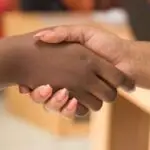
- Handshakes: A firm handshake is common, especially in formal settings.
- Bows: A bow shows respect,often in traditional settings.
- Curtsies: A curtsy is a respectful gesture often used by women.
- Waves: A wave is a casual greeting from a distance.
- Verbal greetings: “Good morning,” “Good afternoon,” or “Good evening” are polite.
- Using honorifics: Some cultures use special words or phrases to show respect. Examples include using titles like “Sir,” “Madam,” “Chief,” or “Elder” when addressing them.
- Kneeling or prostrating: In some cultures, kneeling (for women) or prostrating (for men) is a sign of deep respect.
- Removing hats or head coverings: Removing one’s hat or head covering is a sign of respect in many cultures.
Why is it meaningful to greet and respect elders?
Greeting and respecting elders is significant for several reasons. These include:
- It shows good manners: Greeting elders demonstrates respect and politeness.
- It strengthens relationships: Greeting elders helps build strong relationships within the community.
- It preserves cultural traditions: Greeting elders is a vital part of our cultural heritage.
- It sets a good example for others: Greeting elders sets a positive example for younger generations.
- It promotes harmony: Respecting elders fosters a sense of harmony and cooperation within the community.
- it acknowledges wisdom and experience: Elders are often seen as sources of wisdom and experience, and greeting them acknowledges their value.
- It reinforces social values: Greeting elders reinforces crucial social values such as respect, humility, and consideration for others.
- It ensures cultural continuity: By teaching younger generations to respect elders, we ensure the continuity of our cultural traditions and values.
How can we practice greeting elders?
There are several ways to practice greeting elders respectfully. These include:
- Use appropriate greetings: choose greetings suitable for the situation and person.
- Be respectful: Show respect through polite language and body language.
- Make eye contact: Eye contact shows attention and respect.
- Smile: A smile is a friendly way to show happiness.
- Listen attentively: Pay attention when elders are speaking and show genuine interest in what thay have to say.
- Offer assistance: Offer help with tasks or errands as a sign of respect and consideration.
- Use respectful language: Avoid slang or informal language when speaking to elders.
- Show patience: Be patient and understanding, especially if elders are speaking slowly or have difficulty hearing.
Teaching Methods
To deliver this lesson, the teacher will adopt the following methods: Discussion, Presentation, Role-playing
Instructional Procedures
To deliver this lesson, the teacher will adopt the following steps:
Step 1: Introduction (Set Induction)
Time: 5 minutes
Teaching Skill: Questioning, Discussion
teacher’s Activity: Initiates a discussion on greetings and their importance.Pupils’ Activity: Share their experiences and ideas about greetings.
Step 2: description of Key Concepts
Time: 10 minutes
Teaching Skill: Explanation,Demonstration
Teacher’s Activity: Explains different ways of greeting elders (verbal,physical gestures).
Pupils’ Activity: Listen attentively and ask clarifying questions.
Step 3: Demonstration/Guided Practice
Time: 10 minutes
Teaching Skill: Modeling, Guided Practice
Teacher’s Activity: Demonstrates appropriate greetings; guides pupils in practicing greetings.
Pupils’ Activity: Participate in demonstrations and practice greetings with peers.
Step 4: Autonomous Practice
Time: 5 minutes
Teaching Skill: Monitoring, Feedback
Teacher’s Activity: Observes pupils practicing greetings independently.
pupils’ Activity: practice greetings with peers or individually.
Step 5: Note-Taking
Time: 5 minutes
Teaching Skill: Note-Taking,Summarizing
Teacher’s Activity: Guides pupils in summarizing key points.
Pupils’ Activity: Take notes on key concepts and examples.
Step 6: Evaluation/Review
Time: 5 minutes
Teaching Skill: Questioning, Feedback
Teacher’s Activity: Asks evaluation questions; provides feedback.
Pupils’ Activity: Answer evaluation questions.
Objective-aligned checks:
- Identify different ways of greeting elders.
- Explain the importance of greeting and respecting elders.
- Describe appropriate greetings for various situations.
Step 7: Conclusion
Time: 2 minutes
Teaching Skill: Summarizing, Reinforcement
Teacher’s Activity: Summarizes the lesson and emphasizes the importance of respecting elders.
Pupils’ Activity: Listen and ask any final questions.
Lesson Keywords
- Greeting – A polite expression of goodwill or welcome.
- Respect – A feeling of deep admiration for someone elicited by their abilities,qualities,or achievements.
- Elders – People who are older and often have more experience and wisdom.
- Culture – The customs,arts,social institutions,and achievements of a particular nation,people,or group.
- Honorifics – A title or word implying or expressing respect.
Lesson Evaluation
To evaluate the learning, the teacher asks pupils to:
- Name three ways to greet elders.
- Why is it important to show respect to elders?
- How can you show respect when greeting an elder?
- Think of another way to show respect to elders.
- How does a polite greeting make you feel?
Assignment/Homework
- Practice greeting elders in your family and community this week.
- Write a short paragraph about why it is important to respect elders in our culture.
- Ask an elder in your family about traditional greetings and share what you learn with the class next week.
Differentiation
- For slower learners: Provide one-on-one assistance and use simpler language.
- For advanced learners: Research additional ways to show respect in different cultures.
- For visual/auditory/kinesthetic learners: Use visual aids, verbal explanations, and role-playing activities to cater to different learning styles.
Note for Teachers
Encourage pupils to share personal experiences and stories related to greeting and respecting elders to make the lesson more engaging and relevant. Emphasize the importance of cultural sensitivity and adapting greetings to different situations and individuals.


Community Join the conversation Open discussion +