

Class: Primary Two
term: First Term
Subject: National Values Education
Curriculum Theme: Social Studies
Previous Lesson: Consequences of Eating Together as a Family
Topic: The Importance of food to Our Growth
Content/Learning Area: What are Nutrients?, Identifying Nutrients
Time Allocation: 40 minutes
Performance objectives
By the end of the lesson, pupils should be able to:
- Cognitive Domain:
1.Mention the nutrients we get from different foods.
2.Understand the importance of eating a variety of foods.
- Psychomotor Domain:
1. Actively participate in class discussions.
2. Complete the evaluation questions accurately.
- Affective Domain:
1. Show interest in learning about healthy eating habits.2. Appreciate the importance of a balanced diet.
- Social Domain:
1. Work cooperatively with classmates during activities.
2. Share their knowledge and understanding with others.
reference Materials
- 9 – Years Basic Education Curriculum
- Abuja Educational Resource Center Scheme of Work
- NAPPS National Unified Scheme of Work
- Relevant Textbooks
Instructional Materials
To deliver this lesson, the teacher will use the following materials:
- Whiteboard or chart paper
- Markers or crayons
- Pictures of different foods
Rationale for the Lesson
This lesson is crucial for establishing healthy eating habits from a young age. Understanding nutrition is essential for physical and mental growth,impacting their health and well-being throughout their lives.
Prerequisite/Previous Knowledge
The teacher will start by asking pupils what thay ate for breakfast. This will lead into a discussion about the importance of food for energy and growth, setting the stage for the lesson.
Lesson Content
The Importance Of Food To Our Growth
Food is essential for our growth and well-being. It gives us the energy to play, learn, and grow.
What are Nutrients?
Nutrients are substances in food that our bodies need to work properly. Different nutrients have different roles.
The following are examples of nutrients:
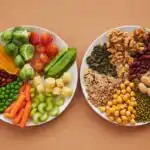
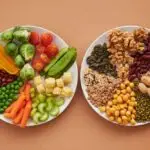
- Carbohydrates: Give us energy. Found in bread, rice, pasta, and fruits.
- Proteins: Help build and repair our bodies. Found in meat, fish, eggs, and beans.
- Fats: Provide energy and protect our organs. Found in butter, oil, and nuts.
- Vitamins: Help our bodies work properly. Found in fruits, vegetables, and dairy.
- Minerals: Also essential for our bodies to function. Found in leafy greens, milk, and meat.
- Water: Helps transport nutrients and regulate body temperature. Found in water, fruits, and vegetables.
- fiber: Aids digestion and helps maintain healthy cholesterol levels. Found in whole grains, fruits, and vegetables.
Identifying Nutrients
Different foods have different combinations of nutrients.
Examples are:
- Milk: Has proteins, calcium, and vitamin D.
- Banana: Has carbohydrates, fiber, vitamin C, and vitamin B6.
- Eggs: Have proteins, vitamin B12, vitamin D, and choline.
- Carrots: Have carbohydrates, fiber, vitamin A, and vitamin K.
- Fish: Provides proteins, omega-3 fatty acids, vitamin D, and vitamin B12.
- Oranges: Rich in vitamin C, carbohydrates, and antioxidants.
- Spinach: Contains iron, vitamin K, vitamin A, and fiber.
These examples show how different foods give us the nutrients we need to grow and be healthy.
Teaching Methods
To deliver this lesson, the teacher will adopt the following methods: Discussion, Question and answer, Visual aids
Instructional Procedures
To deliver this lesson, the teacher will adopt the following steps:
Step 1: Introduction
Time: 5 minutes
Teaching Skill: Set Induction
Teacher’s Activity: Ask pupils what they ate for breakfast and initiate a discussion about the importance of food.
Pupils’ Activity: Share their breakfast experiences and participate in the discussion.
Step 2: Clarification of Key Concepts
Time: 15 minutes
Teaching Skill: Explaining
Teacher’s activity: Explain the concept of nutrients and their importance, using visual aids.
Pupils’ Activity: Listen attentively and ask clarifying questions.
Step 3: Presentation/Guided Practice
Time: 10 minutes
Teaching Skill: Modeling
Teacher’s Activity: Show pictures of different foods and discuss the nutrients they contain.
Pupils’ Activity: Identify the nutrients in each food shown.
Step 4: Self-reliant Practice
Time: 5 minutes
Teaching Skill: Monitoring
Teacher’s Activity: Pupils answer evaluation questions individually.
Pupils’ Activity: Answer the evaluation questions independently.
Step 5: note-Taking
Time: 2 minutes
Teaching Skill: Summarizing
Teacher’s Activity: Summarize the key points of the lesson.
Pupils’ Activity: Take notes on the key points.
Step 6: Evaluation/Review
Time: 3 minutes
Teaching Skill: Assessing
teacher’s Activity: Review answers to evaluation questions.
Pupils’ Activity: Participate in the review.
Objective-aligned checks:
- Mention the nutrients we get from different foods.
- Show interest in learning about healthy eating habits.
Step 7: Conclusion
Time: 2 minutes
Teaching Skill: Summarizing
Teacher’s Activity: Summarize the key points about the importance of food and nutrients for growth and well-being,emphasizing the need for a balanced diet.
Pupils’ Activity: Listen attentively and ask questions for clarification.
Lesson Keywords
- Nutrients – Substances in food that our bodies need to work properly.
- Carbohydrates – Nutrients that give us energy.
- Proteins – Nutrients that help build and repair our bodies.
- Vitamins – Nutrients that help our bodies work properly.
- Minerals – nutrients essential for our bodies to function.
Lesson evaluation
To evaluate the learning, the teacher asks pupils to:
- What are nutrients?
- Name two nutrients found in carbohydrates.
- Why is it significant to eat a variety of foods?
- What are some foods that provide protein?
- What are some foods that provide vitamin C?
Assignment/Homework
- List five different foods you ate yesterday and identify the main nutrients they contain.
- Explain why it is important to eat a balanced diet.
- Research and write down three additional foods and their nutrient content.
Differentiation
- For slower learners: Provide one-on-one assistance and use simpler language.
- For advanced learners: Encourage them to research additional foods and their nutrient content.
- For visual/auditory/kinesthetic learners: Use visual aids, interactive discussions, and hands-on activities to cater to different learning styles.
Note for Teachers
Ensure to use real-life examples and relatable scenarios to explain the importance of nutrients and a balanced diet. Encourage pupils to share their own experiences with different foods and their effects on their energy levels and overall well-being.


Community Join the conversation Open discussion +