

Class: Primary Two
Term: Second Term
Subject: National Values Education
Curriculum Theme: Social Studies
previous Lesson: Prevention of Accidents in Accidents in the School/Home
Topic: Accidents In The School/Home and Caring For Accident Victims
Content/Learning Area: Identifying ways of caring for accident victims, Applying basic first aid, Staying calm in emergency situations
Time Allocation: 40 minutes
performance Objectives
By the end of the lesson, pupils should be able to:
- Cognitive Domain:
1. identify three ways of caring for accident victims.
2. Explain the importance of staying calm in an accident.
3. Describe the steps involved in basic first aid.
- Affective Domain:
1. Show empathy and concern for accident victims.
2. Develop a sense of duty in helping others.
- Psychomotor Domain:
1. Demonstrate how to check for danger before approaching an accident victim.
2. Practice calling for help in a simulated emergency.
- Social Domain:
1. Work cooperatively with others in a simulated emergency situation.2. Communicate effectively to seek help.
Reference Materials
- 9 – Years Basic Education Curriculum
- Abuja Educational Resource Center Scheme of Work
- NAPPS National Unified Scheme of Work
- Relevant Textbooks
Instructional Materials
To deliver this lesson, the teacher will use the following materials:
- Whiteboard or chart paper
- Markers or crayons
- Pictures depicting accidents and first aid
Rationale for the Lesson
This lesson is crucial for equipping young learners with essential life skills. knowing how to respond appropriately to accidents promotes safety and well-being, both for themselves and others. This knowledge is valuable in various situations and builds a sense of responsibility.
Prerequisite/Previous Knowledge
The teacher will begin by asking pupils if they have ever witnessed an accident. A brief discussion will follow, encouraging pupils to share their experiences (without dwelling on graphic details). This will lead into a discussion about the importance of knowing how to help in such situations.
Lesson Content
Caring For Accident Victims
Accidents can happen anywhere,even at school or home. It’s critically vital to know how to help someone who has been hurt. here are some ways to care for accident victims:
Staying Calm
When someone is hurt, staying calm helps the victim feel safe.
Checking for Danger
Before helping, ensure the area is safe. Remove anything that coudl cause further harm.
Calling for Help
For serious accidents, call for help instantly (teacher, adult, or emergency services).
Applying Basic First Aid
Clean and cover any wounds if you know how to do basic first aid.
Comfort and Reassurance
Talk to the victim and reassure them that help is coming.
Keeping Warm
If the victim is cold, use a blanket or jacket to keep them warm.
Avoiding Needless Movement
Unless there’s immediate danger, don’t move the victim; it could worsen injuries.
Teaching Methods
To deliver this lesson, the teacher will adopt the following methods: Discussion, Question and Answer, role-playing.
Instructional Procedures
To deliver this lesson, the teacher will adopt the following steps:
Step 1: Introduction
Time: 5 minutes
Teaching Skill: Set Induction
Teacher’s Activity: Asks pupils if they have ever witnessed an accident and initiates a brief discussion.
Pupils’ Activity: Share experiences (without graphic details) and participate in the discussion.
Step 2: Description of Key Concepts
Time: 10 minutes
Teaching Skill: Explaining
Teacher’s Activity: Explains the importance of knowing how to care for accident victims and introduces key concepts like staying calm, checking for danger, and calling for help.
Pupils’ activity: Listen attentively and ask clarifying questions.
Step 3: Exhibition/Guided Practice
Time: 10 minutes
Teaching Skill: Demonstrating
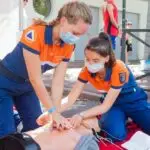
teacher’s Activity: Demonstrates basic first aid techniques (cleaning and covering wounds) using pictures or role-playing.
pupils’ Activity: Observe the demonstration and participate in role-playing scenarios.
Step 4: autonomous practice
Time: 5 minutes
Teaching Skill: Monitoring
Teacher’s Activity: Guides pupils as they practice applying basic first aid techniques in pairs.
Pupils’ Activity: Practice applying basic first aid techniques in pairs.
Step 5: Note-Taking
Time: 5 minutes
Teaching Skill: Note-taking
Teacher’s Activity: Guides pupils in taking notes on the key steps in caring for accident victims.
Pupils’ Activity: Take notes on the key steps.
Step 6: Evaluation/Review
Time: 5 minutes
Teaching Skill: Questioning
Teacher’s Activity: asks evaluation questions to assess pupils’ understanding.
Pupils’ Activity: Answer evaluation questions.
Objective-aligned checks:
- identify three ways of caring for accident victims.
- Explain the importance of staying calm in an accident.
- Describe the steps involved in basic first aid.
Step 7: Conclusion
Time: 5 minutes
Teaching Skill: Summarizing
Teacher’s Activity: summarizes the key points discussed and assigns homework.
Pupils’ Activity: Listen to the summary and note the homework assignment.
lesson Keywords
- Accident – An unexpected event that causes injury or damage.
- First Aid – Basic medical care given to someone who is injured or suddenly becomes ill.
- Emergency – A serious,unexpected,and often hazardous situation requiring immediate action.
- Empathy – The ability to understand and share the feelings of another.
- Reassurance – To say or do something to remove the doubts and fears of someone.
Lesson Evaluation
To evaluate the learning, the teacher asks pupils to:
- What are some ways we learned to care for accident victims?
- Can you mention three things you can do to help someone who is hurt?
- Why is it important to know how to care for accident victims?
Observation: Teacher will observe pupils’ participation in discussions, role-playing, and their ability to answer evaluation questions.
Assignment/Homework
- Draw pictures depicting the steps in caring for accident victims.
- Write a short paragraph on why it is important to stay calm during an accident.
- List three emergency contact numbers you should know.
Differentiation
- For slower learners: Provide one-on-one assistance and use simpler language.
- For advanced learners: Encourage them to research additional first aid techniques and share their findings with the class.
- For visual/auditory/kinesthetic learners: Use visual aids, verbal explanations, and hands-on activities to cater to different learning styles.
Note for Teachers
Ensure to create a safe and supportive habitat for pupils to share their experiences. Emphasize the importance of seeking adult help in serious accident situations. adapt the lesson content and activities to suit the specific needs and abilities of the pupils.



Community Join the conversation Open discussion +