

Class: Primary two
Term: First Term
Subject: National Values Education
Curriculum Theme: Social Studies
Previous Lesson:
Topic: Food We Eat In Our Culture
content/Learning Area: Listing examples of Nigerian food,Identifying common Nigerian foods
Time allocation: 40 minutes
Performance Objectives
By the end of the lesson,pupils should be able to:
- Cognitive Domain:
1. List three examples of food eaten in Nigeria.
2. Identify some common Nigerian foods.
- Psychomotor Domain:
1. Actively participate in class discussions about Nigerian food.
- Affective Domain:
1. Show gratitude for the variety of foods in Nigerian culture.
- Social Domain:
1. Cooperate with classmates during group activities.
Reference Materials
- 9 – Years basic Education Curriculum
- Abuja Educational Resource Center Scheme of Work
- NAPPS National Unified Scheme of Work
- Online Details
- Relevant Textbooks
Instructional Materials
To deliver this lesson, the teacher will use the following materials:
- Whiteboard or chart paper
- Markers or crayons
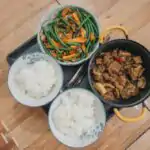
- Pictures of Nigerian foods
Rationale for the Lesson
Understanding the food we eat is crucial to appreciating our culture. This lesson helps pupils connect with their heritage and fosters a sense of belonging.
Prerequisite/Previous knowledge
Pupils have prior knowledge of different types of food.
Lesson Content
Food We Eat In Our Culture
Nigerian culture has many different kinds of food.Examples are:
- Yam
- Amala
- Tuwo shinkafa
- Akpu
- Cocoyam
- Starch
- Pounded yam
- Jollof Rice
- Egusi Soup
- Fufu
These foods are a big part of our culture and traditions. Learning about them helps us understand our heritage better.
Food and Culture
Food culture means the ways a people select, prepare, serve and share food. Nigerian communities prepare foods from crops and animals available in their environment. Yam, rice, maize, beans, cassava, vegetables, fish and meat may be cooked in different ways and given different local names.
Cultural foods can express hospitality and may be served at festivals, naming ceremonies or family gatherings. A food is not nutritious merely because it is traditional; a healthy meal should combine suitable energy-giving, body-building and protective foods and should be prepared hygienically.
teaching Methods
To deliver this lesson, the teacher will adopt the following methods: Discussion, Question and answer, Show and tell (using pictures).
Instructional Procedures
To deliver this lesson, the teacher will adopt the following steps:
Step 1: Introduction
Time: 5 minutes
Teaching Skill: Set Induction
Teacher’s Activity: Ask pupils what they ate for breakfast and initiate a discussion about different foods.
pupils’ Activity: Share their breakfast experiences and participate in the discussion.
step 2: Description of Key Concepts
Time: 10 minutes
teaching Skill: Explanation
Teacher’s Activity: Introduce the topic “Food we Eat In Our Culture” and explain the importance of food in our culture.
Pupils’ Activity: Listen attentively and ask clarifying questions.
Step 3: presentation/guided Practice
time: 10 minutes
Teaching Skill: Demonstration
Teacher’s Activity: show pictures of various Nigerian foods (yam, amala, tuwo shinkafa, akpu, cocoyam, starch, pounded yam) and discuss their characteristics.
Pupils’ Activity: Observe the pictures and participate in the discussion.
Step 4: Autonomous Practice
Time: 5 minutes
Teaching Skill: Monitoring
Teacher’s Activity: ask pupils to list three Nigerian foods they know.
Pupils’ Activity: Write down three Nigerian foods.
Step 5: Note-Taking
Time: 5 minutes
Teaching Skill: Guiding
Teacher’s Activity: Guide pupils in taking notes on the key Nigerian foods discussed.
Pupils’ Activity: Write down notes on the key Nigerian foods.
Step 6: Evaluation/Review
Time: 5 minutes
Teaching Skill: Questioning
Teacher’s Activity: Ask evaluation questions to assess understanding.
Pupils’ Activity: Answer the evaluation questions.
Objective-aligned checks:
- List three examples of food eaten in Nigeria.
- Identify some common Nigerian foods.
- Show gratitude for the variety of foods in Nigerian culture.
Step 7: Conclusion
Time: 2 minutes
Teaching Skill: Summarizing
Teacher’s Activity: Summarize the key Nigerian foods discussed and emphasize the importance of appreciating our cultural heritage through food.
Pupils’ Activity: Listen attentively.
Lesson Keywords
- Yam – A starchy root vegetable commonly eaten in Nigeria.
- Amala – A popular Nigerian swallow made from yam flour.
- Tuwo shinkafa – A Northern Nigerian dish made from rice.
- Akpu – A fermented cassava pudding.
- Cocoyam – A root vegetable used in various Nigerian dishes.
- Starch – A thickener made from cassava, maize, or potatoes.
- Pounded Yam – Boiled yam pounded into a smooth, elastic dough.
lesson Evaluation
To evaluate the learning, the teacher asks pupils to:
- Name three Nigerian foods.
- What is one thing you learned about yam?
- What are some other Nigerian foods you know?
- Why is it vital to learn about the food we eat in our culture?
Assignment/Homework
- Ask your parents or guardians to name three more Nigerian foods.
- Draw a picture of your favorite Nigerian food.
Differentiation
- For slower learners: Provide one-on-one assistance and use simpler language.
- For advanced learners: Encourage them to research and present additional Nigerian foods.
- For visual/auditory/kinesthetic learners: Use pictures, songs, and hands-on activities to engage different learning styles.
note for Teachers
Ensure to bring colorful pictures of the listed Nigerian foods to capture the pupils attention. Encourage pupils to share their personal experiences with these foods to make the lesson more engaging.



Community Join the conversation Open discussion +