

Class: Primary 5
Term: 2nd Term
Week: 4
Age: 10 years
Duration: 45 minutes
Subject: General Mathematics
Curriculum Theme: Measurement
Previous Lesson: Circle, Properties, Circumference and Pi Relationship.
Topic: Weight
Subject Matter: Introduction and meaning of weight, presentation and identification of weight scales, finding and recording weights using weighing scale, word problems involving kilograms and grams, quantitative aptitude on weight
Specific Objectives
By the end of the lesson, pupils should be able to:
Cognitive Domain:
- Define weight.
- Identify various types of weighing scales.
- Solve word problems involving kilograms and grams.
- Solve quantitative aptitude problems involving weight.
Affective Domain:
- Appreciate the importance of accurate weight measurement in daily life.
- Show interest in measuring the weight of different objects.
Psychomotor Domain:
- Measure and record weights of objects using a weighing scale.
- Convert between kilograms and grams correctly.
Social Domain:
- Work collaboratively with peers when identifying weighing scales.
- Participate actively in class discussions and problem-solving.
Reference Materials
The following resources were used in planning this lesson:
- 9 Years Basic Education Curriculum
- State Unified Scheme of Work
- New General Mathematics for Primary 5
Instructional Materials
The teacher will teach this lesson with the aid of:
- Chart showing different types of weighing scales and units of weight
- Actual weighing scales (e.g., kitchen scale, bathroom scale, spring scale)
- Various objects of different weights (e.g., books, fruits, bags of rice)
- Quantitative aptitude examples on weight
Rationale for the Lesson
Understanding weight is important for pupils as it is a fundamental measurement used in many daily activities, such as cooking, shopping, and health. This lesson helps pupils to accurately measure and compare the heaviness of objects, which is a practical skill for everyday life.
Prerequisite/Previous Knowledge
Pupils have a basic understanding of measurement and can compare objects as heavy or light.
Lesson Content/Board Summary
Weight
Meaning of Weight
Weight is a measure of how heavy an object is. It tells us the amount of matter in an object and the force of gravity acting on it. Objects with more matter are generally heavier.
Units of Weight
The standard units for measuring weight are kilograms (kg) and grams (g).
The relationship between kilograms and grams is:
- 1 kilogram (kg) = 1000 grams (g)
Conversion Table:
| Unit | Equivalent |
|---|---|
| 1 kg | 1000 g |
| 1/2 kg (0.5 kg) | 500 g |
| 1/4 kg (0.25 kg) | 250 g |
NOTE: Remember that when converting from a smaller unit (grams) to a larger unit (kilograms), you divide. When converting from a larger unit (kilograms) to a smaller unit (grams), you multiply.
Types of Weighing Scales
Weighing scales are instruments used to measure the weight or mass of an object. The following are common types of weighing scales:
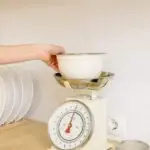
- Kitchen Scale: Used for measuring ingredients in cooking.
- Bathroom Scale: Used for measuring a person’s body weight.
- Spring Scale: Uses a spring to measure weight, often seen in markets.
- Digital Scale: Displays weight electronically, common in homes and shops.
- Balance Scale: Compares the weight of an object with known standard weights.
Finding and Recording Weights Using a Weighing Scale
To find the weight of an object, place it carefully on the weighing scale. Read the measurement shown on the dial or digital display. Record the weight with the correct unit (e.g., 2 kg, 500 g).
Word Problems Involving Kilograms and Grams
Word problems require careful reading to identify what is being asked and which operations (addition, subtraction, multiplication, division) are needed.
Example 1: A bag of rice weighs 5 kg. A bag of beans weighs 2500 g. What is the total weight of both bags in kilograms?
Solution:
Step 1: Convert the weight of beans from grams to kilograms.
2500 g = 2500 ÷ 1000 kg = 2.5 kg
Step 2: Add the weights of both bags in kilograms.
Total weight = 5 kg (rice) + 2.5 kg (beans) = 7.5 kg
The total weight of both bags is 7.5 kg.
Example 2: A baker uses 3 kg 200 g of flour to bake a cake. If he started with 5 kg of flour, how much flour is left?
Solution:
Step 1: Convert all weights to grams for easier subtraction or keep in mixed units.
5 kg = 5000 g
3 kg 200 g = 3200 g
Step 2: Subtract the used flour from the initial amount.
Flour left = 5000 g – 3200 g = 1800 g
Step 3: Convert the remaining flour back to kilograms and grams (optional, but good practice).
1800 g = 1 kg 800 g
The baker has 1 kg 800 g of flour left.
Quantitative Aptitude on Weight
Quantitative aptitude problems test logical reasoning using weight concepts.
Example 1: If 3 oranges weigh 600 g, how much will 5 oranges weigh?
Solution:
Step 1: Find the weight of one orange.
Weight of 1 orange = 600 g ÷ 3 = 200 g
Step 2: Multiply the weight of one orange by 5.
Weight of 5 oranges = 200 g × 5 = 1000 g or 1 kg
Example 2: A box contains 12 packets of biscuits. If each packet weighs 150 g, what is the total weight of the biscuits in kilograms?
Solution:
Step 1: Find the total weight in grams.
Total weight in grams = 12 packets × 150 g/packet = 1800 g
Step 2: Convert the total weight from grams to kilograms.
Total weight in kg = 1800 g ÷ 1000 g/kg = 1.8 kg
Teaching Methods/Instructional Techniques
Discussion, Lecture, Demonstration, Question and Answer, Visual Aids
Instructional Procedures
Step 1: Introduction
Time: 5 minutes
Teaching Skill: Set Induction
Teacher’s Activity: The teacher greets the pupils and asks them to identify objects in the classroom that are heavy and those that are light. The teacher then asks how they know which objects are heavy or light, leading them to the concept of weight.
Pupils’ Activity: Pupils identify heavy and light objects and share their ideas.
Learning Point: Pupils recall prior knowledge of comparing object heaviness and are introduced to the concept of weight.
Step 2: Meaning of Weight and Units
Time: 7 minutes
Teaching Skill: Explanation/Definition
Teacher’s Activity: The teacher defines weight and introduces the standard units of weight: kilograms (kg) and grams (g). The teacher explains the relationship between kg and g (1 kg = 1000 g) and demonstrates simple conversions.
Pupils’ Activity: Pupils listen, define weight, and note the units and their relationship.
Learning Point: Pupils understand the meaning of weight and the standard units for measuring it.
Step 3: Types of Weighing Scales
Time: 7 minutes
Teaching Skill: Demonstration/Identification
Teacher’s Activity: The teacher displays charts of different weighing scales or actual scales. The teacher explains the name and use of each type of scale (e.g., kitchen scale, bathroom scale, spring scale, digital scale).
Pupils’ Activity: Pupils observe the scales, identify their types, and learn their uses.
Learning Point: Pupils can identify and state the uses of various weighing scales.
Step 4: Finding and Recording Weights
Time: 8 minutes
Teaching Skill: Demonstration/Practical Activity
Teacher’s Activity: The teacher demonstrates how to use a weighing scale to find the weight of different objects (e.g., a book, a fruit). The teacher shows pupils how to read the scale correctly and record the weight with the appropriate unit. Pupils are guided to practice weighing objects.
Pupils’ Activity: Pupils observe the demonstration, practice weighing objects, and record their findings.
Learning Point: Pupils learn how to use a weighing scale to find and record weights accurately.
Step 5: Word Problems Involving Kilograms and Grams
Time: 8 minutes
Teaching Skill: Problem Solving/Guided Practice
Teacher’s Activity: The teacher presents word problems involving addition, subtraction, multiplication, and division of weights in kilograms and grams. The teacher guides pupils through the steps to solve these problems, emphasizing conversion when necessary.
Pupils’ Activity: Pupils listen, participate in solving the problems, and copy the solutions.
Learning Point: Pupils develop skills in solving word problems involving weight conversions and operations.
Step 6: Quantitative Aptitude on Weight
Time: 5 minutes
Teaching Skill: Critical Thinking/Application
Teacher’s Activity: The teacher introduces quantitative aptitude questions related to weight, which require logical reasoning. The teacher guides pupils to think critically and solve these problems.
Pupils’ Activity: Pupils attempt to solve the quantitative aptitude problems and discuss their reasoning.
Learning Point: Pupils enhance their logical reasoning and problem-solving skills related to weight.
Step 7: Evaluation/Review
Time: 5 minutes
Teaching Skill: Questioning/Assessment
Teacher’s Activity: The teacher evaluates the learning by asking the following questions:
- What is weight?
- List three types of weighing scales.
- Convert 3.5 kg to grams.
- A bag of sugar weighs 2 kg 400 g. If 1 kg 150 g is used, how much sugar is left?
Pupils’ Activity: Pupils answer orally and in writing.
Learning Point: Pupils demonstrate understanding of the lesson.
Step 8: Conclusion
Time: 2 minutes
Teaching Skill: Summarization/Consolidation
Teacher’s Activity: The teacher summarizes the key points of the lesson, reiterating the importance of weight measurement in daily life. The teacher assigns homework for pupils to practice measuring weights at home or solving more word problems.
Pupils’ Activity: Pupils listen to the summary and note down the homework.
Learning Point: Pupils consolidate their understanding of weight and its practical applications.
Home Task: Solve three new exercises on Weight. Show each step and check each answer.
Lesson Keywords
- Weight – A measure of how heavy an object is.
- Kilogram (kg) – A standard unit of weight, equal to 1000 grams.
- Gram (g) – A smaller unit of weight, with 1000 grams making 1 kilogram.
- Weighing scale – An instrument used to measure the weight of an object.
- Conversion – Changing a measurement from one unit to another (e.g., kg to g).
Differentiation
For pupils who are struggling, the teacher will provide simpler examples and more hands-on practice with actual weighing scales. For advanced pupils, the teacher will provide more complex word problems and quantitative aptitude questions, encouraging them to create their own problems.
Note for teachers using this lesson plan
Teachers should ensure to have actual weighing scales and various objects available for practical demonstration and pupil activity. Encourage pupils to relate the concepts of weight to real-life scenarios to enhance their understanding and retention. Be flexible with time allocation based on pupils’ engagement and comprehension.


Community Join the conversation Open discussion +