

Class: Junior Secondary School 1 (JSS 1 / JS1)
Term: Third Term
Week: 2
Age: 12 years
Duration: 45 minutes
Subject: National Values Education
Curriculum Theme: Security Education
Previous Lesson: Meaning, Roles and Crime Prevention of Security Agents.
Topic: Types of Security Agents
Subject Matter: Police, Armed Forces, Civil Defence, State Security Service (SSS), Peace Corps
Specific Objectives
By the end of the lesson, pupils should be able to:
Cognitive Domain:
- Identify different types of security agents in Nigeria.
- State the primary duties of each security agency.
- Explain the importance of security agents in society.
Affective Domain:
- Appreciate the roles played by various security agencies.
- Value the services rendered by security agents.
- Show willingness to cooperate with security agencies.
Psychomotor Domain:
- Participate actively in discussions about security agencies.
- Draw or identify pictures of different security agents.
- Discuss the functions of each security agency in preventing common crimes.
Social Domain:
- Relate the work of security agents to community safety.
- Engage in healthy debates about the effectiveness of security agencies.
- Develop a sense of civic responsibility towards security.
Reference Materials
The following resources were used in planning this lesson:
- 9 Years Basic Education Curriculum for National Values Education JSS 1
- State Unified Scheme of Work for National Values Education JSS 1
- National Values Education for Junior Secondary Schools Book 1
Instructional Materials
The teacher will teach this lesson with the aid of:
- Illustrative charts showing different security agents.
- Pictures and posters of security personnel.
- Video clips demonstrating the activities of security agencies (if available).
Rationale for the Lesson
This lesson helps pupils understand the various security agencies responsible for maintaining peace and order in Nigeria. It enables them to recognize the roles of these agents in protecting lives and property, fostering their appreciation for security services and encouraging responsible citizenship.
Prerequisite/Previous Knowledge
Pupils should have a basic understanding of what security means and why it is necessary for a peaceful society.
Lesson Content/Board Summary
Types of Security Agents
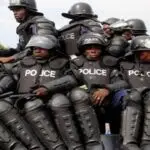
1. The Nigeria Police Force (NPF)
The Nigeria Police Force is the primary law enforcement agency in Nigeria. Its main duty is to maintain law and order, prevent and detect crime, and protect lives and property.
The following are the duties of the Police:
- Maintaining law and order.
- Preventing and detecting crime.
- Protecting lives and property.
- Apprehending offenders.
- Enforcing traffic rules and regulations.
2. The Nigerian Armed Forces (Army, Navy, Air Force)
The Nigerian Armed Forces are responsible for defending the territorial integrity of Nigeria from external aggression. They consist of the Nigerian Army, Nigerian Navy, and Nigerian Air Force.
The following are the duties of the Armed Forces:
- Defending Nigeria’s sovereignty against external threats.
- Protecting national interests on land, sea, and air.
- Participating in international peacekeeping operations.
- Assisting civil authorities in maintaining law and order during emergencies.
3. The Nigeria Security and Civil Defence Corps (NSCDC)
The Nigeria Security and Civil Defence Corps is a paramilitary agency established to protect citizens and provide disaster management. It also assists in maintaining peace and order.
The following are the duties of the Civil Defence:
- Protecting critical national infrastructure and assets.
- Disaster management and relief operations.
- Training and educating the public on security matters.
- Assisting the police in maintaining law and order.
- Providing security at public gatherings.
4. The State Security Service (SSS) / Department of State Services (DSS)
The State Security Service, now known as the Department of State Services (DSS), is responsible for intelligence gathering within Nigeria to protect national security. It deals with internal security threats.
The following are the duties of the SSS/DSS:
- Gathering intelligence on internal security threats.
- Protecting senior government officials and dignitaries.
- Counter-terrorism and counter-insurgency operations.
- Investigating crimes against the state.
- Protecting vital national assets.
5. The Peace Corps of Nigeria
The Peace Corps of Nigeria is a youth-based organization aimed at promoting peace, youth empowerment, and community development. It assists in maintaining peace and order, especially among youths.
The following are the duties of the Peace Corps:
- Promoting peace education and conflict resolution.
- Engaging youths in community development initiatives.
- Assisting in providing security at schools and public events.
- Mentoring and empowering young people.
- Collaborating with other security agencies in maintaining order.
Teaching Methods/Instructional Techniques
Discussion, Lecture, Demonstration, Question and Answer, Visual Aids
Instructional Procedures
Types of Security Agents
Step 1: Introduction
Time: 5 minutes
Teaching Skill: Set Induction
Teacher’s Activity: The teacher greets the pupils, reviews the previous lesson on the meaning of security, and then introduces the new topic, “Types of Security Agents,” by asking pupils who they think protects them and their community.
Pupils’ Activity: Pupils respond to the teacher’s greeting, recall the previous lesson, and share their ideas about who protects them.
Learning Point: Pupils are prepared for the lesson and connect it to their prior knowledge.
Step 2: Presentation of Security Agents
Time: 10 minutes
Teaching Skill: Explanation/Illustration
Teacher’s Activity: The teacher explains what security agents are and then presents illustrative charts and pictures of different security agencies such as the Police, Armed Forces, Civil Defence, SSS, and Peace Corps. The teacher briefly states the role of each.
Pupils’ Activity: Pupils observe the charts and pictures, listen attentively, and identify the different security agents.
Learning Point: Pupils identify various security agents and understand their general functions.
Step 3: Discussion on Police and Armed Forces
Time: 10 minutes
Teaching Skill: Questioning/Discussion
Teacher’s Activity: The teacher leads a discussion on the specific duties and performance of the Nigeria Police Force and the Nigerian Armed Forces, highlighting their primary responsibilities in maintaining internal security and defending national sovereignty respectively.
Pupils’ Activity: Pupils contribute to the discussion by sharing what they know about the police and armed forces and asking questions for clarification.
Learning Point: Pupils understand the distinct roles of the Police and Armed Forces.
Step 4: Discussion on Civil Defence and SSS
Time: 7 minutes
Teaching Skill: Explanation/Interaction
Teacher’s Activity: The teacher continues the discussion by focusing on the Nigeria Security and Civil Defence Corps (NSCDC) and the State Security Service (SSS/DSS), explaining their roles in disaster management, infrastructure protection, and internal intelligence gathering.
Pupils’ Activity: Pupils listen and participate by identifying situations where these agencies are involved.
Learning Point: Pupils learn about the functions of Civil Defence and SSS in national security.
Step 5: Discussion on Peace Corps
Time: 5 minutes
Teaching Skill: Explanation/Engagement
Teacher’s Activity: The teacher discusses the role of the Peace Corps of Nigeria, emphasizing its focus on youth development, peace advocacy, and support for community security.
Pupils’ Activity: Pupils listen and ask questions about the Peace Corps, especially regarding youth involvement.
Learning Point: Pupils understand the youth-oriented and peace-building role of the Peace Corps.
Step 6: Debate on Functions
Time: 3 minutes
Teaching Skill: Group Activity/Debate
Teacher’s Activity: The teacher organizes pupils into small groups to briefly debate the functions of different security agencies in preventing common crimes, using examples from their communities.
Pupils’ Activity: Pupils engage in a short debate within their groups, discussing how each agency contributes to crime prevention.
Learning Point: Pupils apply their knowledge to practical crime prevention scenarios.
Step 7: Evaluation/Review
Time: 5 minutes
Teaching Skill: Questioning/Assessment
Teacher’s Activity: The teacher evaluates the learning by asking the following questions:
- List three types of security agents in Nigeria.
- State two primary duties of the Nigeria Police Force.
- What is the main responsibility of the Nigerian Armed Forces?
- Mention one duty of the Nigeria Security and Civil Defence Corps.
- Explain the role of the State Security Service (SSS/DSS).
Pupils’ Activity: Pupils answer orally and in writing.
Learning Point: Pupils demonstrate understanding of the lesson.
Step 8: Conclusion
Time: 3 minutes
Teaching Skill: Summarization
Teacher’s Activity: The teacher summarizes the key points of the lesson, reiterating the importance of all security agencies and the need for citizens to cooperate with them. The teacher gives an assignment: “Find out how to report a crime to the nearest police station.”
Pupils’ Activity: Pupils listen to the summary and copy the assignment.
Learning Point: Pupils consolidate their learning and are encouraged to apply it.
Home Task: Give three correct examples of Types of Security Agents and explain what each example shows.
Lesson Keywords
- Security Agents – Individuals or organizations responsible for maintaining law, order, and safety.
- Police – A government force that maintains public order, prevents and detects crime.
- Armed Forces – The official military organization of a country, including the army, navy, and air force.
- Civil Defence – An organization that protects citizens and provides emergency services in times of disaster.
- SSS (State Security Service) – A government agency responsible for internal intelligence and national security.
- Peace Corps – An organization promoting peace, youth development, and community security.
Differentiation
For pupils who grasp concepts quickly, the teacher can encourage them to research specific operations carried out by these agencies. For those needing more support, the teacher will use more visual aids and provide simplified explanations, allowing them to focus on identifying the agencies and their most basic duties.
Note for teachers using this lesson plan
Ensure that pupils understand the difference between the roles of internal security agencies (like Police, Civil Defence, SSS) and external defense agencies (Armed Forces). Encourage pupils to discuss safely and respectfully, avoiding any sensitive political commentary. Emphasize cooperation with security agencies for community safety.



Community Join the conversation Open discussion +