

Class: Primary 5
Term: 2nd term
Subject: Pre-Vocational Studies
Curriculum Theme: Home Economics
Previous Lesson: Steps In Making Permanent Stitches
Topic: Steps In Making Decorative Stitches
Content/Learning Area: Satin, stem, chain, loop stitches, etc.
Time Allocation: 40 minutes
Performance Objectives
By the end of the lesson, pupils should be able to:
- Cognitive Domain: Identify at least three types of decorative stitches (e.g., satin, chain, and loop).
- Affective Domain: Appreciate the importance of decorative stitches in enhancing the beauty of sewn items.
- Psychomotor Domain: Demonstrate how to make at least one decorative stitch correctly.
- Social Domain: Collaborate with peers to complete a decorative stitching task.
Reference Materials
The following resources were used in planning this lesson:
- 9 – Years Basic Education Curriculum
- Abuja Educational Resource Center Scheme of Work
- NAPPS National Unified Scheme of Work
- Online Data from: Seamwork – A Guide to Decorative Machine Stitching
- Relevant Textbooks
Instructional Materials
To deliver this lesson, the teacher will use the following materials:
- A piece of fabric (for presentation).
- Embroidery needle and thread in different colors.
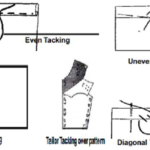
- Diagrams or pictures of decorative stitches.
- Video clips showing steps in making decorative stitches (optional).
Rationale for the Lesson
Understanding decorative stitches is crucial for pupils to enhance their creativity and develop skills in needlework. These skills can also be applied in future home and vocational activities.
Prerequisite/Previous Knowledge
The pupils already no how to make basic permanent stitches and are familiar with basic sewing tools and materials.
Lesson Content
Steps In Making Decorative Stitches
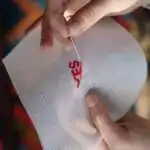
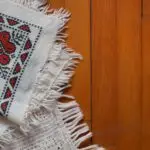
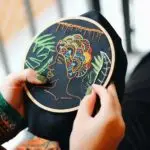
Decorative stitches are used to beautify sewn items and add creative patterns to fabric. They are commonly used in embroidery. Below are the steps involved in making decorative stitches:
- Prepare the fabric: Choose a clean piece of fabric and stretch it using an embroidery hoop (if available).
- Select a stitch: Decide on the type of decorative stitch you wont to make (e.g., satin, chain, loop, or stem).
- Thread the needle: Choose a thread of your desired color and thread it through an embroidery needle.
- mark the design: Use a pencil or tailor’s chalk to outline the design on the fabric.
- Start stitching: Follow the design outline while creating the decorative stitch.
- Finish neatly: Tie off the thread on the backside of the fabric to prevent unraveling.
Teaching Methods
To deliver this lesson, the teacher will adopt the following methods: Interactive teaching, Demonstration, Guided practice, Individual work, Question and answer.
Instructional Procedures
To deliver this lesson, the teacher will adopt the following steps:
Step 1: Introduction
Time: 5 minutes
Teaching Skill: Set induction
Teacher’s Activity: Shows examples of items with decorative stitches and asks pupils to describe them.
Pupils’ Activity: Respond by describing observed designs.
Step 2: Description of Decorative Stitches
Time: 10 minutes
Teaching Skill: Explanation
Teacher’s Activity: Explains what decorative stitches are and their uses,then demonstrates each stitch (satin,loop,chain).
Pupils’ Activity: Observe, listen attentively, and ask questions.
Step 3: Guided Practice
Time: 10 minutes
Teaching Skill: Guided Practice
Teacher’s Activity: Guides pupils in practicing one decorative stitch (e.g., loop stitch) on a piece of fabric.
Pupils’ Activity: Practice the stitch under teacher’s guidance.
Step 4: Self-reliant Practice
Time: 7 minutes
Teaching Skill: Independent Practice
Teacher’s Activity: Asks pupils to independently try another stitch, e.g.,chain stitch.
Pupils’ Activity: Attempt stitching independently.
Step 5: Note-Taking
Time: 3 minutes
Teaching Skill: direct instruction
Teacher’s Activity: Dictates a summary note on the topic for pupils to copy.
Pupils’ Activity: Copy the notes neatly into their books.
Step 6: Evaluation/Review
Time: 3 minutes
Teaching Skill: Oral Questioning
Teacher’s Activity: Asks questions to evaluate understanding of the topic.
Pupils’ Activity: Respond orally to the questions.
Objective-aligned checks:
- Identify at least three types of decorative stitches (e.g., satin, chain, and loop).
- Demonstrate how to make at least one decorative stitch correctly.
Step 7: Conclusion
Time: 2 minutes
Teaching Skill: Recap
Teacher’s Activity: Summarizes key points and encourages pupils to practice at home.
Pupils’ Activity: Listen and ask for clarification if needed.
Lesson Keywords
- Decorative Stitches – Stitches used to enhance the appearance of fabric.
- Satin Stitch – A type of decorative stitch that creates a smooth, solid area of stitching.
- Chain Stitch – A decorative stitch that forms a chain-like pattern.
- Loop Stitch – A decorative stitch that creates small loops on the fabric surface.
- Stem Stitch – A decorative stitch used to outline shapes or create lines.
Lesson Evaluation
To evaluate the learning, the teacher asks pupils to:
- What are decorative stitches?
- Mention three types of decorative stitches.
- List the steps in making a decorative stitch.
- Explain the importance of decorative stitches.
- Demonstrate a loop stitch on a piece of fabric.
Assignment/Homework
- Practice making satin and chain stitches at home.
- Bring a sample of fabric with decorative stitches to the next class.
- Write a short paragraph on how decorative stitches can be used to enhance clothing.
Differentiation
- For slower learners: Provide one-on-one guidance and simplified instructions.
- For advanced learners: Encourage them to explore more complex decorative stitches and create their own designs.
- For visual/auditory/kinesthetic learners: Use visual aids, verbal explanations, and hands-on activities to cater to different learning styles.
Note for Teachers
Encourage pupils to use colorful threads to make the activity fun and engaging. Be patient with slow learners and provide additional guidance if needed. Happy teaching!
Community Join the conversation Open discussion +