

Class: Primary 5
Term: 3rd term
Subject: Pre-Vocational studies
Curriculum Theme: Home Economics
Previous Lesson: Uses Of Cooking Tools And Equipments
Topic: Differences Between Cooking Tools And Equipments
Content/Learning Area: Differences Between Cooking Tools And Equipments
Time Allocation: 40 minutes
Performance Objectives
By the end of the lesson, pupils should be able to:
- Cognitive Domain: Identify the differences between cooking tools and cooking equipment.
- Affective Domain: Appreciate the importance of using the right tools and equipment for cooking.
- Psychomotor Domain: sort and classify common cooking tools and equipment.
- Social Domain: Work cooperatively in groups to identify and describe various cooking items.
Reference Materials
The following resources were used in planning this lesson:
- 9 Years Basic Education Curriculum
- Abuja Educational Resource Center Scheme of Work
- NAPPS National Unified Scheme of Work
- Online Information from: cooksmarts – Basic Essential Cooking Tools Every Kitchen Needs
- Relevant Textbooks
Instructional Materials
To deliver this lesson, the teacher will use the following: Real cooking tools, Real cooking equipment, Flashcards showing pictures of kitchen items, Charts comparing tools and equipment, Whiteboard and markers.
Rationale for the Lesson
Understanding the difference between cooking tools and equipment helps pupils use the correct items in food planning and encourages safety and efficiency in the kitchen.
Prerequisite/Previous Knowledge
Pupils are already familiar with basic kitchen items used at home and in school meal settings.
lesson Content
Differences Between Cooking Tools And Equipments
Cooking involves using many items in the kitchen. These items help us prepare, cook, and serve food.Some are tools we hold in our hands, while others are machines that work with electricity or heat.
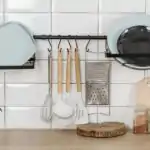
The following are cooking tools:
- Spoon
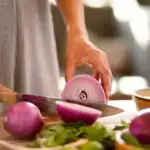
- Knife
- Grater
- Peeler
- whisk
- Fork
- ladle
- Tongs
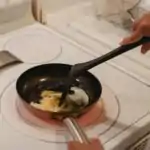
- Spatula
- Cutting board
- Measuring cups
Cooking Equipment
Cooking equipment are bigger machines used in the kitchen. They often use electricity, gas, or heat. These include:
- Blender
- Stove
- Oven
- Microwave
- Gas cooker
- Electric kettle
- Refrigerator
- Toaster
- Deep fryer
- Food processor
- Rice cooker
Differences
Cooking tools and equipment are not the same. They have different uses and sizes.
The following are the differences:
- Tools are small and held in the hand
- Equipment are bigger and often powered by electricity or gas
- tools are used for simple tasks like cutting or stirring
- Equipment help in cooking, heating, or storing food
- Tools are easy to move around
- Equipment are usually fixed in one place or heavy
- Tools are cheaper than equipment
- Equipment cost more and do more work
- Tools require manual effort
- Equipment often automate tasks
- Tools are generally simpler in design
- Equipment are more complex and have multiple parts
Teaching Methods
to deliver this lesson, the teacher will adopt the following methods: Discussion, Lecture, Demonstration, Group Work, Description, Use of Visual Aids
Instructional Procedures
To deliver this lesson, the teacher will adopt the following steps:
Step 1: Introduction (Set Induction)
Time: 5 mins
Teaching Skill: Set Induction
Teacher’s Activity: Tells a short story about preparing a meal with different kitchen items
Pupils’ Activity: Listen and respond to questions about cooking at home
Step 2: Meaning of Cooking Tools
time: 5 mins
Teaching Skill: Explanation
Teacher’s Activity: Explains what cooking tools are and shows real tools to the pupils
Pupils’ Activity: Observe and identify the tools shown
Step 3: Meaning of Cooking Equipment
Time: 5 mins
Teaching Skill: demonstration
Teacher’s Activity: Shows examples of kitchen equipment and explains their use
Pupils’ Activity: Observe, identify and ask questions
Step 4: Differences Between Tools and Equipment
Time: 10 mins
teaching Skill: Comparison
Teacher’s Activity: Compares the tools and equipment side by side, highlights key differences
Pupils’ Activity: Participate in comparison and group sorting activity
Step 5: Note-Taking
Time: 5 mins
Teaching Skill: Note Writing
Teacher’s Activity: Guides pupils to copy summarized class notes into their books
Pupils’ Activity: Copy notes carefully into their notebooks
Step 6: Evaluation/Review
Time: 5 mins
teaching Skill: Questioning
teacher’s Activity: Asks pupils questions and gives practical sorting task using real or pictured items
pupils’ Activity: Answer questions and perform sorting task
Objective-aligned checks:
- Identify the differences between cooking tools and cooking equipment.
- sort and classify common cooking tools and equipment.
- Work cooperatively in groups to identify and describe various cooking items.
Step 7: Conclusion
Time: 5 mins
Teaching Skill: Instructional/Cognitive/Social
Teacher’s Activity: Reviews key points, praises group efforts, and encourages safe kitchen practices
Pupils’ Activity: Recap lesson and ask final questions
Lesson Keywords
- Tool – A small item used by hand to prepare food
- Equipment – A large machine used in cooking
- Stirring – Mixing food with a spoon or whisk
- Blender – A machine that grinds or mixes food
- Microwave – A machine used to heat or cook food
- Grater – A tool used for grating food items
- Oven – An equipment used for baking or roasting food
Lesson Evaluation
to evaluate the learning, the teacher asks pupils to:
- Mention two examples of cooking tools
- Mention two examples of cooking equipment
- State two differences between cooking tools and cooking equipment
- Sort a group of items into tools and equipment
- Say why it is indeed significant to know the difference
Assignment/Homework
- list five cooking tools found in yoru kitchen at home.
- List three cooking equipment found in your kitchen at home.
- Explain the main difference between a cooking tool and cooking equipment.
Differentiation
- For slower learners: Teacher provides visual aids and real objects for slower learners and pairs them with faster learners for group activities.
- For advanced learners: Ask them to research and present on the history and evolution of a specific cooking tool or equipment.
- For visual/auditory/kinesthetic learners: Use flashcards, demonstrations, and hands-on sorting activities to cater to different learning styles.
Note for Teachers
Ensure pupils have hands-on interaction with real or pictured items to improve
Community Join the conversation Open discussion +