

Examination on Home Economics
Class: Primary 5
Term: Second Term
Time: 1 Hour
Total Marks: 70
SECTION A: OBJECTIVES (40 Marks)
Instruction: Answer all questions.
1. ________ is a tool used for cutting fabrics. (a) Tape measure (b) Scissors (c) Needle (d) Pins
2. Which of the following stitches is a temporary stitch? (a) Running stitch (b) Back stitch (c) Tacking stitch (d) Hemming stitch
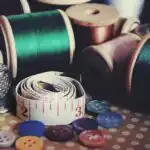
3. The main reason for using a tape measure is to ________. (a) hold fabric together (b) cut fabric (c) take body measurements (d) thread a needle
4. The abbreviation ‘K’ in knitting terms stands for ________. (a) knot (b) knit (c) keen (d) kink
5. All of these are examples of permanent stitches except ________. (a) running stitch (b) back stitch (c) basting stitch (d) hemming stitch
6. Which of these is NOT a decorative stitch? (a) Satin stitch (b) Stem stitch (c) Chain stitch (d) Tacking stitch
7. An example of an article made by crocheting is a ________. (a) apron (b) tray cover (c) school uniform (d) pillowcase
8. The correct step in caring for scissors is to ________. (a) drop them often (b) use them to cut paper (c) keep them clean and oiled (d) leave them open
9. Which of these is not a common knitting abbreviation? (a) K (b) P (c) Sl.st (d) Ch.st
10. A stitch used to temporarily hold two pieces of fabric together is called ________. (a) running stitch (b) back stitch (c) tacking stitch (d) chain stitch
11. Which of the following is a tool used for crocheting? (a) Knitting pin (b) Needle (c) Crochet hook (d) Thimble
12. ________ is the term for a stitch that forms a continuous line of stitches on the right side of the fabric. (a) Running stitch (b) Back stitch (c) Hemming stitch (d) Loop stitch
13. The process of creating fabric by interlocking loops of yarn with needles is called ________. (a) sewing (b) crocheting (c) knitting (d) weaving
14. All of these are uses of temporary stitches except ________. (a) holding seams before permanent stitching (b) marking fabric (c) decorating an article (d) gathering fabric
15. Which of the following abbreviations does NOT belong to crocheting terms? (a) ch (b) st (c) tr (d) P
16. The main reason for using pins is to ________. (a) cut fabric (b) measure fabric (c) hold fabric layers together (d) thread a needle
17. An example of a permanent stitch is ________. (a) basting (b) tailor’s marking (c) running stitch (d) tacking
18. Which of these is not a decorative stitch? (a) Satin stitch (b) Running stitch (c) Stem stitch (d) Chain stitch
19. The correct step in making a simple article is to ________. (a) start with complex designs (b) ignore measurements (c) follow instructions carefully (d) use dull tools
20. ________ stitches are meant to be removed after a permanent stitch is made. (a) Permanent (b) Decorative (c) Temporary (d) Finishing
SECTION B: THEORY (30 Marks)
Instruction: Answer any THREE questions.
1. (a) List any two sewing tools you know. (2 marks)
(b) State two uses of a tape measure in sewing. (3 marks)
(c) Explain how you would care for your sewing scissors. (3 marks)
(d) What is the purpose of pins in sewing? (2 marks)
2. (a) Differentiate between temporary and permanent stitches. (2 marks)
(b) Give two examples of temporary stitches and state one use for each. (3 marks)
(c) Describe the running stitch and state one article where it can be used. (3 marks)
(d) Name two decorative stitches. (2 marks)
3. (a) Identify two tools used for knitting. (2 marks)
(b) Explain the meaning of ‘ch’ and ‘tr’ in crocheting terms. (3 marks)
(c) Outline three basic steps you would take when making a simple knitted article. (3 marks)
(d) What is the main difference between knitting and crocheting tools? (2 marks)
4. (a) Give two examples of permanent stitches. (2 marks)
(b) Describe the satin stitch and state its main use. (3 marks)
(c) List three uses of basting stitch. (3 marks)
(d) Mention two articles that can be made using sewing, knitting, or crocheting. (2 marks)
Objective Marking Scheme
Question 1 – ✅ (b) Scissors
Question 2 – ✅ (c) Tacking stitch
Question 3 – ✅ (c) take body measurements
Question 4 – ✅ (b) knit
Question 5 – ✅ (c) basting stitch
Question 6 – ✅ (d) Tacking stitch
Question 7 – ✅ (b) tray cover
Question 8 – ✅ (c) keep them clean and oiled
Question 9 – ✅ (d) Ch.st
Question 10 – ✅ (c) tacking stitch
Question 11 – ✅ (c) Crochet hook
Question 12 – ✅ (a) Running stitch
Question 13 – ✅ (c) knitting
Question 14 – ✅ (c) decorating an article
Question 15 – ✅ (d) P
Question 16 – ✅ (c) hold fabric layers together
Question 17 – ✅ (c) running stitch
Question 18 – ✅ (b) Running stitch
Question 19 – ✅ (c) follow instructions carefully
Question 20 – ✅ (c) Temporary
Community Join the conversation Open discussion +