

Class: Primary One
Term: Third Term
Subject: Pre-vocational Studies
Curriculum Theme: Agricultural Science
Previous Lesson: Home For Farm Animals
Topic: Home For Farm plants
Content/Learning Area: What is a Habitat?,Types of Habitats,Importance of Habitats
Time Allocation: 40 minutes
Performance Objectives
By the end of the lesson,pupils should be able to:
- Cognitive Domain:
1. List various habitats where farm plants thrive.
2. Categorize plants based on their habitats.
- Affective Domain:
1. Develop an recognition for the importance of different habitats to plant growth.
- Psychomotor Domain:
1. Work in groups to list different plant habitats.
- social Domain:
1. Cooperate with peers during group activities.
Reference Materials
- 9 – Years Basic Education Curriculum
- Abuja educational Resource Center Scheme of Work
- NAPPS National Unified Scheme of Work
- Relevant Textbooks
Instructional Materials
To deliver this lesson, the teacher will use the following materials:
- Whiteboard or chart paper
- Markers or crayons
- Pictures of different habitats
- Relevant textbooks
Rationale for the Lesson
Understanding plant habitats is crucial for successful farming and environmental conservation. This lesson lays the foundation for future lessons on plant care and agriculture, fostering responsible environmental stewardship.
Prerequisite/Previous Knowledge
Pupils have a basic understanding of plants and where they can be found.
Lesson Content
What is a Habitat?
A habitat is like a home for a plant. It provides everything a plant needs to grow,such as water,sunlight,and nutrients from the soil.Different plants need different things, so they live in different habitats.
Types of Habitats
Habitats are the natural environments where plants live and grow. These environments provide the necessary conditions for plants to thrive.
The following are examples of habitats:
- Garden: A small, personal space where plants are grown, often near homes.
- Field: Large open areas used for growing crops like rice,wheat,and maize.
- Orchard: Areas planted with fruit trees like apples, oranges, and mangoes.
- Greenhouse: Enclosed spaces where plants are grown under controlled conditions.
- Aquatic environments: places where plants grow in water, like rice paddies, swamps, and rivers.
- Forest: A large area covered with trees and undergrowth, providing a habitat for various plants.
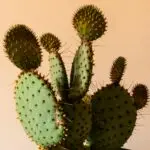
- Desert: A dry, arid region with sparse vegetation adapted to survive with little water.
Importance of Habitats
Habitats play a crucial role in supporting plant life and overall ecosystem health.
These include:
- successful Farming: Understanding plant needs helps farmers choose the right crops for their area.
- Conservation: Knowing where plants thrive helps protect their habitats.
- Biodiversity: Different habitats support many plant species, contributing to a rich variety of life.
- Nutrient Cycling: Habitats facilitate the cycling of nutrients, essential for plant growth and soil health.
- Water Regulation: Some habitats, like wetlands, help regulate water flow and prevent flooding.
- Climate Regulation: Forests and other plant-rich habitats help regulate the climate by absorbing carbon dioxide.
Teaching Methods
To deliver this lesson, the teacher will adopt the following methods: Discussion, Group work, Visual aids
Instructional Procedures
To deliver this lesson, the teacher will adopt the following steps:
Step 1: Introduction (Set Induction)
Time: 5 minutes
Teaching Skill: Questioning, explaining
Teacher’s Activity: introduce the topic “Home For Farm Plants” and ask pupils what they already know about where plants grow.
Pupils’ Activity: Respond to the teacher’s questions and share their prior knowledge.
Step 2: Explanation of Key Concepts
Time: 10 minutes
Teaching Skill: Explaining, illustrating
Teacher’s Activity: Explain the concept of a habitat and its importance for plant growth. Show pictures of different habitats.
Pupils’ Activity: Listen attentively and ask clarifying questions.
Step 3: Habitat Examples
Time: 10 minutes
Teaching Skill: Demonstrating,guiding
Teacher’s activity: Guide pupils through examples of different habitats (gardens,fields,orchards,greenhouses,aquatic environments).
Pupils’ Activity: Participate in the discussion and identify examples of each habitat.
step 4: Group Activity
Time: 10 minutes
Teaching Skill: Monitoring, assisting
Teacher’s Activity: Divide pupils into groups and ask them to list different plant habitats.
Pupils’ Activity: Work collaboratively in groups to complete the task.
Step 5: Note-Taking
Time: 2 minutes
Teaching Skill: summarizing, guiding
Teacher’s Activity: Summarize the key concepts learned.
Pupils’ Activity: Take notes on the key points.
Step 6: Evaluation/Review
Time: 3 minutes
Teaching Skill: Questioning,assessing
Teacher’s Activity: Ask evaluation questions to assess pupils’ understanding.
Pupils’ Activity: Answer the evaluation questions.
Step 7: Conclusion
Time: 2 minutes
teaching Skill: Summarizing, reinforcing
Teacher’s Activity: Review the main points of the lesson and assign homework.
Pupils’ Activity: Listen to the summary and note the homework assignment.
Lesson keywords
- Habitat – The natural habitat where a plant or animal lives.
- Garden – A small area where plants are grown, often near homes.
- Field – A large open area used for growing crops.
- Orchard – An area planted with fruit trees.
- Greenhouse – A structure where plants are grown under controlled conditions.
- Aquatic – Relating to water.
Lesson Evaluation
To evaluate the learning, the teacher asks pupils to:
- Name two farm plants that grow in wetlands.
- Why is it critically important to know a farm plant’s habitat?
- List two habitats from today’s lesson.
- What do plants need to grow in their habitats?
- Can you think of other habitats for farm plants?
Assignment/Homework
- Draw your favorite habitat and label its key features.
- List three plants that can be found in a garden.
- Describe why it is important to protect plant habitats.
Differentiation
- For slower learners: Provide one-on-one assistance and use simpler language.
- For advanced learners: Encourage them to research additional habitats and present their findings to the class.
- For visual/auditory/kinesthetic learners: Use visual aids, discussions, and hands-on activities to cater to different learning styles.
Note for Teachers
Ensure to use real-life examples and visual aids to make the lesson engaging and understandable for primary one pupils.Encourage active participation and group work to enhance learning.


Community Join the conversation Open discussion +