

Class: Junior Secondary School 2 (JSS2, JSS 2)
Term: 1st Term
Week: 2
Age: 13 years
Duration: 45 minutes
Subject: Basic Science And Technology
Curriculum Theme: Basic Science
Previous Lesson: Habitat, Types of Habitat and Examples
Topic: Adaptation Of Living Things To Their Habitat
Subject Matter: Adaptive features of living things in their habitat.
Specific Objectives
By the end of the lesson, pupils should be able to:
- Cognitive Domain:
(a) Identify adaptive features of living things in their habitat.
(b) Explain how adaptations help organisms survive in their environment. - Affective Domain:
(a) Show appreciation for the uniqueness of different living things in their habitats. - Psychomotor Domain:
(a) Observe pictures or models of organisms and point out their adaptive features. - Social Domain:
(a) Work cooperatively in groups to discuss the adaptive features of selected organisms.
Reference Materials
The following resources was used in planning this lesson:
- 9 Years Basic Education Curriculum
- Lagos State Unified Scheme of work for Junior Secondary Schools
- National Geographic – “Adaptations” (https://education.nationalgeographic.org/resource/adaptation)
- BBC Bitesize – “Adaptations of Animals and Plants” (https://www.bbc.co.uk/bitesize/topics/zvhhvcw/articles/zxg7y4j)
- Relevant Textbooks
Instructional Materials
The teacher will teach this lesson with the aid of:
- Charts showing plants and animals in their habitats
- Flash cards with adaptive features written on them
- Models of animals such as fish, bird, camel, and chameleon
- Short video clips on animal and plant survival in habitats
- Whiteboard and markers
Rationale for the Lesson
This lesson is important because it enables students to understand how plants and animals adjust to their habitats for survival, ensuring balance in nature and continuity of life.
Prerequisite/Previous Knowledge
Pupils already know that living things exist in different habitats such as land, water, and air, and that they have basic needs for survival.
Lesson Content/Board Summary
Adaptation of Living Things to Their Habitat
Adaptation is the special feature or behavior that helps a plant or animal survive in its environment. Every habitat has conditions that living things must adjust to in order to live and reproduce.
Adaptive Features of Animals
Animals possess certain physical and behavioral traits that enable them to survive in their habitats.
The following are examples of adaptive features of animals:
- The camel stores fat in its hump to survive long periods without food or water in the desert.
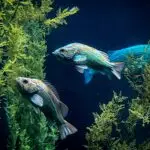
- Fishes have gills that allow them to breathe underwater.
- Birds have hollow bones and wings for flight in the air.
- The chameleon changes its skin color to blend with its environment for protection.
- Polar bears have thick fur and fat layers to keep them warm in cold environments.
- Frogs have webbed feet that enable them to swim effectively in water.
Adaptive Features of Plants
Plants also develop special features that help them survive in their habitats.
The following are examples of adaptive features of plants:
- Cactus plants store water in their thick stems to survive desert conditions.
- Mangrove plants have breathing roots that help them take in oxygen in swampy areas.
- Water lilies have broad leaves that float on water to receive sunlight.
- Climbing plants like yam and beans have tendrils for support.
- Pine trees have needle-like leaves that reduce water loss in cold regions.
Importance of Adaptation
Adaptation is necessary because it ensures that living things can cope with the challenges of their environment.
The following are the importance of adaptation:
- It helps organisms survive and reproduce in their habitats.
- It protects organisms from predators and harsh conditions.
- It ensures proper use of available resources such as food and water.
- It promotes balance in the ecosystem by enabling species to occupy specific roles.
Teaching Methods/Instructional Techniques:
Discussion, Lecture, Explanation, Storytelling, Group Work, Visual Aids, Question and Answer
Instructional Procedures
To deliver this lesson, the teacher will adopt the following steps:
Step 1: Introduction
Time: 5 minutes
Teaching Skill: Set Induction
Teacher’s Activity: The teacher narrates a short story about how camels survive in the desert without much water and asks pupils why this is possible.
Pupils’ Activity: Pupils respond by sharing ideas and recalling past lessons.
Learning Point: Pupils are motivated and ready to learn about adaptive features.
Step 2: Adaptive Features of Animals
Time: 10 minutes
Teaching Skill: Explanation
Teacher’s Activity: The teacher explains and lists animal adaptations with charts and models.
Pupils’ Activity: Pupils listen, take notes, and identify adaptive features from illustrations.
Learning Point: Pupils understand how animals survive in their habitats.
Step 3: Adaptive Features of Plants
Time: 10 minutes
Teaching Skill: Discussion
Teacher’s Activity: The teacher describes plant adaptations with examples and shows pictures.
Pupils’ Activity: Pupils discuss and mention plants they know with special features.
Learning Point: Pupils understand how plants adjust to their environments.
Step 4: Importance of Adaptation
Time: 10 minutes
Teaching Skill: Explanation
Teacher’s Activity: The teacher explains the importance of adaptation for survival and balance in nature.
Pupils’ Activity: Pupils listen, ask questions, and contribute examples.
Learning Point: Pupils appreciate the value of adaptation in maintaining life.
Step 5: Note-Taking
Time: 5 minutes
Teaching Skill: Reinforcement
Teacher’s Activity: Teacher dictates or writes the board summary for pupils to copy.
Pupils’ Activity: Pupils copy the notes neatly in their exercise books.
Learning Point: Pupils keep records for study and revision.
Step 6: Evaluation/Review
Time: 3 minutes
Teaching Skill: Questioning
Teacher’s Activity: The teacher evaluates the learning by asking the following questions:
- State two adaptive features of animals.
- Mention two adaptive features of plants.
- List two importance of adaptation.
Pupils’ Activity: Pupils answer questions orally and in writing.
Learning Point: Pupils demonstrate understanding of the lesson objectives.
Step 7: Conclusion
Time: 2 minutes
Teaching Skill: Reinforcement
Teacher’s Activity: The teacher summarizes the lesson and encourages pupils to observe living things in their environment.
Pupils’ Activity: Pupils listen attentively and ask questions.
Learning Point: Pupils understand that adaptation is vital for survival in all habitats.
Lesson Keywords
- Adaptation – special feature or behavior that helps living things survive in their environment
- Habitat – natural home of plants and animals
- Gills – organs that allow fish to breathe in water
- Tendrils – parts of climbing plants used for support
- Camouflage – ability of animals to blend into their surroundings
Differentiation
Slower learners are supported with simpler examples and guided observation, while faster learners are encouraged to explain adaptations in unfamiliar organisms.
Note for teachers using this lesson plan
Make the lesson lively by using charts, models, or videos. Always relate examples to local plants and animals pupils are familiar with. Encourage observation and participation.


Community 2 comments Open discussion +