

Class: Primary 1
term: 2nd Term
Subject: Agricultural Science
Previous Lesson: Parts Of A Typical Plant
topic: Uses Of Plants
Content/learning Area: Uses Of Plants
Time Allocation: 40 minutes
Performance Objectives
By the end of the lesson,pupils should be able to:
- Cognitive Domain: Mention at least five uses of plants.
- Affective Domain: Appreciate the importance of plants in daily life.
- Psychomotor Domain: Draw and label a simple plant and its product (e.g., fruit or leaves).
- Social Domain: Share how plants benefit their family or community.
Reference Materials
The following resources were used in planning this lesson:
- 9–years Basic Education Curriculum.
- Abuja Educational Resource Center Scheme of work.
- NAPPS National Unified Scheme of Work.
- Online Information from Wikipedia – Human uses of plants
- Relevant Textbooks.
Instructional Materials
To deliver this lesson,the teacher will use the following materials:
- chart showing different plants and their uses.
- Flashcards with names and images of plants.
- A real plant or plant products (e.g., fruits, leaves).
Rationale for the Lesson
Understanding the uses of plants helps pupils appreciate their importance in our daily lives, from food and medicine to clothing and shelter.
Prerequisite/Previous Knowledge
Pupils can identify parts of a plant from the previous lesson.
Lesson Content
Uses Of Plants
Plants are very useful in our lives. They give us many things that we need every day. Below are some common uses of plants:
The following are some common uses of plants:
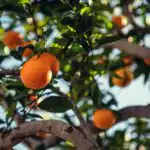
- Food: Plants like rice, beans, and vegetables are food. Examples include yam, maize, and cocoyam.
- Medicine: Some plants are used to make medicine to cure sickness. Examples include neem tree (dogonyaro), aloe vera, and ginger.
- Shelter: Trees provide wood for building houses. Examples include iroko, mahogany, and teak.
- Clothing: Cotton plants give fibers to make clothes. Other examples include flax and hemp.
- Air: Plants produce oxygen for us to breathe. This process is called photosynthesis.
- Shade: Trees give shade on hot days. Examples include mango trees, palm trees, and guava trees.
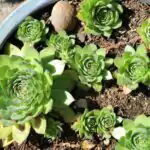
- Decoration: Flowers and plants beautify our homes and schools. Examples include roses, sunflowers, and lilies.
- Paper: Some plants are used to make paper. Examples include bamboo, eucalyptus, and pine trees.
- Fuel: Firewood from plants is used for cooking. Examples include firewood from cashew trees,mango trees,and guava trees.
- Protection: Hedges protect homes and farms from trespassers. Examples include cactus,bougainvillea,and thorny shrubs.
Teaching Methods
To deliver this lesson, the teacher will adopt the following methods: Discussion, Visual aids, Demonstration, Experiential Learning, Guided Writing, Questioning, Oral Assessment, Summary.
Instructional Procedures
To deliver this lesson, the teacher will adopt the following steps:
Step 1: Introduction
Time: 5 mins
Teaching skill: Set Induction
Teacher’s Activity: Ask pupils questions like: “What do we get from plants?”
Pupils’ Activity: Pupils respond to the questions.
Step 2: Explanation
Time: 10 mins
Teaching Skill: Explanation
Teacher’s Activity: Display a chart and discuss the uses of plants.Pupils’ Activity: Listen and observe the chart.
Step 3: Demonstration
Time: 8 mins
Teaching Skill: Demonstration
Teacher’s Activity: Show real plants and products; explain their uses.
Pupils’ activity: Observe and interact with the materials.
Step 4: Note-Taking
Time: 7 mins
Teaching Skill: Guided Writing
Teacher’s Activity: Guide pupils to write short notes on uses of plants.
Pupils’ Activity: Copy notes in their books.
Step 5: Evaluation/Review
Time: 5 mins
Teaching Skill: Questioning
Teacher’s Activity: Ask questions to check pupils’ understanding.
Pupils’ Activity: Answer questions orally.
Objective-aligned checks:
- Mention at least five uses of plants.
- Draw and label a simple plant and its product (e.g., fruit or leaves).
Step 6: Conclusion
Time: 3 mins
Teaching Skill: Recap
Teacher’s Activity: Summarize the uses of plants and their importance.
Pupils’ Activity: Listen attentively and participate in summary.
Lesson Keywords
- Food – Plants that provide nourishment.
- medicine – Plants used to cure illnesses.
- Shelter – Plants used for building homes.
- Clothing – Plants used to make fabrics.
- Oxygen – gas produced by plants for breathing.
Lesson Evaluation
To evaluate the learning, the teacher asks pupils to:
- Mention three uses of plants.
- Name one plant that is used for food and another for medicine.
- Draw a plant and name one of its uses.
Assignment/Homework
- List five plants found in your home or community and state their uses.
- Bring a leaf or fruit from any plant to class tomorrow.
Differentiation
- For slower learners: Provide simplified charts and one-on-one assistance.
- For advanced learners: Encourage them to research and present on less common uses of plants.
- For visual/auditory/kinesthetic learners: Use visual aids, verbal explanations, and hands-on activities with real plants.
Note for Teachers
Encourage pupils to share personal experiences with plants to make the lesson relatable. Use visual aids and real plant materials for better engagement. Happy teaching!


Community Join the conversation Open discussion +