

Class: Basic 1
Term: Third Term
Subject: Pre-Vocational Studies
Previous Lesson: Home For Farm Plants
Topic: Farm Animals
Content/Learning Area: Animals that live on land and in water
Time Allocation: 40 minutes
Performance Objectives
By the end of the lesson, pupils should be able to:
- Cognitive Domain: List three examples of animals that live on land and in water.
- Affective Domain: Show appreciation for the diversity of farm animals.
- Psychomotor Domain: Draw and label one animal that lives on land and one that lives in water.
- Social Domain: Participate actively in class discussions about farm animals.
Reference Materials
- Pre-Vocational Studies for Primary Schools.
- Pictures/charts of farm animals.
- Uses Of Farm Animals for Basic 1
- Lesson note on Meaning of Agriculture for Primary 1
- Lesson on The Environment (Basic 1)
Instructional Materials
To deliver this lesson, the teacher will employ the help of the following materials: pictures/charts of farm animals, real objects (if available), and drawing materials.
Rationale for the Lesson
Understanding farm animals and their habitats is crucial for pupils to appreciate their importance and diversity in our environment.
Prerequisite/Previous Knowledge
Pupils are familiar with some common animals around their environment.
Lesson Content
Farm animals are a diverse group of creatures that play a vital role in our lives. They provide us with food, clothing, and other essential resources. some of these animals live on land, while others live in water.
What are Animals That Live on Land?
Animals that live on land are called terrestrial animals. They have adapted to survive in various environments, from forests and grasslands to deserts and mountains. The following are examples of animals that live on land:
- cow: A large, herbivorous mammal that provides us with milk, beef, and leather.
- Horse: A strong and agile animal used for transportation, work, and recreation.
- Goat: A smaller herbivorous mammal that provides us with milk, meat, and wool.
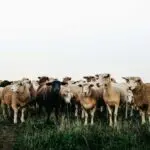
- Sheep: A gentle and woolly animal that provides us with wool, meat, and milk.
- Pig: A domesticated omnivore that provides us with pork and bacon.
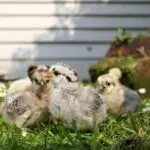
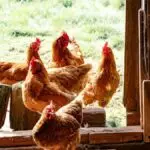
- Chicken: A common poultry bird that provides us with eggs and meat.
- Duck: A waterbird that can also live on land and provides us with eggs and meat.
- Cat: A domesticated carnivore often kept as a pet and for pest control.
- Dog: A domesticated carnivore often kept as a pet and for security.
What are Animals That Live in Water?
animals that live in water are called aquatic animals. They have adapted to survive in different water environments, such as oceans, lakes, rivers, and ponds. Examples of animals that live in water include:
- Fish: A diverse group of aquatic vertebrates that breathe through gills and have fins for swimming.
- Frog: An amphibian that can live both on land and in water.
- Duck: A waterbird that can also live on land and provides us with eggs and meat.
- Swan: A large, graceful waterbird known for its elegant neck and white plumage.
- Crab: A crustacean with a hard exoskeleton and ten legs.
- Turtle: A reptile with a hard shell that protects its body.
- Dolphin: A marine mammal that is highly intelligent and social.
- Lobster: A marine crustacean with a long body and strong claws.
- seahorse: A small marine fish with a distinctive horse-like head.
Teaching Methods
To deliver this lesson, the teacher will adopt the following methods: Discussion, explanation, Visual Aids, Demonstration.
Instructional Procedures
To deliver this lesson, the teacher will adopt the following steps:
Step 1: Introduction
Time: 5 minutes
Teaching Skill: Set Induction
Teacher’s Activity: The teacher asks pupils about different animals they know and where they live.
Pupils’ Activity: pupils respond by naming animals they know and their habitats.
Step 2: Animals That Live on Land
Time: 10 minutes
Teaching Skill: Explanation
Teacher’s Activity: The teacher explains what terrestrial animals are and provides examples using pictures/charts.
Pupils’ Activity: Pupils listen attentively and ask questions for clarification.
Step 3: Animals That Live in Water
Time: 10 minutes
Teaching Skill: Explanation
Teacher’s Activity: The teacher explains what aquatic animals are and provides examples using pictures/charts.
Pupils’ Activity: Pupils listen attentively and ask questions for clarification.
Step 4: Drawing and Labeling
Time: 10 minutes
Teaching Skill: Demonstration
Teacher’s Activity: The teacher instructs pupils to draw and label one animal that lives on land and one that lives in water.
Pupils’ Activity: Pupils draw and label the animals as instructed.
Step 5: Note-Taking
Time: 3 minutes
Teaching Skill: summarization
Teacher’s Activity: The teacher summarizes the lesson on the board.
Pupils’ Activity: Pupils copy the notes into their notebooks.
Step 6: Evaluation/Review
Time: 2 minutes
Teaching Skill: questioning
Teacher’s Activity: The teacher asks pupils questions based on the lesson.
Pupils’ Activity: Pupils answer the questions to demonstrate their understanding.
Objective-aligned checks:
- List three examples of animals that live on land and in water.
- Draw and label one animal that lives on land and one that lives in water.
Step 7: Conclusion
Time: 2 minutes
Teaching Skill: closure
Teacher’s Activity: The teacher concludes the lesson by summarizing the main points.
Pupils’ Activity: Pupils listen and ask any final questions.
Lesson Keywords
- Terrestrial Animals – Animals that live on land.
- Aquatic Animals – Animals that live in water.
- Habitat – The natural environment where an animal lives.
- Farm Animals – Animals raised on farms for various purposes.
Lesson Evaluation
To evaluate the learning, the teacher asks pupils to:
- Name three animals that live on land.
- Name three animals that live in water.
- Draw and label one animal that lives on land and one that lives in water.
Assignment/Homework
- List five animals that live on land and their uses.
- List five animals that live in water and their uses.
Differentiation
- For slower learners: provide simplified pictures and one-on-one assistance during drawing activities.
- For advanced learners: Encourage them to research and present on less common farm animals and their habitats.
- For visual/auditory/kinesthetic learners: Use visual aids, verbal explanations, and hands-on activities like drawing and acting out animal movements.
Note for Teachers
Ensure to use colorful and engaging visuals to capture pupils’ attention. encourage active participation and provide positive reinforcement.

Community Join the conversation Open discussion +