

Class: Primary Three
Term: Third Term
Subject: Pre-vocational Studies
Curriculum Theme: Agricultural Science
Previous Lesson:
Topic: Balanced Diet
Content/Learning Area: Balanced Diet
Time allocation: 40 minutes
Performance Objectives
By the end of the lesson, pupils should be able to:
- Cognitive Domain:
1. Define a balanced diet.
2. Identify the six major food groups.
3.Give examples of foods from each food group.
4. explain the importance of a balanced diet.
- Affective Domain:
1. Appreciate the importance of a balanced diet for good health.
- Psychomotor Domain:
1. Identify food items from a chart.
- Social Domain:
1.Discuss the benefits of eating a balanced diet with peers.
Reference Materials
- 9 – Years Basic Education Curriculum
- Abuja educational Resource Center Scheme of work
- NAPPS National Unified Scheme of Work
- Online details
- relevant Textbooks
Instructional Materials
To deliver this lesson, the teacher will use the following materials:
- Whiteboard or chart
- Markers or chalk
- Pictures or charts of food groups
Rationale for the Lesson
Understanding balanced diets is crucial for pupils’ health and well-being. This lesson provides a foundation for making healthy food choices, impacting their present and future health.
Prerequisite/Previous Knowledge
pupils are familiar with different types of food.
Lesson Content
balance Diet
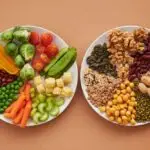
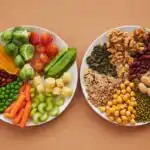
A balanced diet includes all six food groups in the right amounts. these foods give our bodies the things they need to work well. Such as, a balanced meal might have rice (carbohydrates), beans (protein), vegetables (vitamins and minerals), and a little oil (fats).
Food Groups
The major food groups provide essential nutrients for the body. These include:
- Carbohydrates: These give us energy. Examples include rice, bread, potatoes, and pasta. Other examples include yam, maize, and sorghum.
- Proteins: These help us grow and repair our bodies. Examples include beans, meat, fish, and eggs.Additional examples are milk, groundnuts, and soybeans.
- Fats: These give us energy and help our bodies use vitamins. Examples include butter, oil, and nuts.Other examples include avocado, margarine, and fatty fish.
- Vitamins: These help our bodies work properly. Examples include fruits and vegetables. Additional examples include oranges,carrots,and spinach.
- Minerals: These are vital for our bones, teeth, and other body parts. Examples include milk, cheese, and yogurt.Other examples include leafy green vegetables,nuts,and seeds.
- Water: This is very critically importent for everything our bodies do.examples include drinking water, watermelon, and cucumber.
teaching Methods
To deliver this lesson, the teacher will adopt the following methods: Discussion,Question and answer,Use of charts and pictures
Instructional Procedures
To deliver this lesson,the teacher will adopt the following steps:
Step 1: Introduction (Set Induction)
Time: 5 minutes
Teaching Skill: Questioning
Teacher’s Activity: Asks pupils what they ate for breakfast and initiates a discussion about different foods.
pupils’ Activity: Respond to the teacher’s questions and participate in the discussion.
Step 2: Clarification of Key Concepts
Time: 10 minutes
teaching Skill: Explanation
Teacher’s Activity: Defines a balanced diet and explains the importance of eating one.
Pupils’ Activity: Listen attentively and ask clarifying questions.
Step 3: exhibition/Guided Practice
Time: 10 minutes
Teaching skill: Exhibition
Teacher’s Activity: Shows a chart of the six food groups and gives examples of foods from each group.Pupils’ Activity: Observe the chart and identify foods from each group.
Step 4: Self-Reliant Practice
Time: 5 minutes
Teaching Skill: Guided Practice
Teacher’s Activity: Asks pupils to name one food from each food group.
Pupils’ Activity: name one food from each food group.
Step 5: Note-Taking
Time: 5 minutes
Teaching Skill: Note-taking
Teacher’s Activity: Guides pupils in taking notes on the key concepts.
Pupils’ Activity: Take notes on the key concepts.
Step 6: Evaluation/Review
Time: 5 minutes
Teaching Skill: Questioning
Teacher’s Activity: Asks review questions to assess understanding.
Pupils’ Activity: Answer review questions.
Objective-aligned checks:
- Define a balanced diet.
- Identify the six major food groups.
- explain the importance of a balanced diet.
Step 7: Conclusion
Time: 5 minutes
Teaching Skill: Summarizing
Teacher’s Activity: Summarizes the key points of the lesson.
Pupils’ Activity: Listen to the summary and ask any remaining questions.
Lesson Keywords
- Balanced Diet – A diet that contains all six food groups in the right amounts.
- Carbohydrates – Food group that provides energy.
- Proteins – Food group that helps in growth and repair.
- Fats – Food group that provides energy and helps in vitamin absorption.
- Vitamins – Nutrients that help the body function properly.
- Minerals – Nutrients vital for bones, teeth, and other body parts.
Lesson Evaluation
To evaluate the learning, the teacher asks pupils to:
- What is a balanced diet?
- Name one food from each food group.
- Why is it critically important to eat a balanced diet?
Assignment/Homework
- List three examples of foods from each food group.
- Explain why it is important to include all the food groups in your daily meals.
Differentiation
- For slower learners: Provide one-on-one assistance and simplified explanations.
- For advanced learners: Encourage them to research and present additional data on balanced diets.
- For visual/auditory/kinesthetic learners: Use visual aids, discussions, and hands-on activities to cater to different learning styles.
Note for Teachers
Ensure to use real-life examples and visual aids to make the lesson engaging and relatable for the pupils. Encourage active participation and provide constructive feedback.


Community Join the conversation Open discussion +