

Class: Primary 3
Term: 1st Term
Week: 5
Age: 8 years
Duration: 40 minutes
Subject: Pre Vocational Studies
Curriculum Theme: Agricultural Science
Previous Lesson: Meaning And Types Of Savannah Crops
Topic: Distribution Of Animals: Forest Animals
Content/Learning Area: Forest animals e.g. Fish, Pigs, Snails.
Performance Objectives
By the end of the lesson, pupils should be able to:
Cognitive Domain: Identify and mention examples of forest animals such as fish, pigs, and snails.
Affective Domain: Show interest in learning about forest animals and respect for nature.
Psychomotor Domain: Draw or point at pictures of common forest animals when shown.
Social Domain: Participate actively in group discussions about the uses of forest animals.
Reference Materials
The following resources were used in planning this lesson:
- 9 Years Basic Education Curriculum
- Abuja Educational Resource Centre Scheme of work
- NAPPS National Unified Scheme of Work
- Online information from: Wikipedia – Forest
- Relevant Textbooks
Instructional Materials
The teacher will teach this lesson with the aid of:
- Chart showing pictures of fish, pigs, and snails
- Real specimens of snails in a container
- Flashcards with names of forest animals
- A short video clip about forest animals
- Whiteboard and markers
Rationale for the Lesson
Pupils need to understand forest animals because they are important to agriculture, food supply, and the environment.
Prerequisite/Previous Knowledge
Pupils have seen or eaten forest animals such as fish, pigs, or snails at home or in the market.
Lesson Content
Distribution of Animals: Forest Animals
Forest animals are animals that live in the forest or are usually found in bushy places. They depend on the plants, soil, and water in the forest for survival.
Examples of Forest Animals
The following are examples of forest animals:
- Fish
- Pigs
- Snails
Importance of Forest Animals
These include:
- Fish provides food for man
- Pigs give us meat called pork
- Snails are eaten as food
- They provide income when sold in the market
- They help maintain the balance of nature
Forest Animals and Their Habitat
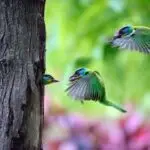
A forest has many trees and layers of plants that provide food, water, cover and nesting places. Nigerian forest animals include monkeys, duikers, squirrels, pangolins, snakes, birds and insects; exact species differ by location.
Some climb, some burrow and some use colour or quiet movement for protection. Wild animals should be observed from a safe distance. Habitat loss and hunting can reduce their numbers.
Teaching Methods
Discussion, Lecture, Storytelling, Explanation, Visual Aids, Group Work
Instructional Procedures
To deliver this lesson, the teacher will adopt the following steps:
Step 1: Introduction
Time: 5 mins
Teaching Skill: Set Induction
Teacher’s Activity: Teacher shows a snail in a container and asks pupils if they have seen such animals before.
Pupils’ Activity: Pupils respond by mentioning where they have seen the animals.
Learning Point: Pupils’ interest is aroused and linked to prior knowledge.
Step 2: Meaning of Forest Animals
Time: 5 mins
Teaching Skill: Explanation
Teacher’s Activity: Teacher explains the meaning of forest animals as animals found in the bush or forest.
Pupils’ Activity: Pupils listen attentively.
Learning Point: Pupils understand the meaning of forest animals.
Step 3: Examples of Forest Animals
Time: 7 mins
Teaching Skill: Demonstration
Teacher’s Activity: Teacher shows charts and flashcards of fish, pigs, and snails, and names them clearly.
Pupils’ Activity: Pupils repeat the names and point at the pictures.
Learning Point: Pupils can identify forest animals.
Step 4: Importance of Forest Animals
Time: 8 mins
Teaching Skill: Discussion
Teacher’s Activity: Teacher explains the uses of forest animals in providing food, meat, income, and balancing nature.
Pupils’ Activity: Pupils mention examples of food and uses.
Learning Point: Pupils understand why forest animals are important.
Step 5: Group Activity
Time: 5 mins
Teaching Skill: Collaboration
Teacher’s Activity: Teacher divides class into groups to discuss which of the animals they have eaten or seen.
Pupils’ Activity: Pupils discuss and report back.
Learning Point: Pupils share knowledge and learn from each other.
Step 6: Note Taking
Time: 3 mins
Teaching Skill: Reinforcement
Teacher’s Activity: Teacher writes short notes on the board.
Pupils’ Activity: Pupils copy notes into their books.
Learning Point: Pupils have written records for reference.
Step 7: Evaluation
Time: 5 mins
Teaching Skill: Questioning
Teacher’s Activity: Teacher asks pupils to name three forest animals and state one use of each.
Pupils’ Activity: Pupils answer questions.
Learning Point: Pupils’ knowledge is assessed.
Step 8: Closure/Conclusion
Time: 2 mins
Teaching Skill: Cognitive/Social Closure
Teacher’s Activity: Teacher summarizes the lesson, encourages pupils to value animals, and praises participation.
Pupils’ Activity: Pupils clap and listen to closing remarks.
Learning Point: Pupils are motivated to appreciate forest animals.
Lesson Keywords
- Forest: A large area with many trees and plants.
- Animals: Living things that can move and eat food.
- Fish: A water animal that people eat.
- Pig: A farm animal that gives us pork.
- Snail: A small slow animal with a shell.
Lesson Evaluation
To evaluate the learning, the teacher asks pupils to:
- What are forest animals?
- Mention three examples of forest animals.
- State one importance of fish.
- What meat do we get from pigs?
- Why are snails important to man?
Differentiation
Teacher supports slower learners with pictures and repeated explanations while advanced learners give additional examples of forest animals.
Note for teachers using this lesson plan
Use real-life examples like fish from the market or live snails to make the lesson more practical. Encourage pupils to participate in group discussions to boost interaction.

Community Join the conversation Open discussion +