

Class: Primary 3
Term: 1st Term
Week: 7
Age: 8 years
Duration: 40 minutes
Subject: Pre Vocational Studies
Curriculum Theme: Agricultural Science
Previous Lesson: Meaning And Types Of Savannah Animals
Topic: Materials Needed For Growing Crops
Content/Learning Area: Good seeds, Stem cutting, Fertilizers (manure).
Performance Objectives
By the end of the lesson, pupils should be able to:
- Cognitive Domain: Explain the materials needed for growing crops.
- Affective Domain: Appreciate the importance of using the right materials for healthy crop growth.
- Psychomotor Domain: Identify and sort different materials used for planting crops.
- Social Domain: Work together in groups to list and discuss the materials needed for crop production.
Reference Materials
The following resources were used in planning this lesson:
- 9 Years Basic Education Curriculum
- Abuja Educational Resource Centre Scheme of work
- NAPPS National Unified Scheme of Work
- Online information from: Britannica – Fertilizer | Definition, Types, Plant Nutrients, Application, & Facts
- Relevant Textbooks
Instructional Materials
The teacher will teach this lesson with the aid of:
- Samples of seeds (maize, beans, rice)
- Stem cuttings (cassava, sugarcane)
- Pictures or charts of fertilizers and manure
- Real manure or fertilizer samples
- Flashcards with names of materials
- A hoe or small farm tools
Rationale for the Lesson
Crops cannot grow well without the right materials, so pupils need to understand the basic requirements for planting and healthy growth.
Prerequisite/Previous Knowledge
Pupils have seen farmers planting crops in their environment and are familiar with seeds and soil as basic planting materials.
Lesson Content
Materials Needed For Growing Crops
Crops need certain materials to grow well. These materials help the crops to start growing, remain healthy, and produce food for people.
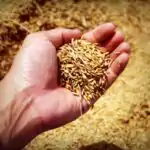
Good Seeds: Seeds are small parts of plants that grow into new plants. Good seeds are clean, healthy, and free from pests and diseases.
The following are qualities of good seeds:
- They are not broken
- They are free from pests
- They are dry and healthy
- They can germinate easily
Stem Cutting: Some crops do not grow from seeds but from parts of the plant like stems. This is called stem cutting. Examples include cassava and sugarcane.
Examples are crops grown with stem cutting:
- Cassava
- Sugarcane
- Yam
- Cocoyam
Fertilizers (Manure): Fertilizers and manure provide food for crops to grow well. They add nutrients to the soil that crops need to stay healthy.
These include types of fertilizers:
- Organic manure
- Chemical fertilizer
- Compost manure
- Animal dung
Teaching Methods
Discussion, Lecture, Explanation, Question and Answer, Demonstration, Group Work, Use of Instructional Materials
Instructional Procedures
To deliver this lesson, the teacher will adopt the following steps:
Step 1: Introduction
Time: 5 mins
Teaching Skill: Set Induction
Teacher’s Activity: Teacher shows different seeds and asks pupils what they are and where they are used.
Pupils’ Activity: Pupils observe and respond with answers.
Learning Point: Pupils become interested in the lesson.
Step 2: Good Seeds
Time: 7 mins
Teaching Skill: Explanation
Teacher’s Activity: Teacher explains the meaning of good seeds and shows examples.
Pupils’ Activity: Pupils listen, observe, and touch samples.
Learning Point: Pupils understand the importance of good seeds.
Step 3: Stem Cutting
Time: 7 mins
Teaching Skill: Demonstration
Teacher’s Activity: Teacher shows cassava stem cuttings and explains how crops grow from them.
Pupils’ Activity: Pupils handle the stem cuttings and identify crops.
Learning Point: Pupils learn crops that grow from stem cuttings.
Step 4: Fertilizers and Manure
Time: 8 mins
Teaching Skill: Discussion
Teacher’s Activity: Teacher displays fertilizer and manure, explains their uses.
Pupils’ Activity: Pupils touch, observe, and mention the differences.
Learning Point: Pupils understand why crops need fertilizers.
Step 5: Group Activity
Time: 5 mins
Teaching Skill: Group Work
Teacher’s Activity: Teacher groups pupils to list all materials needed for growing crops.
Pupils’ Activity: Pupils work in groups to list and present materials.
Learning Point: Pupils reinforce knowledge by group sharing.
Step 6: Note Taking
Time: 3 mins
Teaching Skill: Reinforcement
Teacher’s Activity: Teacher dictates notes on materials needed for growing crops.
Pupils’ Activity: Pupils write notes in their books.
Learning Point: Pupils record the lesson in writing.
Step 7: Evaluation
Time: 3 mins
Teaching Skill: Questioning
Teacher’s Activity: Teacher asks pupils to answer oral and written questions.
Pupils’ Activity: Pupils respond individually.
Learning Point: Teacher checks pupils’ understanding.
Objective-aligned checks:
- Explain the materials needed for growing crops.
- Identify and sort different materials used for planting crops.
- Work together in groups to list and discuss the materials needed for crop production.
Step 8: Conclusion
Time: 2 mins
Teaching Skill: Closure
Teacher’s Activity: Teacher summarizes lesson, praises participation, and encourages farm observation.
Pupils’ Activity: Pupils listen and ask final questions.
Learning Point: Pupils leave with clear understanding.
Home Task: List four lesson examples connected with Materials Needed For Growing Crops and add one correct use, step or safety rule.
Lesson Keywords
- Seeds: Small parts of plants that grow into new plants
- Stem Cutting: Part of a stem used to grow a new plant
- Fertilizer: A substance added to soil to make crops grow well
- Manure: Waste from animals used to improve soil fertility
- Germination: The process of a seed starting to grow
Lesson Evaluation
To evaluate the learning, the teacher asks pupils to:
- What is a seed?
- Mention two qualities of good seeds.
- Name two crops that grow from stem cutting.
- What do fertilizers and manure do for crops?
- List three materials needed for growing crops.
Differentiation
The teacher supports slower learners with real-life examples and uses pictures for better understanding while advanced pupils are asked to explain and teach others.
Note for teachers using this lesson plan
Encourage practical demonstrations with real seeds and stem cuttings to keep pupils engaged. Use group activities to build teamwork and reinforce learning.



Community Join the conversation Open discussion +