

Class: Primary 1
Term: 3rd Term
Week: 7
Age: 6 years
Duration: 45 minutes
Subject: Mathematics
Curriculum Theme: Mathematics
Previous Lesson: 3, Dimensional Shapes, Identification of Cubes, Cuboid, Cylinder, Sphere.
Topic: Time
Subject Matter: Days of the week, Reading clock; hour, minutes and seconds, Differentiating between hours, minutes and second’s hand in a clock
Specific Objectives
By the end of the lesson, pupils should be able to:
Cognitive Domain:
- State the seven days of the week.
- Identify the hour, minute, and second hands on a clock.
- Read time to the hour (e.g., 3 o’clock).
Affective Domain:
- Appreciate the importance of telling time for daily activities.
- Show interest in learning how to read a clock.
Psychomotor Domain:
- Point to the different hands on a clock.
- Demonstrate setting a clock to a specific hour.
Social Domain:
- Discuss with peers when certain activities are done during the day.
Reference Materials
The following resources were used in planning this lesson:
- 9 Years Basic Education Curriculum
- State Unified Scheme of Work
- New General Mathematics for Primary 1
Instructional Materials
The teacher will teach this lesson with the aid of:
- A real clock or a toy clock with movable hands
- A chart showing the days of the week
- A chart showing a clock face with labeled hands
Rationale for the Lesson
Understanding time helps pupils organize their daily activities at school and home. Learning to read a clock and know the days of the week enables pupils to follow schedules and manage their time effectively.
Prerequisite/Previous Knowledge
Pupils can count numbers from 1 to 12 and can identify basic shapes.
Lesson Content/Board Summary
Time
Days of the Week
There are seven days in a week. Knowing the days helps us to plan our activities.
The seven days of the week are:
- Monday
- Tuesday
- Wednesday
- Thursday
- Friday
- Saturday
- Sunday
Activities like going to school are done on weekdays (Monday to Friday). Playing and resting are often done on weekends (Saturday and Sunday).
The Clock
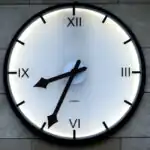
A clock is an instrument used to tell time. It has numbers from 1 to 12 on its face.
Hands of a Clock
A clock has different hands that point to the numbers to show the time.
- Hour Hand: This is the shortest hand. It moves slowly and tells us the hour.
- Minute Hand: This is the long hand. It moves faster than the hour hand and tells us the minutes.
- Second Hand: This is the thinnest and fastest hand. It shows the seconds.
Reading Time to the Hour (‘o’clock’)
When the minute hand points to 12 and the hour hand points to any number, we read the time as “o’clock”.
Example 1:
- If the hour hand points to 3 and the minute hand points to 12, the time is 3 o’clock.
Example 2:
- If the hour hand points to 7 and the minute hand points to 12, the time is 7 o’clock.
Teaching Methods/Instructional Techniques
Discussion, Lecture, Demonstration, Question and Answer, Visual Aids
Instructional Procedures
Step 1: Introduction
Time: 5 minutes
Teaching Skill: Set Induction
Teacher’s Activity: The teacher greets the pupils, reviews the previous lesson, and introduces the topic “Time” by asking pupils what they use to know when it is time for school or play.
Pupils’ Activity: Pupils respond to greetings and questions, mentioning clocks or watches.
Learning Point: Pupils are introduced to the concept of time and its importance.
Step 2: Days of the Week
Time: 10 minutes
Teaching Skill: Explanation/Recitation
Teacher’s Activity: The teacher displays a chart of the days of the week, names each day, and leads pupils in reciting them. The teacher asks pupils to name activities done on specific days (e.g., school days, weekends).
Pupils’ Activity: Pupils recite the days of the week and mention activities they do on different days.
Learning Point: Pupils learn and recall the seven days of the week and relate them to daily activities.
Step 3: Introducing the Clock
Time: 5 minutes
Teaching Skill: Demonstration
Teacher’s Activity: The teacher shows a real clock or a toy clock to the pupils, pointing out the numbers on its face. The teacher asks pupils what they see on the clock.
Pupils’ Activity: Pupils observe the clock and identify the numbers.
Learning Point: Pupils become familiar with the appearance of a clock.
Step 4: Identifying Clock Hands
Time: 10 minutes
Teaching Skill: Explanation/Identification
Teacher’s Activity: The teacher explains the different hands of the clock (hour hand, minute hand, second hand) using the instructional clock. The teacher points to each hand and explains its function and relative length.
Pupils’ Activity: Pupils listen attentively and point to the different hands as directed by the teacher.
Learning Point: Pupils learn to identify and understand the purpose of the hour, minute, and second hands.
Step 5: Differentiating Between Clock Hands
Time: 5 minutes
Teaching Skill: Questioning/Practice
Teacher’s Activity: The teacher moves the hands of the clock and asks pupils to identify which hand is the hour hand, minute hand, or second hand. The teacher emphasizes their differences in length and movement.
Pupils’ Activity: Pupils actively participate by pointing and naming the different hands.
Learning Point: Pupils can differentiate between the hour, minute, and second hands.
Step 6: Simple Time Reading (‘o’clock’)
Time: 5 minutes
Teaching Skill: Demonstration/Guided Practice
Teacher’s Activity: The teacher demonstrates how to read time to the hour by setting the minute hand to 12 and the hour hand to various numbers (e.g., 2 o’clock, 5 o’clock). The teacher guides pupils to read the time.
Pupils’ Activity: Pupils watch the demonstration and practice reading the time to the hour.
Learning Point: Pupils learn to read basic ‘o’clock’ times on a clock.
Step 7: Evaluation/Review
Time: 5 minutes
Teaching Skill: Questioning/Assessment
Teacher’s Activity: The teacher evaluates the learning by asking the following questions:
- Mention the seven days of the week.
- What instrument do we use to tell time?
- Name the three hands found on a clock.
- Which hand is the shortest on the clock?
- If the hour hand points to 9 and the minute hand points to 12, what is the time?
Pupils’ Activity: Pupils answer orally and in writing.
Learning Point: Pupils demonstrate understanding of the lesson.
Step 8: Conclusion
Time: 1 minute
Teaching Skill: Summarization
Teacher’s Activity: The teacher summarizes the lesson by reminding pupils about the days of the week and the parts of a clock. The teacher assigns homework to draw a clock and label its hands.
Pupils’ Activity: Pupils listen to the summary and copy the homework.
Learning Point: The lesson is concluded with a recap and assignment.
Home Task: Solve two new exercises on Time. Show each step and check each answer.
Lesson Keywords
- Days – The units that make up a week.
- Week – A period of seven days.
- Clock – An instrument used for telling time.
- Hour – A period of 60 minutes.
- Minute – A period of 60 seconds.
- Second – A very short unit of time.
- Hand – The pointers on a clock face.
Differentiation
For pupils who grasp the concepts quickly, the teacher can challenge them to read half-hour times. For pupils needing more support, the teacher will provide extra practice identifying the hands and reciting the days of the week using flashcards or one-on-one guidance.
Note for teachers using this lesson plan
Ensure that the instructional clock used is large enough for all pupils to see clearly. Allow ample time for pupils to handle the clock and practice moving the hands themselves. Encourage active participation through songs or rhymes about the days of the week.
Community Join the conversation Open discussion +