

Note for teachers using this lesson plan
This lesson focuses on helping Primary 1 pupils identify and distinguish between common three-dimensional shapes like cubes, cuboids, cylinders, and spheres. Ensure you have concrete examples of these shapes readily available for demonstration and pupil interaction. Guide pupils through hands-on activities to sort and name the shapes, paying close attention to their ability to differentiate between cubes and cuboids. By the end of the lesson, pupils should be able to confidently identify these shapes and give examples from their environment.
Class: Primary One
Term: Third Term
Week: 7
Age: 6 years
Duration: 45 minutes
Subject: General Mathematics
Curriculum Theme: Mensuration and Geometry
Focal competence: Identifying solid shapes in the environment
Key competencies/values: ICT and Digital Competencies
Skills:
- Sorting cubes, cuboids, cylinders and spheres
- Identifying and naming cubes, cuboids, cylinders and spheres
- Distinguishing cuboids and cubes
Previous Lesson: Weight, Comparing Light and Heavy Objects
Topic: Three Dimensional Shapes
Subject Matter: Identifying cubes, cuboids, cylinders, spheres
Specific Objectives
By the end of the lesson, pupils/students should be able to:
Cognitive Domain
- Sort out cubes, cuboids, cylinders and spheres.
- Identify and name cuboids, cubes, cylinders and spheres.
- Distinguish between cuboids and cubes.
- Mention solid shapes in homes and environment.
Psychomotor Domain
- Sort solid shapes according to their shapes.
Reference Materials
The following resources were used in planning this lesson:
- 2025 Revised 9 Years Basic Education Curriculum
- Relevant State Unified Scheme of Work
- Universal Basic Mathematics for Primary 1
- The HeadTeacher Scheme of work
Instructional Materials
The teacher will teach this lesson with the aid of:
- Ludo dice
- Cuboids (e.g., small carton, matchbox)
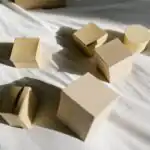
- Cubes (e.g., sugar cube, building block)
- Spheres (e.g., ball, orange)
- Cylinders (e.g., tin of milk, battery)
- Chart showing different 3D shapes
Rationale for the Lesson
This lesson helps pupils recognise common three-dimensional shapes found in their everyday surroundings. Understanding these shapes builds a foundation for more advanced geometry concepts. It also develops their observation and classification skills, which are essential for problem-solving.
Prerequisite/Previous Knowledge
Pupils can identify basic two-dimensional shapes like circles, squares, and rectangles. They also have a general awareness of objects in their environment.
Lesson Content/Board Summary
Three Dimensional Shapes
What are Three-Dimensional (3D) Shapes?
Three-dimensional shapes are solid shapes that have length, width, and height. They take up space.
Types of Three-Dimensional Shapes
1. Cube
A cube has:
- All its faces are square.
- All its sides are equal.
- It has flat surfaces.
Examples of cubes:
- Ludo dice
- Sugar cube
- Some building blocks
2. Cuboid
A cuboid has:
- Faces that are rectangles or a mix of rectangles and squares.
- It has flat surfaces.
Examples of cuboids:
- Matchbox
- Book
- Carton of milk
Distinguishing between Cubes and Cuboids
The main difference is:
- A cube has all its faces as squares and all sides equal.
- A cuboid has faces that are mostly rectangles, and its sides are not all equal.
3. Cylinder
A cylinder has:
- Two flat, circular ends.
- One curved surface in the middle.
- It can roll and sometimes stack.
Examples of cylinders:
- Tin of milk
- Battery
- Drinking can
4. Sphere
A sphere has:
- Only one curved surface.
- No flat faces or straight edges.
- It rolls easily.
Examples of spheres:
- Ball
- Orange
- Marble
Teaching Methods/Instructional Techniques
Discussion, Demonstration, Guided Practice, Question and Answer, Explanation, Observation, Group Work, Individual Practice.
Instructional Procedures
Step 1: Introduction
Time: 5 minutes
Teaching Skill: Activating prior knowledge
Teacher’s Activity: The teacher greets the pupils and asks them to name some flat shapes they know (e.g., square, circle). The teacher then shows some everyday objects and asks if they are flat or solid.
Pupils’ Activity: Pupils respond by naming flat shapes and observing the objects.
Learning Point: Recalling familiar shapes
Step 2: Identifying Cubes
Time: 7 minutes
Teaching Skill: Demonstration/Identification
Teacher’s Activity: The teacher displays a Ludo dice and other cube-shaped objects. The teacher explains that this shape is called a cube and points out its square faces and equal sides. Pupils are asked to touch and describe the cube.
Pupils’ Activity: Pupils observe the cubes, touch them, and repeat the name “cube.”
Learning Point: Cube identification
Step 3: Identifying Cuboids
Time: 7 minutes
Teaching Skill: Demonstration/Comparison
Teacher’s Activity: The teacher displays a matchbox or a small carton. The teacher explains that this shape is a cuboid and points out its rectangular faces. The teacher guides pupils to compare it with the cube, noting the difference in face shapes.
Pupils’ Activity: Pupils observe the cuboids, compare them with cubes, and repeat the name “cuboid.”
Learning Point: Cuboid identification
Step 4: Distinguishing Cubes and Cuboids
Time: 6 minutes
Teaching Skill: Guided practice/Differentiation
Teacher’s Activity: The teacher guides pupils to work in groups. Each group is given a mix of cubes and cuboids. The teacher instructs them to sort the shapes into two piles: cubes and cuboids, and explain their choices.
Pupils’ Activity: Pupils work in groups to sort the shapes and discuss the differences between cubes and cuboids.
Learning Point: Cubes and cuboids distinction
Step 5: Identifying Cylinders
Time: 6 minutes
Teaching Skill: Demonstration/Observation
Teacher’s Activity: The teacher shows a tin of milk or a battery. The teacher introduces it as a cylinder, highlighting its two flat circular ends and curved body. The teacher demonstrates how it can roll.
Pupils’ Activity: Pupils observe the cylinder, identify its features, and watch it roll. They repeat the name “cylinder.”
Learning Point: Cylinder identification
Step 6: Identifying Spheres
Time: 5 minutes
Teaching Skill: Demonstration/Engagement
Teacher’s Activity: The teacher presents a ball or an orange. The teacher names it a sphere and shows that it has only a curved surface and rolls easily. Pupils are encouraged to hold and feel the spherical objects.
Pupils’ Activity: Pupils observe and handle the spheres, noting their curved surface and ability to roll. They repeat the name “sphere.”
Learning Point: Sphere identification
Step 7: Evaluation/Review
Time: 5 minutes
Teaching Skill: Questioning/Assessment
Teacher’s Activity: The teacher evaluates the learning by asking the following questions:
- Show me a cube from the objects on the table.
- What is this shape called? (Teacher points to a cuboid).
- Can you tell the difference between a cube and a cuboid?
- Name one object in your home that looks like a sphere.
Pupils’ Activity: Pupils answer orally and in writing.
Learning Point: Shape identification skills
Step 8: Note-Taking
Time: 4 minutes
Teaching Skill: Guided Writing
Teacher’s Activity: The teacher guides pupils to copy the essential Board Summary notes on the names and examples of 3D shapes into their notebooks.
Pupils’ Activity: Pupils copy the notes carefully into their notebooks.
Learning Point: Copying shape notes
Step 9: Conclusion
Time: 3 minutes
Teaching Skill: Consolidation
Teacher’s Activity: The teacher summarises the main points of the lesson, reminding pupils about the four 3D shapes learned and encouraging them to look for these shapes in their environment. The teacher praises pupils for their participation.
Pupils’ Activity: Pupils listen attentively and acknowledge the summary.
Learning Point: Solid shapes in environment
Continuous Assessment/Further Study
Type: Homework
Instruction: Look around your home and draw two objects that look like each of the following shapes:
- Cube
- Cuboid
- Cylinder
- Sphere
Lesson Keywords
- Cube – A solid shape with six equal square faces.
- Cuboid – A solid shape with six rectangular faces.
- Cylinder – A solid shape with two flat circular ends and one curved side.
- Sphere – A perfectly round solid shape, like a ball.
- 3D Shapes – Shapes that have length, width, and height.
Differentiation
For weaker learners, provide more one-on-one guidance during sorting activities and use larger, more distinct examples of each shape. For faster learners, challenge them to find more examples of each shape in the classroom or to describe the properties of each shape in their own words.
Suggested Lesson Videos
For further understanding, pupils can watch videos on “Identifying 3D shapes for kids” on YouTube.
Teacher Guide for Using This Lesson Plan
Before the lesson, gather a good collection of real-life objects representing cubes (e.g., dice, small box), cuboids (e.g., matchbox, book), cylinders (e.g., tin, battery), and spheres (e.g., ball, orange). Start by reviewing 2D shapes to connect new learning with prior knowledge. During the lesson development, allow ample time for pupils to handle and explore the shapes. Emphasise the differences between cubes and cuboids through direct comparison. Encourage group work for sorting activities to foster peer learning. Guide pupils to copy the Board Summary notes after the main teaching points have been covered and evaluated. Ensure all pupils participate in identifying and naming the shapes. Check for understanding frequently by asking simple questions and providing immediate feedback.

Community Join the conversation Open discussion +