

Class: Primary 1
Term: 2nd Term
Subject: Agricultural Science
Previous Lesson: Meaning Of Plants
Topic: Examples Of Common Plants
Content/Learning Area: Examples of Common plants
Time Allocation: 40 minutes
Performance Objectives
By the end of the lesson, pupils should be able to:
- Cognitive Domain: List five examples of common plants.
- Affective Domain: Appreciate the role of plants in the environment.
- Psychomotor Domain: Draw one example of a common plant.
- Social Domain: Share ideas with peers about common plants.
Reference materials
The following resources were used in planning this lesson:
- 9 – Years Basic Education Curriculum Abuja.
- Educational Resource Centre Scheme of Work.
- NAPPS National Unified Scheme of Work.
- Online Information from: GeeksforGeeks – 50+ Plants Names in English: List of Common Plants
- Relevant Textbooks.
Instructional Materials
To deliver this lesson, the teacher will use the following materials:
- Flashcards showing pictures of common plants.
- A chart displaying plant names and characteristics.
- Real samples of small plants (e.g., grass or flowers).
- Drawing books and crayons.
Rationale for the Lesson
Understanding examples of common plants helps pupils identify the plants they see around them daily, fostering a connection to nature and their environment.
Prerequisite/Previous Knowledge
Pupils already know what plants are from the previous lesson and can recognize them in their surroundings.
lesson Content
Examples Of Common Plants
Plants are living things that grow in our surroundings. They provide us with food, shelter, and beauty. The following are examples of common plants and their descriptions:
- Grass: Green, soft, and grows close to the ground. Found in fields and lawns.
- Hibiscus: A plant with colorful flowers. Used as decoration.
- Mango Tree: Produces sweet,juicy mango fruits. Grows tall.
- Maize: A tall plant that grows corn. Common on farms.
- Tomato Plant: A small plant that grows juicy red tomatoes.
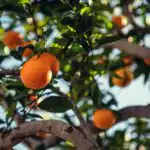
- Orange Tree: A tree that produces juicy and vitamin-rich oranges.
- Palm Tree: A tree that produces palm nuts and palm oil.
- Yam Plant: A plant with edible tubers that are a staple food in Nigeria.
Teaching Methods
To deliver this lesson, the teacher will adopt the following methods: Question and Answer,Discussion,Visual Aids,Exhibition,Interactive Discussion,Hands-on,guided Practice,explanation,Direct Teaching,Questioning,peer Review,Recap,Summarization.
Instructional Procedures
To deliver this lesson, the teacher will adopt the following steps:
Step 1: Introduction (Set Induction)
Time: 5 mins
Teaching Skill: Set Induction
Teacher’s Activity: Asks pupils what they remember about plants.Pupils’ Activity: Respond by sharing their knowledge.
Step 2: Examples of plants
Time: 10 mins
Teaching Skill: Visual Aids
Teacher’s Activity: Shows pictures of five common plants and explains them.
Pupils’ Activity: Observe,listen,and name the plants.
Step 3: Characteristics
Time: 7 mins
Teaching Skill: Interactive discussion
Teacher’s Activity: Describes features of the plants, e.g., leaves, flowers.
Pupils’ Activity: Participate by pointing at features.
Step 4: Drawing Activity
Time: 8 mins
Teaching Skill: Guided Practice
Teacher’s Activity: Guides pupils to draw one of the plants (e.g., hibiscus).
Pupils’ Activity: Draw the plant with crayons.
Step 5: Note-Taking
Time: 5 mins
Teaching Skill: Direct Teaching
Teacher’s Activity: Writes a short note for pupils to copy into notebooks.
Pupils’ Activity: copy the note into their notebooks.
Step 6: Evaluation/Review
Time: 3 mins
Teaching Skill: Peer Review
Teacher’s Activity: Asks pupils questions to assess learning.
Pupils’ Activity: Answer questions orally.
Objective-aligned checks:
- List five examples of common plants.
- Draw one example of a common plant.
Step 7: Conclusion
Time: 2 mins
Teaching Skill: Summarization
Teacher’s activity: Summarizes the lesson and gives positive feedback.
Pupils’ Activity: Listen attentively.
lesson Keywords
- Plants – Living things that grow in our surroundings.
- Grass – A green plant that grows close to the ground.
- Hibiscus – A plant with colorful flowers.
- Mango Tree – A tree that produces mango fruits.
- maize – A tall plant that grows corn.
- Tomato Plant – A small plant that grows tomatoes.
Lesson Evaluation
To evaluate the learning, the teacher asks pupils to:
- Name five common plants.
- Describe one feature of each plant.
- Draw a simple picture of the hibiscus plant.
- Explain why plants are vital to the environment.
Assignment/Homework
- List three plants found in your compound.
- draw and color any plant of your choice.
Differentiation
- For slower learners: Provide simplified flashcards and one-on-one assistance during the drawing activity.
- For advanced learners: Encourage them to research and present additional information about the uses of each plant.
- For visual/auditory/kinesthetic learners: Use a variety of visual aids, verbal explanations, and hands-on activities like touching real plant samples.
Note for Teachers
This lesson introduces pupils to plants they see every day. Engage them with real-life examples and encourage interaction during activities. Remember to be patient as they practice drawing. Happy teaching!


Community Join the conversation Open discussion +