

Class: Primary Two
Term: Second Term
Subject: National Values Education
Curriculum Theme: Social Studies
Previous Lesson:
Topic: Cleaning Tools and Activities
content/Learning area: What are cleaning Tools?, Types of Cleaning Activities
Time Allocation: 40 minutes
performance objectives
By the end of the lesson, pupils should be able to:
- Cognitive Domain:
- Identify tools needed for carrying out different cleaning activities.
- Explain the purpose of each cleaning tool.
- Psychomotor Domain:
- Demonstrate how to use some basic cleaning tools safely.
- Affective Domain:
- Appreciate the importance of using appropriate cleaning tools.
- Social Domain:
- Work cooperatively during cleaning activities.
Reference Materials
- 9 – Years Basic Education Curriculum
- abuja Educational Resource Center Scheme of Work
- NAPPS National Unified Scheme of Work
- Online Details
- Relevant Textbooks
Instructional materials
To deliver this lesson, the teacher will employ the help of the following materials:
- Broom
- Dustpan
- Mop
- bucket
- Duster
- Trash bags
- Gloves
- Cleaning cloths
- Pictures of cleaning tools
Rationale for the Lesson
This lesson is crucial for teaching pupils about hygiene and environmental obligation. Knowing how to use cleaning tools effectively contributes to a cleaner and healthier surroundings, both at home and in school.
prerequisite/Previous Knowledge
The teacher will start by asking pupils what they do to keep their homes clean. The teacher will then introduce the topic of cleaning tools and their importance.
Lesson Content
What are Cleaning Tools?
Cleaning tools are items that help us clean. They make cleaning easier and more efficient. Examples are:
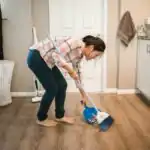
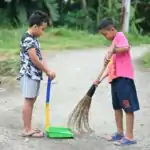
- Broom: Used to sweep dirt from floors.
- Dustpan: Used to collect dirt swept by a broom.
- Mop: Used to clean floors with water or cleaning solutions.
- Bucket: Holds water or cleaning solutions for mopping.
- Duster: Used to remove dust from surfaces.
- Trash bags: Used to collect and dispose of garbage.
- Gloves: Protect hands during cleaning.
- Cleaning cloth: Used to wipe surfaces and clean spills.
- Sponge: Used for scrubbing surfaces and washing dishes.
- Scrub brush: Used for cleaning tough stains and grime.
types of Cleaning Activities
Cleaning activities are the different tasks we do to keep our environment clean.
Sweeping the Floor
Sweeping the floor involves removing dirt and debris from the floor using specific tools.
These include:
- tools: Broom, Dustpan
- How to: Sweep dirt into the dustpan, then empty it into a trash bag.
Mopping the Floor
Mopping the floor involves cleaning floors with water or cleaning solutions to remove dirt and stains.
These include:
- Tools: Mop, Bucket, Cleaning solution (optional)
- How to: Fill the bucket with water or cleaning solution. Dip the mop, wring it out, and mop the floor in sections.
Dusting Surfaces
Dusting surfaces involves removing dust from furniture and other surfaces.
These include:
- Tools: duster, Cleaning cloth
- How to: Use the duster or cloth to wipe dust from shelves, tables, and furniture.
Cleaning Tables and Desks
Cleaning tables and desks involves wiping surfaces to remove dirt and spills.These include:
- Tools: Cleaning cloth, Mild cleaning solution (optional)
- How to: Dampen the cloth with water or cleaning solution and wipe the surface.
Collecting and disposing of Trash
Collecting and disposing of trash involves gathering waste and discarding it properly.
These include:
- Tools: Trash bags, Gloves
- How to: Use gloves to collect trash, place it in a bag, tie it securely, and dispose of it properly.
Washing Dishes
Washing dishes involves cleaning used plates, cups, and utensils after a meal.
These include:
- Tools: Sponge, dish soap, Water
- How to: Apply soap to the sponge, scrub the dishes, and rinse with water.
Cleaning Windows
Cleaning windows involves removing dirt and streaks from glass surfaces.
These include:
- Tools: Window cleaner, Spray bottle, Cleaning cloth
- How to: Spray the window cleaner on the glass and wipe it clean with a cloth.
Teaching Methods
To deliver this lesson, the teacher will adopt the following methods: presentation, Clarification, Question and answer, and Group Activity.
Instructional Procedures
To deliver this lesson, the teacher will adopt the following steps:
Step 1: Introduction
Time: 5 minutes
Teaching Skill: Questioning
Teacher’s Activity: Asks pupils about their cleaning experiences at home.
Pupils’ Activity: Share their experiences.
Step 2: Explanation of Key Concepts
Time: 10 minutes
Teaching Skill: Explanation
Teacher’s Activity: Explains what cleaning tools are and shows pictures of various tools.
Pupils’ Activity: Listen attentively and ask questions.
Step 3: Exhibition/Guided Practice
Time: 10 minutes
Teaching skill: Demonstration
Teacher’s Activity: Demonstrates how to use a broom, dustpan, and mop.
Pupils’ Activity: Observe the demonstration and ask questions.
Step 4: Self-reliant Practice
Time: 5 minutes
Teaching Skill: Monitoring
Teacher’s Activity: Supervises pupils as they practice using the tools.
Pupils’ Activity: Practice using the tools under supervision.
Step 5: Note-taking
Time: 5 minutes
Teaching Skill: Note-taking
Teacher’s Activity: Guides pupils in taking notes on the key cleaning tools and their uses.
Pupils’ Activity: Take notes on the key cleaning tools and their uses.
Step 6: Evaluation/Review
Time: 5 minutes
Teaching Skill: questioning
Teacher’s Activity: Asks evaluation questions.Pupils’ Activity: Answer the evaluation questions.
Objective-aligned checks:
- Identify tools needed for carrying out different cleaning activities.
- Explain the purpose of each cleaning tool.
- Demonstrate how to use some basic cleaning tools safely.
Step 7: Conclusion
Time: 5 minutes
Teaching Skill: Summarizing
Teacher’s Activity: Summarizes the key points about cleaning tools and their uses.
Pupils’ Activity: Listen and ask any remaining questions.
Lesson Keywords
- Broom – A tool used for sweeping floors.
- Dustpan – A flat container used to collect swept dirt.
- Mop – A tool used for cleaning floors with water.
- duster – A cloth or tool used for removing dust.
- Trash bag – A bag used for collecting and disposing of trash.
Lesson Evaluation
To evaluate the learning, the teacher asks pupils to:
- What are three tools used for cleaning the floor?
- What is the purpose of a dustpan?
- Why is it vital to use gloves when collecting trash?
- What are some other cleaning tools you can think of?
- How can you use cleaning tools safely?
Assignment/Homework
- Draw yoru favorite cleaning tool and write a sentence about its use.
- List three cleaning activities you can do at home to help your family.
Differentiation
- For slower learners: Provide one-on-one assistance and simplified instructions.
- For advanced learners: Encourage them to identify additional cleaning tools and their uses.
- For visual/auditory/kinesthetic learners: Use visual aids, verbal explanations, and hands-on activities to cater to different learning styles.
Note for Teachers
Ensure that all cleaning tools used in demonstrations are safe for pupils to handle. Emphasize the importance of hygiene and safety during cleaning activities. Encourage pupils to participate actively and ask questions.
Community Join the conversation Open discussion +