

Class: Primary Two
Term: Second Term
Subject: Basic Science and Technology
Curriculum Theme: Physical & Health Education
Previous Lesson: Benefits of Swimming
Topic: Basic skills In Swimming
Content/learning Area: safety Rules In Swimming
Time Allocation: 40 minutes
Performance Objectives
By the end of the lesson, pupils should be able to:
- Cognitive Domain:
1. List four safety rules in swimming.
2. Explain the importance of following safety rules in swimming.
3. Identify examples of floatation devices.
- affective Domain:
1. Show respect for safety rules and lifeguards.
2. Value the importance of personal safety in swimming.
- Psychomotor Domain:
1. demonstrate understanding of safety rules through role-playing.
- Social Domain:
1. Cooperate with others to ensure a safe swimming habitat.
Reference Materials
- 9 – Years Basic education Curriculum
- Abuja educational Resource Center Scheme of Work
- NAPPS National Unified scheme of Work
- Relevant Textbooks
Instructional Materials
To deliver this lesson, the teacher will use the following materials: Whiteboard or chart paper, markers or crayons, Pictures or illustrations related to swimming safety.
Rationale for the Lesson
Understanding swimming safety is crucial for preventing accidents and ensuring enjoyable water activities. This lesson provides a foundation for safe participation in water-related activities throughout life.
Prerequisite/previous Knowledge
The teacher will start by asking pupils about their experiences with swimming or water activities. A brief discussion about fun water activities will lead into the importance of safety.
Lesson Content
Safety Rules in Swimming
Swimming is a fun and healthy activity, but safety is key. Following safety rules ensures a safe and enjoyable experience.
What are Safety rules?
Safety rules are guidelines to keep us safe while swimming. They prevent accidents and make sure everyone has fun.
some of the critically important safety rules in swimming include:
These include:
- Always swim with adult supervision, especially for young children and beginners.
- No running around the pool; running can cause slips, falls, and injuries.
- Always listen to and follow lifeguard instructions; lifeguards are trained to keep everyone safe.
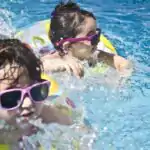
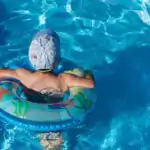
- Use appropriate floatation devices if needed; these help keep you afloat and prevent drowning.
- Never dive into shallow water; this can cause serious injuries.
- Stay within designated swimming areas; these areas are marked for safety and supervision.
- Learn basic swimming skills and water safety techniques; knowing how to swim and understanding water safety helps you stay safe.
- Check water depth before diving to avoid head or spinal injuries.
- Avoid swimming during thunderstorms to prevent risk of lightning strikes.
- Do not swim under the influence of alcohol or drugs, as they impair judgment and coordination.
Teaching Methods
To deliver this lesson, the teacher will adopt the following methods: Discussion, question and answer, Role-playing.
Instructional Procedures
To deliver this lesson, the teacher will adopt the following steps:
Step 1: introduction
Time: 5 minutes
Teaching Skill: Set Induction
Teacher’s Activity: Ask pupils about their experiences with swimming and water activities.Introduce the topic: Basic Skills in Swimming.
Pupils’ Activity: Share their experiences and listen attentively.
Step 2: clarification of Key Concepts
Time: 10 minutes
Teaching Skill: Explaining
Teacher’s Activity: Explain the concept of safety rules in swimming and their importance.
Pupils’ Activity: Listen attentively and ask clarifying questions.
Step 3: Presentation/Guided Practice
Time: 10 minutes
Teaching Skill: Demonstrating
Teacher’s activity: Demonstrate and explain each safety rule using pictures or illustrations.
Pupils’ Activity: Observe and participate in discussions.
Step 4: Autonomous Practice
Time: 5 minutes
teaching Skill: Monitoring
Teacher’s Activity: guide pupils in a short role-playing activity demonstrating the safety rules.
Pupils’ Activity: Participate in role-playing, demonstrating understanding of safety rules.
Step 5: Note-Taking
Time: 5 minutes
teaching Skill: Note-taking
Teacher’s Activity: Guide pupils in writing down key safety rules.
Pupils’ Activity: Write down key safety rules in their notebooks.
Step 6: Evaluation/Review
time: 5 minutes
Teaching Skill: Questioning
Teacher’s Activity: Ask evaluation questions to assess understanding.
Pupils’ Activity: Answer evaluation questions.
Objective-aligned checks:
- List four safety rules in swimming.
- Explain the importance of following safety rules in swimming.
- Identify examples of floatation devices.
Step 7: Conclusion
Time: 5 minutes
teaching Skill: Summarizing
Teacher’s Activity: Summarize the key safety rules and emphasize the importance of following them for a safe and enjoyable swimming experience. Encourage pupils to share their learning with family and friends.
Pupils’ Activity: Listen attentively and ask any remaining questions.
Lesson Keywords
- Supervision – Watching over someone to ensure their safety.
- Floatation devices – Equipment that helps you stay afloat in water.
- Lifeguard – A trained person who watches over swimmers and helps in emergencies.
- Shallow water – Water that is not deep.
- Designated areas – Specific areas marked for swimming.
Lesson Evaluation
To evaluate the learning,the teacher asks pupils to:
- Name four safety rules for swimming.
- Why are safety rules critically important when swimming?
- Give examples of floatation devices.
- Why shouldn’t you dive into shallow water?
- How can you stay safe while swimming in a lake or ocean?
Assignment/Homework
- List five safety rules you should follow when swimming.
- Explain why it is important to have adult supervision when swimming.
- Draw and label three different types of floatation devices.
Differentiation
- For slower learners: Provide one-on-one assistance and use simpler language.
- For advanced learners: Encourage them to research additional safety tips and share their findings with the class.
- For visual/auditory/kinesthetic learners: Use visual aids, verbal explanations, and hands-on activities to cater to different learning styles.
note for Teachers
Ensure to emphasize the practical application of safety rules and encourage pupils to share their own experiences and insights.Reinforce the importance of respecting lifeguards and following their instructions.


Community 1 comment Open discussion +