Class: Primary one
Term: First Term
Subject: Pre-vocational Studies
curriculum Theme: Home Economics
Previous Lesson: Care of the Mouth, Teeth and Tongue
Topic: The Human Body
Content/Learning Area: What is The Human Body?, The Neck, Trunk, Chest, and Belly
Time Allocation: 40 minutes
Performance Objectives
By the end of the lesson, pupils should be able to:
- Cognitive Domain:
1. Identify the human neck, trunk, chest, and belly.
2. State the function of the neck, trunk, chest, and belly.
- Affective Domain:
1. Show interest in learning about the human body.
2. Appreciate the importance of the different parts of the body.
- psychomotor Domain:
1. Point to the neck, trunk, chest, and belly on a diagram of the human body.
- Social Domain:
1. Participate actively in class discussions.
2. Work cooperatively with classmates.
Reference Materials
- 9 – Years Basic Education Curriculum
- Abuja Educational Resource Center scheme of Work
- NAPPS National Unified Scheme of Work
- Relevant Textbooks
Instructional Materials
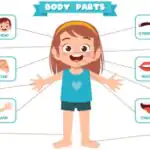
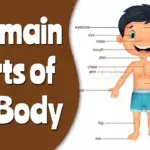
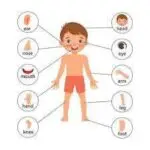
To deliver this lesson, the teacher will use the following materials: A chart or diagram of the human body, Pictures of the neck, trunk, chest, and belly.
Rationale for the Lesson
Understanding the human body is fundamental to health and well-being. This lesson provides a basic foundation for future learning about health, hygiene, and the importance of caring for one’s body. It also helps children understand their own bodies better.
Prerequisite/Previous Knowledge
Pupils have a basic awareness of their own bodies and can identify some body parts.
Lesson Content
What is The Human Body?
The human body is like an amazing machine, with many parts working together. We’ll learn about some of these critically crucial parts.
The Neck, Trunk, Chest, and belly
The neck connects your head to your body; it lets you move your head. The trunk is the main part of your body, including the chest and belly. The chest protects your heart and lungs – vital for breathing and pumping blood. the belly is between your chest and hips, containing your stomach and intestines for digesting food.
The Neck, Trunk, Chest and Belly
The neck joins the head to the trunk and helps the head turn. The trunk is the central part of the body. The chest is the upper front part of the trunk, while the belly or abdomen is below the chest.
These parts help protect important organs inside the body. We care for them by bathing, wearing clean clothes, sitting and standing properly, eating well, and avoiding rough play that can cause injury.
Movement Activity
Pupils point to each part on themselves, turn the head gently from side to side, and practise an upright sitting posture. No pupil should push or strike another pupil’s body.
Teaching Methods
To deliver this lesson, the teacher will adopt the following methods: Discussion, Question and Answer, Presentation.
Instructional Procedures
To deliver this lesson, the teacher will adopt the following steps:
Step 1: introduction
Time: 5 minutes
Teaching Skill: Set Induction
teacher’s Activity: Ask pupils what they know about their bodies. Show a picture of the human body.
Pupils’ Activity: Respond to the teacher’s questions and point out body parts.
Step 2: Clarification of Key Concepts
Time: 15 minutes
Teaching Skill: Explanation
Teacher’s Activity: Explain the neck, trunk, chest, and belly, their functions, and their importance.
Pupils’ Activity: Listen attentively and ask questions.
Step 3: demonstration/Guided Practise
Time: 10 minutes
Teaching Skill: Demonstration
Teacher’s Activity: Point to the neck, trunk, chest, and belly on a diagram of the human body. Guide pupils to do the same.
Pupils’ activity: Point to the body parts on the diagram.
Step 4: Autonomous practice
Time: 5 minutes
Teaching Skill: Observation
Teacher’s Activity: Observe pupils as they independently identify the body parts on their own diagrams.
Pupils’ Activity: Label the body parts on their own diagrams.
step 5: note-Taking
Time: 2 minutes
Teaching Skill: Note-taking
Teacher’s Activity: Guide pupils to write down key points about the neck, trunk, chest, and belly.
Pupils’ Activity: Write down key points in their notebooks.
step 6: Evaluation/Review
Time: 3 minutes
Teaching Skill: Questioning
Teacher’s Activity: Ask evaluation questions to assess understanding.
Pupils’ Activity: Answer the evaluation questions.
Objective-aligned checks:
- Identify the human neck , trunk, chest, and belly.
- State the function of the neck, trunk, chest, and belly.
- Show interest in learning about the human body.
Step 7: Conclusion
Time: 2 minutes
Teaching skill: Summarization
Teacher’s Activity: Summarize the key points and assign homework.
pupils’ Activity: Listen to the summary and note the homework.
Lesson Keywords
- Neck – The part of the body that connects the head to the body.
- Trunk – The main part of the body, including the chest and belly.
- Chest – The upper part of the trunk that protects the heart and lungs.
- Belly – The part of the trunk between the chest and hips, containing the stomach and intestines.
- Human Body – The complete structure of a person, including all its parts and systems.
Lesson Evaluation
To evaluate the learning, the teacher asks pupils to:
- What is the neck’s job?
- Name the parts of the trunk.
- Why is the chest critically important?
- Where is the belly?
- What organs are in the belly?
Assignment/Homework
- Draw a picture of the human body.
- Label the neck,trunk,chest,and belly on your drawing.
- Write one sentence about what each body part does.
Differentiation
- For slower learners: Provide one-on-one assistance and use simpler language.
- For advanced learners: Encourage them to research and present additional information about the organs in the chest and belly.
- For visual/auditory/kinesthetic learners: Use visual aids, verbal explanations, and hands-on activities to cater to different learning styles.
note for Teachers
Ensure to use clear and simple language, and provide plenty of visual aids to help pupils understand the concepts. Encourage active participation and make the lesson interactive.