

Class: Primary One
Term: second Term
Subject: Pre-vocational Studies
Curriculum Theme: Home Economics
Previous Lesson: Dangers Of Not Caring For The Ear And Nose
Topic: Eye Care
Content/Learning Area: Functions of the eyes, Dangers of neglecting eye care, Ways to protect the eyes
Time Allocation: 40 minutes
Performance Objectives
By the end of the lesson, pupils should be able to:
- Cognitive Domain:
- Explain the main functions of the eyes.
- Identify the dangers of not caring for the eyes.
- List simple ways to protect the eyes.
- Affective Domain:
- Show gratitude for the importance of eye care.
- Psychomotor Domain:
- Demonstrate proper eye hygiene practices.
- Social Domain:
- Share knowledge about eye care with others.
Reference Materials
- 9 – Years Basic Education Curriculum
- Abuja educational Resource Center Scheme of Work
- NAPPS National Unified Scheme of Work
- Relevant Textbooks
Instructional materials
To deliver this lesson, the teacher will employ the help of the following materials:
- Whiteboard or chart
- Markers or chalk
- Pictures of eyes and eye care practices
Rationale for the Lesson
This lesson is crucial for pupils to understand the importance of eye health and how to protect their vision. Good eye care habits learned now will benefit them throughout their lives.
Prerequisite/Previous Knowledge
The teacher will start by asking pupils what they use to see. The teacher will then ask pupils to share their experiences with eye problems or eye care. This will lead into a discussion about the importance of eye care.
Lesson Content
The Care of the Eyes
Caring for our eyes involves protecting them from harm and maintaining their health. Our eyes are essential for seeing the world, enabling us to perceive colors, shapes, and distances. Without healthy eyes, many everyday activities would be arduous or unfeasible.
Key Functions of our Eyes
the eyes perform several crucial functions that enable us to interact with the world around us.
Thes include:
- Seeing objects, peopel, and places.
- Discerning different colors (color vision).
- Judging distances (depth perception).
- Adapting to varying light conditions (light sensitivity).
- Enabling facial recognition, helping us identify people.
- Aiding in navigation and spatial awareness.
Dangers of Neglecting Eye Care
Neglecting eye care can lead to various problems, some of which can have long-term consequences.These include:
- Eye Infections: Dirt and germs can cause infections, leading to redness, itching, and pain.
- Vision problems: Poor eye care can result in nearsightedness, farsightedness, astigmatism, and even blindness.
- Eye Injuries: Accidents can damage eyes; protective eyewear is crucial during sports or hazardous activities.
- Dry Eyes: Insufficient blinking or exposure to dry environments can cause discomfort and blurred vision.
- Cataracts: Prolonged exposure to UV rays without protection can increase the risk of developing cataracts later in life.
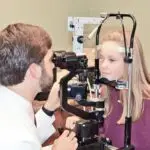
Regular eye check-ups are essential for early detection of potential eye problems.
How to Care for the Eyes
Protecting our eyes is vital for maintaining good vision.
We can safeguard our eyesight by:
- Undergoing regular eye examinations.
- Consuming foods rich in vitamins A, C, and E (carrots, spinach, berries).
- Ensuring sufficient sleep.
- Studying and reading in well-lit environments.
- Limiting screen time and taking frequent breaks.
- Washing hands before touching eyes and avoiding rubbing them.
- Wearing sunglasses to shield eyes from harmful UV rays.
- Using lubricating eye drops to prevent dryness.
- Avoiding sharing personal eye care items like towels.
- Protecting eyes from dust and pollutants.
Teaching Methods
To deliver this lesson, the teacher will adopt the following methods: Discussion, Question and answer, Visual aids
Instructional Procedures
To deliver this lesson, the teacher will adopt the following steps:
Step 1: Introduction
Time: 5 minutes
Teaching Skill: Set Induction
Teacher’s Activity: ask pupils what they use to see and engage them in a brief discussion about the importance of sight.
Pupils’ Activity: Respond to the teacher’s questions and participate in the discussion.
Step 2: Explanation of Key Concepts
Time: 10 minutes
Teaching Skill: Explanation
Teacher’s Activity: Explain the main functions of the eyes and the importance of eye care.
Pupils’ Activity: Listen attentively and ask clarifying questions.
Step 3: Presentation/Guided Practice
Time: 10 minutes
Teaching Skill: Demonstration
Teacher’s Activity: Demonstrate proper eye hygiene practices, such as washing hands before touching eyes.
Pupils’ Activity: Observe the demonstration and practice the steps.
Step 4: Independent Practice
Time: 5 minutes
Teaching Skill: Monitoring
Teacher’s Activity: Supervise pupils as they practice eye hygiene.Pupils’ Activity: Practice eye hygiene independently.
Step 5: note-Taking
Time: 5 minutes
Teaching Skill: Note-taking
Teacher’s Activity: Guide pupils in taking notes on key concepts.
Pupils’ Activity: Take notes on key concepts.
Step 6: Evaluation/Review
Time: 5 minutes
Teaching skill: Questioning
Teacher’s Activity: Ask review questions to assess understanding.Pupils’ Activity: Answer review questions.
Objective-aligned checks:
- Explain the main functions of the eyes.
- Identify the dangers of not caring for the eyes.
- List simple ways to protect the eyes.
Step 7: Conclusion
Time: 5 minutes
Teaching Skill: Summarizing
Teacher’s Activity: Summarize the key points discussed and emphasize the importance of practicing good eye care habits daily. Assign homework.
Pupils’ Activity: Listen to the summary and note the homework assignment.
Lesson Keywords
- Vision – The ability to see.
- Hygiene – Practices for maintaining cleanliness and health.
- Protection – measures taken to prevent harm or injury.
- Infection – A condition caused by germs in the body.
- UV Rays – Harmful rays from the sun.
Lesson Evaluation
To evaluate the learning, the teacher asks pupils to:
- What are the main functions of our eyes?
- Why are regular eye check-ups critically crucial?
- Name two foods good for our eyes.
- How can we protect our eyes from the sun?
- What are some dangers of not caring for our eyes?
Assignment/Homework
- Write a short essay on the importance of eye care.
- List five ways you can protect your eyes every day.
- Ask your parents about the last time they had an eye exam and share with the class.
Differentiation
- For slower learners: Provide one-on-one assistance and simplified explanations.
- For advanced learners: Encourage them to research further on eye care and present their findings to the class.
- For visual/auditory/kinesthetic learners: Use visual aids,demonstrations,and hands-on activities to cater to different learning styles.
Note for Teachers
Ensure to use real-life examples and visual aids to make the lesson engaging and relatable for the pupils. Emphasize the importance of forming good eye care habits early in life.



Community 2 comments Open discussion +