

Class: Primary One
Term: Third Term
Subject: Pre-vocational Studies
Curriculum Theme: Home Economics
Previous Lesson: Toilet Hygiene II
Topic: home and Its Surrounding
Content/Learning Area: What is Dirt?, types of Dirt, Ways to Clean Dirt
time Allocation: 40 minutes
Performance Objectives
By the end of the lesson, pupils should be able to:
- Cognitive Domain:
- Identify and classify types of dirt in their surroundings.
- Understand the importance of communal obligation in keeping the home and its surroundings clean.
- Affective Domain:
- develop an gratitude for a clean habitat and their role in maintaining cleanliness.
- Psychomotor Domain:
- Demonstrate basic skills in cleaning dust and dirt.
- Social Domain:
- Understand the importance of communal responsibility in keeping the home and its surroundings clean.
Reference Materials
- 9 – Years Basic Education Curriculum
- Abuja Educational Resource Center Scheme of Work
- NAPPS National Unified scheme of Work
- Relevant Textbooks
Instructional Materials
To deliver this lesson, the teacher will use the following materials:
- Pictures of different types of dirt
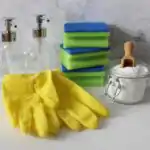
- Broom
- Dustpan
- Cloth
- Water
Rationale for the lesson
This lesson is crucial for developing good hygiene habits and promoting a healthy habitat. Understanding cleanliness is essential for personal well-being and contributes to a cleaner community. This lesson lays the foundation for future lessons on environmental responsibility.
prerequisite/Previous Knowledge
Pupils are familiar wiht their homes and classrooms and can identify some items in their surroundings.
Lesson Content
What is Dirt?
Dirt is anything that makes our surroundings unclean. It can be solid, like paper or food scraps, or liquid, like spilled juice or mud.
Types of Dirt
Dirt comes in many forms and can be found both indoors and outdoors. These include:
- Litter: This includes things like paper, plastic bottles, and food wrappers.
- Spilled foods and liquids: These can stain surfaces and attract insects.
- Dust and mud: These can be found in the air and on surfaces, and thay can cause allergies.
- fallen leaves and natural debris: These can accumulate in yards and gardens.
- Animal waste: This can be harmful to our health and attract pests.
- Cobwebs: These are often found in corners and ceilings and can make a place look untidy.
- Grease: This is common in kitchens and can be difficult to clean.
Ways to clean Dirt
There are several methods to effectively clean dirt and maintain a tidy environment. These include:
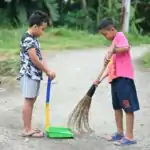
- Sweeping with a broom: This is a good way to clean up dust, dirt, and small pieces of litter.
- Picking up litter by hand: This is the best way to clean up larger pieces of litter.
- Wiping spills with a cloth: This is a good way to clean up liquid stains.
- Using a dustpan for small waste: This is a good way to collect small pieces of dirt and litter.
- Rinsing with water were appropriate: This is a good way to clean up spills and dirt that can be washed away.
- Mopping: This is effective for cleaning hard floors and removing stubborn dirt.
- Scrubbing: This is useful for removing dirt and grime from surfaces like walls and tiles.
Teaching Methods
To deliver this lesson, the teacher will adopt the following methods: Discussion, Exhibition, Practical Activity
Instructional Procedures
To deliver this lesson, the teacher will adopt the following steps:
Step 1: Introduction
Time: 5 minutes
Teaching Skill: Set Induction
Teacher’s Activity: Ask pupils what they see around their homes and classrooms. Ask them to identify things that make the environment dirty.
Pupils’ Activity: Respond to the teacher’s questions, identifying different types of dirt.
Step 2: Description of key Concepts
Time: 10 minutes
Teaching Skill: Explaining
Teacher’s Activity: Explain the concept of dirt and its different types using pictures and examples.
Pupils’ Activity: Listen attentively and participate in the discussion.
Step 3: Demonstration/Guided Practice
Time: 10 minutes
Teaching Skill: Demonstrating
Teacher’s Activity: Demonstrate how to clean different types of dirt using a broom, dustpan, cloth, and water.
Pupils’ Activity: Observe the demonstration and ask questions.
Step 4: Autonomous Practice
Time: 5 minutes
Teaching Skill: Monitoring
Teacher’s Activity: Supervise pupils as they clean a designated area.
Pupils’ Activity: Clean a small area using the methods demonstrated.
Step 5: Note-Taking
Time: 5 minutes
Teaching Skill: Guiding
Teacher’s Activity: Guide pupils in taking notes on the key concepts learned.
Pupils’ Activity: Write down key points in their notebooks.
Step 6: Evaluation/Review
Time: 5 minutes
Teaching Skill: Questioning
teacher’s Activity: Ask review questions to assess understanding.
Pupils’ Activity: Answer the review questions.
Objective-aligned checks:
- Identify and classify types of dirt in their surroundings.
- Demonstrate basic skills in cleaning dust and dirt.
Step 7: Conclusion
Time: 5 minutes
Teaching Skill: summarizing
Teacher’s Activity: Summarize the key points of the lesson and assign homework.
Pupils’ Activity: listen to the summary and note the homework assignment.
Lesson Keywords
- Dirt – Anything that makes our surroundings unclean.
- Litter – Waste material discarded incorrectly.
- Dust – Fine particles of matter.
- Cleanliness – The state of being clean and free from dirt.
- Hygiene – Practices conducive to maintaining health and preventing disease.
Lesson Evaluation
To evaluate the learning,the teacher asks pupils to:
- What are two types of dirt mentioned in today’s lesson?
- Name one way we can clean up liquid stains.
- Why is it vital to keep our surroundings clean?
- What are some things we can do to keep our homes and surroundings clean?
- How can we help our community stay clean?
Assignment/Homework
- Draw pictures of different types of dirt.
- Write down one way to clean each type of dirt you drew.
- ask your parents or guardians about the cleaning tasks they do at home and write them down.
Differentiation
- For slower learners: Provide one-on-one assistance and simplify cleaning tasks.
- for advanced learners: Give more challenging cleaning tasks and encourage them to help others.
- For visual/auditory/kinesthetic learners: Use visual aids, verbal instructions, and hands-on activities to cater to different learning styles.
Note for Teachers
Ensure all cleaning materials are safe for pupils to use. Supervise pupils closely during the practical activity to prevent accidents. Encourage pupils to practice cleanliness at home and in school.

Community Join the conversation Open discussion +