

Class: Junior Secondary School 1 (JSS1, JSS 1)
Term: 1st Term
Week: 5
Age: 12 years
Duration: 45 minutes
Subject: Basic Science And Technology
Curriculum Theme: Basic Technology
Previous Lesson: Safety Rules and Safety Devices in Workshop
Topic: PROPERTIES OF WOOD
Subject Matter: Identification, Classification
Specific Objectives
By the end of the lesson, pupils should be able to:
- Cognitive Domain:
(a) Define wood and explain its basic properties.
(b) Identify and classify types of wood into hardwood and softwood. - Affective Domain:
(a) Appreciate the importance of wood as a natural resource.
(b) Show interest in the proper use and care of wooden materials. - Psychomotor Domain:
(a) Demonstrate how to identify wood samples based on texture and hardness.
(b) Group wood samples into different classes. - Social Domain:
(a) Work cooperatively in groups during classification activities.
(b) Share ideas and observations with peers respectfully.
Reference Materials
The following resources were used in planning this lesson:
- 9 Years Basic Education Curriculum
- Lagos State Unified Scheme of work for Junior Secondary Schools
- Britannica – Wood: Structure and Properties (https://www.britannica.com/science/wood-plant-tissue)
- Relevant Textbooks
Instructional Materials
The teacher will teach this lesson with the aid of:
- Samples of hardwood and softwood
- Pictures or charts showing different wood types
- Sandpaper for texture identification
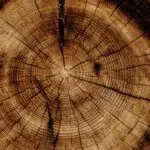
- A sawed block of wood showing grains
- Chalkboard and chalk
Rationale for the Lesson
Understanding the properties of wood equips pupils with knowledge to identify, classify, and appreciate its importance in daily life and technology.
Prerequisite/Previous Knowledge
Pupils have seen and used wooden furniture, pencils, doors, and kitchen utensils at home and school, giving them a basic awareness of wood.
Lesson Content/Board Summary
PROPERTIES OF WOOD
Meaning of Wood
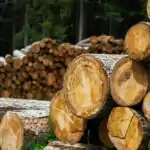
Wood is the hard, fibrous material that forms the trunk and branches of trees. It is used for making furniture, buildings, tools, and other useful objects.
Classification of Wood
Wood can be classified into two major groups based on structure and characteristics. These include:
- Hardwood – from broad-leaved trees such as mahogany, iroko, and oak.
- Softwood – from coniferous trees such as pine, cedar, and fir.
Properties of Wood
Wood has several physical and mechanical properties that determine its use. The following are properties of wood:
- Hardness – ability to resist wear and pressure.
- Strength – ability to carry weight without breaking.
- Texture – smooth or coarse surface depending on the type.
- Colour – varies from light to dark depending on species.
- Grain – arrangement of fibres which can be straight or irregular.
- Durability – ability to last long and resist decay.
Properties of Wood
Wood differs in colour, grain, texture, density, hardness, strength, toughness, durability, moisture content and ease of working. Hardwood and softwood are botanical groups, not a guarantee that every hardwood is harder than every softwood.
A builder selects wood according to purpose: strength for structural work, dimensional stability for furniture and durability where moisture or insects are risks. Seasoning reduces excess moisture and distortion.
Teaching Methods/Instructional Techniques:
Discussion, Lecture, Storytelling, Explanation, Visual Aids, Group Work, Demonstration
Instructional Procedures
To deliver this lesson, the teacher will adopt the following steps:
Step 1: Introduction
Time: 5 minutes
Teaching Skill: Set Induction
Teacher’s Activity: The teacher shows pupils a wooden chair and asks them what material it is made from and where else they have seen wood used.
Pupils’ Activity: Pupils mention objects made from wood such as tables, doors, and pencils.
Learning Point: Pupils become aware of wood as a common material around them.
Step 2: Meaning of Wood
Time: 7 minutes
Teaching Skill: Explanation
Teacher’s Activity: The teacher explains the meaning of wood and writes a clear definition on the board.
Pupils’ Activity: Pupils listen, take notes, and repeat the definition.
Learning Point: Pupils understand what wood is.
Step 3: Classification of Wood
Time: 8 minutes
Teaching Skill: Demonstration
Teacher’s Activity: The teacher shows samples of hardwood and softwood, points out differences, and guides pupils to classify them.
Pupils’ Activity: Pupils observe and classify the samples into hardwood and softwood.
Learning Point: Pupils can differentiate between hardwood and softwood.
Step 4: Properties of Wood
Time: 10 minutes
Teaching Skill: Discussion
Teacher’s Activity: The teacher lists and explains the properties of wood such as hardness, strength, colour, texture, grain, and durability.
Pupils’ Activity: Pupils copy the properties and give examples of objects that require each property.
Learning Point: Pupils know the major properties of wood.
Step 5: Note-Taking
Time: 3 minutes
Teaching Skill: Reinforcement
Teacher’s Activity: The teacher instructs pupils to copy the board summary into their notebooks.
Pupils’ Activity: Pupils copy notes.
Learning Point: Pupils have complete lesson notes for reference.
Step 7: Evaluation/Review
Time: 3 minutes
Teaching Skill: Questioning
Teacher’s Activity: The teacher evaluates the learning by asking the following questions:
- What is wood?
- Mention the two major classifications of wood with examples.
- State three properties of wood.
- List three uses of wood.
Pupils’ Activity: Pupils answer the teacher’s questions orally.
Learning Point: Pupils’ understanding of the lesson is tested and confirmed.
Step 8: Conclusion
Time: 1 minute
Teaching Skill: Summarization
Teacher’s Activity: The teacher summarizes the lesson and encourages pupils to observe wooden materials at home.
Pupils’ Activity: Pupils listen and reflect on the importance of wood.
Learning Point: Pupils recall the main points of the lesson.
Home Task: Record two correct examples of PROPERTIES OF WOOD from the lesson or home environment and explain each in your own words.
Lesson Keywords
- Wood – hard material from trees used for making objects.
- Hardwood – wood from broad-leaved trees.
- Softwood – wood from coniferous trees.
- Grain – arrangement of fibres in wood.
- Durability – ability of wood to last long and resist damage.
Differentiation
The teacher will use visual aids and physical samples for slower learners, while advanced learners will be encouraged to give more examples and explain uses of wood around them.
Note for teachers using this lesson plan
Always bring actual wood samples to class. Encourage group participation in classification. Emphasize safety when handling wood.


Community Join the conversation Open discussion +