

Class: Junior Secondary School 1 (JSS 1 / JS1)
Term: Third Term
Week: 8
Age: 12 years
Duration: 45 minutes
Subject: Basic Science and Technology
Curriculum Theme: Basic Technology
Previous Lesson: Definition and Types of Current in Basic Electricity.
Topic: BASIC ELECTRICITY II
Subject Matter: Measuring instruments, Definition of transformer, stabilizer: Electrical appliances and accessories
Specific Objectives
By the end of the lesson, pupils should be able to:
Step 7: Evaluation/Review
Time: 5 minutes
Teaching Skill: Questioning/Assessment
Teacher’s Activity: The teacher evaluates the learning by asking the following questions:
- Define an ammeter and state its function.
- What is a transformer used for?
- Explain the purpose of a voltage stabilizer.
- List three examples of electrical appliances and two electrical accessories.
Pupils’ Activity: Pupils answer orally and in writing.
Learning Point: Pupils demonstrate understanding of the lesson.
Step 8: Conclusion
Time: 2 minutes
Teaching Skill: Summarization
Teacher’s Activity: The teacher summarizes the key points of the lesson and encourages pupils to be careful when using electrical devices. The teacher assigns homework for pupils to draw and label two electrical measuring instruments.
Pupils’ Activity: Pupils listen to the summary and copy the homework.
Learning Point: The lesson is concluded with a recap and assignment.
Home Task: Record two correct examples of BASIC ELECTRICITY II from the lesson or home environment and explain each in your own words.
Lesson Keywords
- Ammeter – An instrument used to measure electric current.
- Voltmeter – An instrument used to measure potential difference (voltage).
- Transformer – A device that changes AC voltage levels.
- Stabilizer – An appliance that provides constant voltage to protect devices.
- Appliance – A device that uses electricity to perform a function.
- Accessory – A component used to control or connect electrical circuits.
Differentiation
For pupils who grasp concepts quickly, the teacher will encourage them to research different types of transformers (step-up and step-down) and their specific applications. For pupils needing more support, the teacher will provide simplified diagrams and additional visual aids to reinforce understanding of each instrument and device.
Note for teachers using this lesson plan
Teachers should ensure they have clear visual aids for all instruments, appliances, and accessories mentioned. Practical demonstration or showing actual items, if available and safe, will enhance pupil understanding. Emphasize safety precautions when discussing electricity. Encourage pupils to share their experiences with these devices at home to make the lesson relatable.
Cognitive Domain:
- Define common electrical measuring instruments.
- List examples of electrical measuring instruments and their uses.
- Explain the definitions of transformer and stabilizer.
- Identify various electrical appliances and accessories.
Affective Domain:
- Appreciate the importance of using appropriate measuring instruments in electrical work.
- Show interest in how transformers and stabilizers protect electrical devices.
- Value the role of electrical appliances and accessories in daily life.
Psychomotor Domain:
- Identify correctly, pictures or actual examples of electrical measuring instruments.
- Distinguish between electrical appliances and accessories.
- State the function of a transformer and a stabilizer.
Social Domain:
- Work together in groups to discuss different electrical devices.
- Share knowledge about the safe use of electrical appliances.
Reference Materials
The following resources were used in planning this lesson:
- 9 Years Basic Education Curriculum for Basic Science and Technology JSS 1-3.
- State Unified Scheme of Work for Basic Science and Technology JSS 1.
- Basic Science and Technology for Junior Secondary Schools Book 1.
- https://www.jstor.org/stable/4437894
- https://www.electrical4u.com/transformer/
Instructional Materials
The teacher will teach this lesson with the aid of:
- Charts showing different electrical measuring instruments (e.g., ammeter, voltmeter, multimeter).
- Pictures or actual examples of a transformer and a stabilizer.
- Various electrical appliances (e.g., electric fan, electric iron) and accessories (e.g., plug, switch, socket).
Rationale for the Lesson
This lesson helps pupils understand the tools used to measure electrical quantities and the functions of important electrical devices like transformers and stabilizers. It also enables them to identify common electrical appliances and accessories used in their homes and communities, promoting safe and informed interaction with electricity.
Prerequisite/Previous Knowledge
Pupils have some basic understanding of electricity, including sources of electricity and simple circuits, from the previous lesson on Basic Electricity I.
Lesson Content/Board Summary
BASIC ELECTRICITY II
Measuring Instruments
Electrical measuring instruments are devices used to measure various electrical quantities such as current, voltage, and resistance in a circuit.
The following are common electrical measuring instruments:
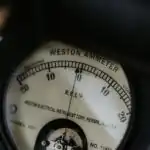
- Ammeter: Used to measure electric current in amperes (A). It is connected in series in a circuit.
- Voltmeter: Used to measure potential difference (voltage) in volts (V). It is connected in parallel across the component.
- Ohmmeter: Used to measure electrical resistance in ohms (Ω).
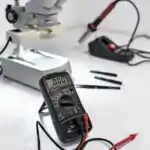
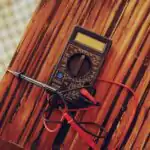
- Multimeter: A versatile instrument that can measure current, voltage, and resistance.
Transformer
A transformer is an electrical device that transfers electrical energy between two or more circuits through electromagnetic induction. It is used to change the voltage of an alternating current (AC) circuit.
- Function: Transformers can either “step up” (increase) or “step down” (decrease) voltage levels. They are important for transmitting electricity over long distances and for ensuring correct voltage for home use.
Stabilizer
A stabilizer (or voltage stabilizer) is an electrical appliance designed to deliver a constant voltage to a load from an unstable mains power supply. It protects electrical appliances from damage due to voltage fluctuations.
- Function: It ensures that electrical devices receive a steady and safe voltage, even if the incoming power supply is too high or too low.
Electrical Appliances and Accessories
Electrical appliances are devices that use electricity to perform a specific function, converting electrical energy into other forms like heat, light, or motion.
Examples of electrical appliances:
- Electric fan
- Electric iron
- Television (TV)
- Refrigerator
- Electric kettle
Electrical accessories are components used to control, connect, or protect electrical circuits and appliances.
Examples of electrical accessories:
- Plugs
- Switches
- Sockets
- Fuses
- Circuit breakers
- Lamp holders
Teaching Methods/Instructional Techniques
Discussion, Lecture, Demonstration, Question and Answer, Visual Aids
Instructional Procedures
Step 1: Introduction
Time: 5 minutes
Teaching Skill: Set Induction
Teacher’s Activity: The teacher greets the pupils and reminds them of the previous lesson on Basic Electricity. The teacher then asks pupils to mention some electrical devices they use at home.
Pupils’ Activity: Pupils respond to the greetings and mention various electrical devices they use daily.
Learning Point: Pupils recall prior knowledge and are introduced to the lesson topic.
Step 2: Measuring Instruments
Time: 10 minutes
Teaching Skill: Explanation/Demonstration
Teacher’s Activity: The teacher explains what electrical measuring instruments are and describes the functions of an ammeter, voltmeter, ohmmeter, and multimeter, using charts or actual examples.
Pupils’ Activity: Pupils listen attentively, observe the instruments, and ask questions for clarification.
Learning Point: Pupils learn about different electrical measuring instruments and their uses.
Step 3: Transformer
Time: 7 minutes
Teaching Skill: Explanation
Teacher’s Activity: The teacher defines a transformer, explains its purpose in stepping up or stepping down voltage, and discusses its importance in power transmission and usage.
Pupils’ Activity: Pupils listen and take notes, understanding the role of a transformer.
Learning Point: Pupils understand the definition and function of a transformer.
Step 4: Stabilizer
Time: 5 minutes
Teaching Skill: Explanation
Teacher’s Activity: The teacher defines a stabilizer and explains how it protects electrical appliances from damage caused by voltage fluctuations.
Pupils’ Activity: Pupils listen, take notes, and understand why stabilizers are used.
Learning Point: Pupils learn about the definition and function of a stabilizer.
Step 5: Electrical Appliances
Time: 8 minutes
Teaching Skill: Explanation/Identification
Teacher’s Activity: The teacher explains what electrical appliances are and provides various examples, showing pictures or actual items where possible.
Pupils’ Activity: Pupils listen, identify the appliances, and mention other examples they know.
Learning Point: Pupils understand what electrical appliances are and can give examples.
Step 6: Electrical Accessories
Time: 5 minutes
Teaching Skill: Explanation/Identification
Teacher’s Activity: The teacher explains what electrical accessories are and shows examples like plugs, switches, sockets, and fuses.
Pupils’ Activity: Pupils listen, identify the accessories, and understand their functions.
Learning Point: Pupils understand what electrical accessories are and can give examples.
Community Join the conversation Open discussion +