

Class: Primary 4
Term: 3rd Term
Subject: Pre-Vocational Studies
Curriculum theme: Home Economics
Previous Lesson: Functions Of Food
Topic: Deficiency Disease Of Food Nutrients
Content/Learning Area: Deficiency disease of each nutrients e.g, Carbohydrates. Deficiency: lack of energy
Performance Objectives
By the end of the lesson,pupils should be able to:
- Cognitive Domain: Identify deficiency diseases related to different classes of food.
- Affective Domain: Show concern for people suffering from food deficiency.
- Psychomotor Domain: Match food types with their deficiency diseases in a class activity.
- Social Domain: Work cooperatively with classmates during food chart activities.
Reference Materials
The following resources were used in planning this lesson:
- 9 Years Basic Education Curriculum
- Abuja Educational Resource Centre Scheme of work
- NAPPS National Unified Scheme of Work
- Online Data from: Wikipedia – Malnutrition
- Relevant Textbooks
Instructional Materials
To deliver this lesson, the teacher will employ the help of the following materials:
- Food nutrient chart
- Pictures of healthy and malnourished children
- Real or plastic food samples
- Flash cards showing diseases and food types
- Marker board and markers
Rationale for the Lesson
Understanding food deficiency diseases helps pupils learn how to eat healthily and avoid sickness caused by lack of important nutrients.
Prerequisite/Previous Knowledge
Pupils have previously learned about classes of food and their importance to the body.
Lesson Content
Deficiency Disease Of Food Nutrients
Food deficiency diseases happen when the body does not get enough of the right kind of food. each class of food has a job to do in the body. If the body lacks any class of food, it can cause sickness.
Carbohydrates Deficiency: Lack of carbohydrates makes a child weak and tired. Deficiency diseases of carbohydrates include:
The following are deficiency diseases of carbohydrates:
- Tiredness
- Weight loss
- slow growth
- Fatigue
- Muscle weakness
Protein Deficiency: Not eating enough protein can cause a serious disease in children.
The following are deficiency diseases of protein:
- Kwashiorkor
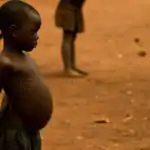
- Swollen belly
- Thin body
- Slow healing of wounds
- Stunted growth
- Hair discoloration
Fats and Oil Deficiency: Fats give energy and help keep the body warm. they also help in the use of some vitamins.
The following are deficiency diseases of fats and oils:
- Dry skin
- Cold feeling
- Slow growth
- Weakness
- poor absorption of vitamins
- Hormonal imbalances
Vitamins Deficiency: Vitamins help the body stay healthy. There are many types of vitamins, and each one has its job.
The following are deficiency diseases of vitamins:
- Night blindness
- Bleeding gums
- Rough skin
- Rickets
- Scurvy
- Pellagra
Minerals Deficiency: Minerals make bones strong and help the body work well. They are needed in small amounts.
The following are deficiency diseases of minerals:
- Weak bones
- Tooth decay
- Tiredness
- Pale skin
- Goiter
- Anemia
Teaching Methods
To deliver this lesson, the teacher will adopt the following methods: Discussion, Lecture, Storytelling, Explanation, Visual Aids, Group Work
Instructional Procedures
To deliver this lesson, the teacher will adopt the following steps:
Step 1: Introduction
Time: 5 min
Teaching Skill: Set Induction
Teacher’s Activity: Tells a short story about a sick child who does not eat well
Pupils’ Activity: Listen and answer questions about the story
Step 2: Carbohydrates Deficiency
Time: 7 min
Teaching Skill: Explanation
Teacher’s activity: Explains carbohydrate role and diseases from not eating enough
Pupils’ Activity: Mention food rich in carbohydrates
Step 3: Protein Deficiency
Time: 5 min
Teaching Skill: Explanation, Visual Aid
Teacher’s Activity: Shows picture of a child with Kwashiorkor and explains protein deficiency
Pupils’ activity: Identify the condition from pictures
Step 4: Fats, Vitamins and Minerals
Time: 8 min
Teaching Skill: Discussion, Group Work
Teacher’s Activity: Discusses other nutrients and their deficiency diseases using food chart
Pupils’ Activity: Group pupils to match foods with deficiency diseases
Step 5: Revision Activity
time: 3 min
Teaching Skill: Reinforcement
Teacher’s Activity: Uses flash cards and questions to revise food classes and their deficiencies
Pupils’ Activity: Match flashcards of food to diseases
Step 6: Note-Taking
Time: 3 min
Teaching Skill: Note Writing
Teacher’s Activity: Dictates structured notes for pupils to copy
Pupils’ Activity: Copy notes into notebooks
Step 7: Evaluation/Review
time: 5 min
Teaching Skill: Assessment
teacher’s Activity: Asks questions based on the lesson
Pupils’ Activity: Answer the teacher’s questions
Objective-aligned checks:
- Identify deficiency diseases related to different classes of food.
- Show concern for people suffering from food deficiency.
Step 8: Conclusion
Time: 4 min
teaching Skill: Instructional, Social
Teacher’s Activity: Encourages proper eating and praises group effort
Pupils’ Activity: Reflect on lesson and agree to eat well
Lesson keywords
- Deficiency – Not having enough of somthing needed
- Nutrients – Useful parts of food that help the body
- Protein – Food that helps the body grow
- Vitamin – Part of food that helps the body stay healthy
- Minerals – Natural things in food that help the body work well
Lesson Evaluation
To evaluate the learning, the teacher asks pupils to:
- Name one disease caused by lack of protein.
- List two deficiency diseases of vitamins.
- What happens if you don’t eat enough carbohydrates?
- Identify pictures of children with food deficiency.
- Match each class of food with its deficiency disease.
Assignment/Homework
- List three foods rich in vitamins and the benefits they provide.
- Explain why it is important to eat a balanced diet.
- Research and write down two local Nigerian foods that can prevent protein deficiency.
Differentiation
- For slower learners: Provide simplified charts and one-on-one assistance to match foods with deficiencies.
- For advanced learners: Challenge them to research and present on less common deficiency diseases and their global impact.
- For visual/auditory/kinesthetic learners: Use visuals, discussions, and hands-on activities like sorting food models to cater to different learning styles.
Note for Teachers
Use real food items or accurate visuals.Encourage pupils to talk about their meals to make the topic more



Community Join the conversation Open discussion +