

Class: Primary One
Term: First Term
Subject: Basic Science and Technology
Curriculum Theme: Basic Technology
Previous Lesson: Simple Machines in the School
Topic: Uses of Simple Machines at Home
Content/Learning Area: Uses of Simple Machines at Home
Time Allocation: 40 minutes
Performance Objectives
By the end of the lesson, pupils should be able to:
Cognitive Domain:
- State at least two uses of simple machines at home.
- Mention examples of simple machines and describe what they help us do.
- Explain how simple machines make work easier at home.
Psychomotor Domain:
- Identify and match pictures of simple machines to their uses.
Affective Domain:
- Show interest in learning about how simple machines help us every day.
Social Domain:
- Work together in small groups to discuss the uses of common home tools.
Reference Materials
- 9-Year Basic Education Curriculum
- Abuja Educational Resource Centre Scheme of Work
- NAPPS National Unified Scheme of Work
- Relevant textbooks and online resources from 6 Simple Machines At Home: Fun Projects With Lever & Pulley
Instructional Materials
- Real-life examples of home tools (broom, spoon, knife, scissors, door handle, bottle opener, wheelbarrow)
- Pictures or flashcards showing household tools in use
- Whiteboard or chart paper
- Markers or crayons
Rationale for the Lesson
Pupils use many simple machines every day at home. Learning their uses helps pupils understand how these tools make work easier, faster, and safer — building awareness of technology in everyday life.
Prerequisite/Previous Knowledge
Pupils already know the meaning of simple machines and can identify simple machines around the home.
Lesson Content
Uses of Simple Machines at Home
“Uses of simple machines at home” means how the simple tools we use every day help us do work easily — like cutting, lifting, opening, and moving things around the house.
Simple Machines at Home and Their Uses
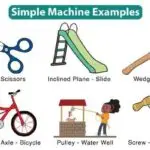
- Broom – helps us sweep the floor easily.
- Spoon – helps us scoop or stir food.
- Knife – helps us cut fruits and vegetables.
- Scissors – helps us cut paper or cloth easily.
- Door handle – helps us open and close doors easily.
- Bucket handle – helps us lift and carry water.
- Wheelbarrow – helps us carry heavy loads easily.
- Bottle opener – helps us open bottle caps easily.
- Nutcracker – helps us break open nuts.
- Tap handle – helps us turn water on and off.
- Ceiling or table fan – helps move air to keep us cool.
- Grater – helps us shred food items.
- Mortar and pestle – helps us pound food.
- Can opener – helps us open tins easily.
- Rake – helps us gather leaves or grasses.
- Trowel – helps us scoop or mix sand.
- Hanger – helps us hold or dry clothes neatly.
- Rolling pin – helps us flatten dough.
- Dustpan – helps us collect dirt after sweeping.
- Door hinge – helps the door open and close smoothly.
Teaching Methods
Discussion, Question and Answer, Demonstration, Group Work
Instructional Procedures
Step 1: Introduction (Set Induction)
Time: 5 minutes
Teaching Skill: Questioning, Explaining
Teacher’s Activity:
- Ask: “Who helped their parents sweep, cook, or wash at home?”
- Guide pupils to mention the tools they used.
- Introduce the topic: Uses of Simple Machines at Home.
Pupils’ Activity: - Respond eagerly and mention some household tools.
Step 2: Explanation of Key Concepts
Time: 10 minutes
Teaching Skill: Explaining, Illustrating
Teacher’s Activity:
- Explain that simple machines help us do our work easily at home.
- Show pictures or real tools and discuss what each one helps us do.
Pupils’ Activity: - Observe and listen carefully.
- Ask questions about the tools.
Step 3: Guided Practice
Time: 10 minutes
Teaching Skill: Demonstrating, Guiding
Teacher’s Activity:
- Demonstrate how a broom, knife, or bottle opener works.
- Ask pupils to describe what happens and how it makes the work easier.
Pupils’ Activity: - Watch the demonstrations and discuss what they observe.
Step 4: Self-Reliant Practice
Time: 5 minutes
Teaching Skill: Monitoring, Encouraging
Teacher’s Activity:
- Give pupils a worksheet or picture chart.
- Ask them to match each tool to its correct use.
Pupils’ Activity: - Complete the matching activity individually.
Step 5: Note-Taking
Time: 5 minutes
Teaching Skill: Guiding, Summarizing
Teacher’s Activity:
- Guide pupils to write down short notes about the uses of simple machines at home.
Pupils’ Activity: - Copy notes into their notebooks.
Step 6: Evaluation/Review
Time: 5 minutes
Teaching Skill: Questioning, Reinforcing
Teacher’s Activity: Ask:
- What is the use of a broom?
- How does a knife help us at home?
- What simple machine do we use to open bottles?
- Which simple machine helps us carry water?
Pupils’ Activity:
- Answer orally.
Step 7: Conclusion
Time: 2 minutes
Teaching Skill: Summarizing, Motivating
Teacher’s Activity:
- Summarize key points and praise pupils for participation.
- Encourage them to notice more tools at home and think about their uses.
Pupils’ Activity: - Share what they learned.
Lesson Keywords
- Simple Machines at Home: Tools that make home work easier.
- Use: What the tool helps us do.
- Lever: Helps lift or move things easily.
- Wedge: Helps cut or split objects.
- Wheel and Axle: Helps carry or move things smoothly.
Lesson Evaluation
- What are simple machines used for?
- Mention three simple machines you use at home.
- What is the use of a wheelbarrow?
- How does a knife make work easier?
- Name one simple machine used in the kitchen and its use.
Assignment/Homework
- List five simple machines found in your home and write one use for each.
- Draw one simple machine and show what it is used for.
Differentiation
- For slower learners: Provide one-on-one help and use real items instead of pictures.
- For advanced learners: Ask them to find more home tools and describe how each works.
- For visual/auditory/kinesthetic learners: Use charts, spoken explanations, and hands-on demonstrations.
Note for Teachers
- Focus on uses of simple machines, not definitions or types.
- Use real objects or vivid pictures to keep the class interactive.
- Allow pupils to demonstrate how they use these tools at home (e.g., sweeping, cutting, lifting).
- Reinforce the idea that simple machines make work easier, faster, and safer.


Community Join the conversation Open discussion +