

Class: Junior Secondary School 1 (JSS 1 / JS1)
Term: 3rd Term
Week: 10
Age: 12 years
Duration: 45 minutes
Subject: Pre-Vocational Studies
Curriculum Theme: Home Economics
Previous Lesson: Al’ada, Kiyaye Hakikin Makwabtaka.
Topic: SEWING TOOLS AND EQUIPMENT
Subject Matter: Care and storage of sewing tools; Guidelines for choosing sewing tools and equipment; Demonstration of care and storage of sewing tools.
Specific Objectives
By the end of the lesson, pupils should be able to:
Cognitive Domain:
- State ways to care for sewing tools.
- List guidelines for choosing suitable sewing tools and equipment.
- Explain the importance of proper storage of sewing tools.
Affective Domain:
- Appreciate the importance of maintaining sewing tools.
- Value the need to choose appropriate tools for sewing tasks.
Psychomotor Domain:
- Demonstrate the correct way to care for different sewing tools.
- Practice proper storage methods for sewing tools.
Social Domain:
- Collaborate with peers to identify and discuss different sewing tools.
- Share knowledge on best practices for tool maintenance.
Reference Materials
The following resources were used in planning this lesson:
- 9 Years Basic Education Curriculum for Pre-Vocational Studies JSS 1
- State Unified Scheme of Work for Pre-Vocational Studies JSS 1
- Pre-Vocational Studies for Junior Secondary Schools Book 1
- https://www.youtube.com/watch?v=N80rLhI82jQ
- https://www.youtube.com/watch?v=3-E7H2o-9bA
Instructional Materials
The teacher will teach this lesson with the aid of:
- Charts showing various sewing tools
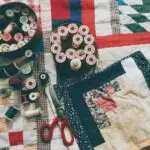
- Actual sewing tools (e.g., scissors, tape measure, thimble, needles, pins, pin cushion)
- A storage box/container for sewing tools
Rationale for the Lesson
This lesson helps pupils understand how to properly maintain and select sewing tools, which is essential for effective and safe sewing. It enables them to prolong the life of their tools and achieve better results in their practical activities.
Prerequisite/Previous Knowledge
Pupils have some basic knowledge of common tools used at home and may have seen some sewing tools before.
Lesson Content/Board Summary
SEWING TOOLS AND EQUIPMENT
Care and Storage of Sewing Tools
Caring for sewing tools means keeping them in good condition so they can last long and work well. Proper storage protects them from damage and loss.
The following are ways to care for sewing tools:
- Keep scissors sharp and clean by cutting only fabric.
- Wipe metal tools like needles and pins with an oily cloth to prevent rust.
- Clean dust and lint from sewing machines regularly.
- Handle tools carefully to avoid dropping or bending them.
- Store tools in a dry place to prevent rusting and damage.
The following are ways to store sewing tools:
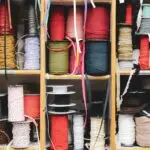
- Store pins and needles in a pin cushion or a magnetic dish.
- Keep scissors in their cases or a designated slot to protect blades.
- Roll up tape measures neatly.
- Keep small tools like thimbles and thread in a sewing box or kit.
- Hang large equipment like a sewing machine cover after use.
Guidelines for Choosing Sewing Tools and Equipment
Choosing the right sewing tools is important for good results and ease of work. It helps ensure safety and efficiency.
The following are guidelines for choosing sewing tools and equipment:
- Quality: Choose tools made from durable materials that will last long.
- Purpose: Select tools specifically designed for the task at hand (e.g., fabric scissors for cutting fabric).
- Size and Comfort: Ensure tools are comfortable to hold and of an appropriate size for your hands.
- Sharpness: For cutting tools like scissors, ensure they are sharp and cut smoothly.
- Accuracy: Measuring tools like tape measures should have clear and accurate markings.
- Safety: Consider tools with safety features, such as thimbles to protect fingers.
- Cost: Choose tools that fit your budget but do not compromise on quality.
Teaching Methods/Instructional Techniques
Discussion, Lecture, Demonstration, Question and Answer, Visual Aids
Instructional Procedures
Step 1: Introduction
Time: 5 minutes
Teaching Skill: Set Induction
Teacher’s Activity: The teacher greets the pupils and asks them to mention any tools they use at home and how they care for them. The teacher then introduces the topic: “Sewing Tools and Equipment.”
Pupils’ Activity: Pupils respond to the teacher’s questions and listen attentively to the introduction.
Learning Point: Pupils connect their existing knowledge of tools to the new topic.
Step 2: Discussion on Care of Sewing Tools
Time: 10 minutes
Teaching Skill: Explanation/Demonstration
Teacher’s Activity: The teacher explains the importance of caring for sewing tools and demonstrates practical ways to care for items like scissors, needles, and pins, emphasizing cleanliness and rust prevention.
Pupils’ Activity: Pupils observe the demonstration and ask questions for clarification.
Learning Point: Pupils learn practical methods for caring for various sewing tools.
Step 3: Discussion on Storage of Sewing Tools
Time: 7 minutes
Teaching Skill: Explanation/Demonstration
Teacher’s Activity: The teacher explains the importance of proper storage and demonstrates how to store different tools using a sewing box, pin cushion, and a designated space for scissors.
Pupils’ Activity: Pupils pay attention to the different storage methods shown.
Learning Point: Pupils understand how to store sewing tools safely and efficiently.
Step 4: Guidelines for Choosing Sewing Tools
Time: 8 minutes
Teaching Skill: Lecture/Discussion
Teacher’s Activity: The teacher discusses the guidelines for choosing sewing tools, such as quality, purpose, size, sharpness, and safety, using examples of different tools.
Pupils’ Activity: Pupils listen and contribute by suggesting characteristics of good tools.
Learning Point: Pupils learn the criteria for selecting appropriate sewing tools.
Step 5: Practical Demonstration of Choosing and Caring
Time: 5 minutes
Teaching Skill: Practical Application
Teacher’s Activity: The teacher presents a selection of tools (some good, some poor quality) and demonstrates how to choose a suitable tool based on the guidelines, and quickly reviews care methods.
Pupils’ Activity: Pupils observe the teacher’s demonstration and identify good and poor quality tools.
Learning Point: Pupils see the application of the guidelines in a practical scenario.
Step 6: Pupils’ Practice
Time: 5 minutes
Teaching Skill: Group Work/Practice
Teacher’s Activity: The teacher provides groups of pupils with some sewing tools and asks them to practice caring for and storing them correctly.
Pupils’ Activity: Pupils work in groups to practice the care and storage techniques.
Learning Point: Pupils reinforce their learning through hands-on practice.
Step 7: Evaluation/Review
Time: 5 minutes
Teaching Skill: Questioning/Assessment
Teacher’s Activity: The teacher evaluates the learning by asking the following questions:
- Mention two ways to care for sewing scissors.
- List three guidelines for choosing good sewing tools.
- Why is it important to store sewing tools properly?
- How should pins and needles be stored?
Pupils’ Activity: Pupils answer orally and in writing.
Learning Point: Pupils demonstrate understanding of the lesson.
Step 8: Conclusion
Time: 3 minutes
Teaching Skill: Summarization
Teacher’s Activity: The teacher summarizes the key points of the lesson, emphasizing the importance of proper care, storage, and selection of sewing tools. The teacher then assigns homework: “Draw and label five sewing tools, and write one way to care for each.”
Pupils’ Activity: Pupils listen to the summary and copy the homework.
Learning Point: Pupils consolidate their learning and prepare for further practice.
Home Task: List four lesson examples connected with SEWING TOOLS AND EQUIPMENT and add one correct use, step or safety rule.
Lesson Keywords
- Sewing Tools – Instruments used for sewing, such as needles, scissors, and thimbles.
- Care – The process of maintaining tools to keep them in good condition.
- Storage – The act of keeping tools in a designated place when not in use.
- Guidelines – Rules or principles that provide direction for choosing tools.
- Equipment – Larger items used in sewing, such as a sewing machine.
Differentiation
For pupils who grasp concepts quickly, they can be asked to identify different types of fabrics and the specific tools suitable for each. For those needing more support, the teacher will provide closer guidance during practical activities and simplify explanations with more visual aids.
Note for teachers using this lesson plan
Ensure all sewing tools used for demonstration are safe and handled with care, especially sharp objects. Encourage active participation and allow pupils to share their experiences with tools at home. Emphasize the practical relevance of proper tool care and selection for everyday life.


Community Join the conversation Open discussion +