

Class: Junior Secondary School 1 (JSS1, JSS 1)
Term: 2nd Term
Week: 7
Age: 12 years
Duration: 45 minutes
Subject: Pre-Vocational Studies
Curriculum Theme: Home Economics
Previous Lesson: Tracing Your Family Tree, Functions and Roles of the Family
Topic: The Home
Subject Matter: Meaning of a home, Differences between homes, Functional areas in the home
Specific Objectives
By the end of the lesson, pupils should be able to:
- Cognitive Domain:
(a) Explain the meaning of a home.
(b) Differentiate between types of homes.
(c) Identify functional areas in a home. - Affective Domain:
(a) Value the importance of a well-organized home.
(b) Develop appreciation for the functions of different home areas. - Psychomotor Domain:
(a) Illustrate functional areas of a home through drawing or chart-making. - Social Domain:
(a) Participate in group discussion about homes and their functional areas.
Reference Materials
The following resources were used in planning this lesson:
- 9 Years Basic Education Curriculum
- Lagos State Unified Scheme of work for Junior Secondary Schools
- Wikipedia – Home
- Relevant Textbooks
Instructional Materials
The teacher will teach this lesson with the aid of:
- Charts illustrating different types of homes
- Pictures or slides showing functional areas of homes
- Whiteboard and markers
- Flash cards for key terms
- Drawing sheets and crayons for pupils
Rationale for the Lesson
This lesson introduces pupils to the concept of a home, its types, and functional areas, helping them understand organization, comfort, and roles of different spaces for family living.
Prerequisite/Previous Knowledge
Pupils have previously discussed the basic concept of a home and can describe some personal experiences of their living environment.
Lesson Content/Board Summary
The Home
A home is a place where individuals or families live, providing shelter, security, and a sense of belonging. It is central to human comfort and daily activities.
Meaning of a Home
A home is more than just a building; it is a place where people live together, share resources, and find safety, love, and comfort.
The following are key points about a home:
- It provides shelter and protection from weather conditions.
- It serves as a place for family interaction.
- It is a center for personal and social development.
- It offers a sense of identity and belonging.
Differences Between Homes
Homes differ based on design, purpose, and occupants’ needs. They may vary in size, structure, and location.
These include:
- Detached houses – stand alone buildings with surrounding land.
- Semi-detached houses – share one wall with another house.
- Apartments/Flats – multiple housing units in one building.
- Bungalows – single-story houses.
- Compound houses – several units around a shared courtyard.
Functional Areas in the Home
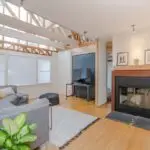
Functional areas are designated spaces in a home designed for specific activities. They ensure comfort, organization, and efficient use of space.
They are:
- Living room – for social interaction and relaxation.
- Kitchen – for preparing and cooking meals.
- Bedroom – for rest and sleep.
- Bathroom – for personal hygiene.
- Dining area – for eating meals.
- Storage areas – for keeping household items organized.
- Study or work area – for learning or office tasks.
Teaching Methods/Instructional Techniques:
Discussion, Lecture, Explanation, Visual Aids, Demonstration, Group Work
Instructional Procedures
To deliver this lesson, the teacher will adopt the following steps:
Step 1: Introduction
Time: 5 minutes
Teaching Skill: Set Induction
Teacher’s Activity: Teacher asks pupils to describe their homes and recall previous lessons on the meaning of a home.
Pupils’ Activity: Pupils share descriptions of their homes.
Learning Point: Pupils are engaged and motivated to learn about homes and their functions.
Step 2: Meaning of a Home
Time: 8 minutes
Teaching Skill: Explanation
Teacher’s Activity: Teacher defines a home and explains its role in family life.
Pupils’ Activity: Pupils listen, take notes, and discuss their understanding.
Learning Point: Pupils understand what constitutes a home.
Step 3: Differences Between Homes
Time: 10 minutes
Teaching Skill: Discussion and Visual Aid
Teacher’s Activity: Teacher presents charts and pictures showing different types of homes and highlights their differences.
Pupils’ Activity: Pupils identify and classify homes in groups.
Learning Point: Pupils can differentiate between various types of homes.
Step 4: Functional Areas in the Home
Time: 10 minutes
Teaching Skill: Demonstration
Teacher’s Activity: Teacher explains each functional area using diagrams and examples from everyday life.
Pupils’ Activity: Pupils draw simple layouts showing functional areas.
Learning Point: Pupils recognize the purpose of each area in the home.
Step 5: Note-Taking
Time: 5 minutes
Teaching Skill: Explanation
Teacher’s Activity: Teacher summarizes key points on the board for pupils to copy.
Pupils’ Activity: Pupils take notes.
Learning Point: Pupils have a clear written record of the lesson.
Step 6: Evaluation/Review
Time: 5 minutes
Teaching Skill: Questioning
Teacher’s Activity: The teacher evaluates the learning by asking the following questions:
- Define a home in your own words.
- List three types of homes.
- Name three functional areas of a home.
Pupils’ Activity: Pupils answer orally.
Learning Point: Pupils demonstrate understanding of lesson objectives.
Step 7: Conclusion
Time: 2 minutes
Teaching Skill: Reinforcement
Teacher’s Activity: Teacher summarizes the lesson and emphasizes the importance of well-organized homes.
Pupils’ Activity: Pupils listen and ask questions.
Learning Point: Pupils appreciate the concept and functions of a home.
Home Task: List four lesson examples connected with The Home and add one correct use, step or safety rule.
Lesson Keywords
- Home – place where people live together
- Functional Area – specific space in a home for a particular activity
- Detached House – standalone building
- Compound House – multiple units around a shared space
- Apartment – housing units in a single building
Differentiation
Provide additional visual examples and simpler explanations for slower learners, while allowing advanced pupils to lead group layout drawing activities.
Note for teachers using this lesson plan
Encourage pupils to relate lessons to their personal homes. Ensure all group drawings or discussions involve all pupils for active participation.



Community Join the conversation Open discussion +