

Class: Senior Secondary School 1 (SS1, SS 1, SSS1, SSS 1)
Term: 2nd Term
Week: 3
Age: 15 years
Duration: 45 minutes
Subject: Food and Nutrition
Curriculum Theme: Food and Nutrition
Previous Lesson: Digestive System: Enzymes and Water in Digestion.
Topic: Reproductive Health
Subject Matter: Definition of reproductive health, identification of male organs, identification of female organs, functions of male reproductive parts, functions of female reproductive parts
Specific Objectives
By the end of the lesson, pupils should be able to:
Cognitive Domain:
- Define reproductive health.
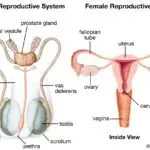
- Identify the major male reproductive organs.
- Identify the major female reproductive organs.
- State the functions of the male reproductive parts.
- State the functions of the female reproductive parts.
Affective Domain:
- Appreciate the importance of understanding reproductive health.
- Participate actively in discussions about reproductive health.
Psychomotor Domain:
- Accurately point out male and female reproductive organs on a chart.
- Draw and label a simple diagram of either the male or female reproductive system.
Social Domain:
- Collaborate with peers in identifying and discussing reproductive organs.
Reference Materials
The following resources were used in planning this lesson:
- Senior Secondary Curriculum for Food and Nutrition.
- State Unified Scheme of Work for Senior Secondary School.
- Food and Nutrition for Senior Secondary Schools by C.K.C. Amadi and others.
Instructional Materials
The teacher will teach this lesson with the aid of:
- Chart showing male reproductive organs.
- Chart showing female reproductive organs.
Rationale for the Lesson
This lesson helps pupils understand their own bodies and the biological processes related to reproduction. It provides essential knowledge for making informed decisions about personal health and well-being as they grow.
Prerequisite/Previous Knowledge
Pupils are assumed to have basic knowledge of the human body and its systems from their junior secondary science classes.
Lesson Content/Board Summary
Reproductive Health
Definition of Reproductive Health
Reproductive health is a state of complete physical, mental, and social well-being, and not merely the absence of disease or infirmity, in all matters relating to the reproductive system and its functions and processes.
Male Reproductive Organs
The main male reproductive organs include:
- Testes (Testicles): Produce sperm and male hormones (testosterone).
- Epididymis: Stores and matures sperm.
- Vas Deferens: Tubes that transport sperm from the epididymis to the ejaculatory ducts.
- Seminal Vesicles: Glands that produce fluid that mixes with sperm to form semen.
- Prostate Gland: Produces a milky fluid that contributes to semen volume and sperm motility.
- Urethra: Tube that carries both urine and semen out of the body.
- Penis: External organ for urination and sexual intercourse.
- Scrotum: Sac that holds the testes outside the body, maintaining a cooler temperature for sperm production.
Female Reproductive Organs
The main female reproductive organs include:
- Ovaries: Produce eggs (ova) and female hormones (estrogen and progesterone).
- Fallopian Tubes (Oviducts): Tubes that transport eggs from the ovaries to the uterus; fertilization usually occurs here.
- Uterus (Womb): Muscular organ where a fertilized egg implants and develops during pregnancy.
- Cervix: Lower, narrow part of the uterus that opens into the vagina.
- Vagina: Muscular canal that connects the uterus to the outside of the body; it receives the penis during intercourse and serves as the birth canal.
- Vulva: External female genitalia, including the labia and clitoris.
Functions of Male Reproductive Parts
The following are the functions of male reproductive parts:
- Testes: Produce sperm (male gametes) and male sex hormones (e.g., testosterone).
- Epididymis: Stores and allows sperm to mature.
- Vas Deferens: Conducts mature sperm from the epididymis to the urethra.
- Seminal Vesicles and Prostate Gland: Produce fluids that nourish sperm and aid in their movement, forming semen.
- Penis: Delivers sperm into the female reproductive tract during sexual intercourse.
Functions of Female Reproductive Parts
The following are the functions of female reproductive parts:
- Ovaries: Produce eggs (female gametes) and female sex hormones (estrogen and progesterone).
- Fallopian Tubes: Serve as the site for fertilization and transport the egg to the uterus.
- Uterus: Provides a suitable environment for the implantation of a fertilized egg and the development of a fetus.
- Cervix: Connects the uterus to the vagina and acts as a barrier.
- Vagina: Receives sperm during intercourse and serves as the birth canal during childbirth.
Teaching Methods/Instructional Techniques
Discussion, Lecture, Demonstration, Question and Answer, Visual Aids
Instructional Procedures
Step 1: Introduction
Time: 5 minutes
Teaching Skill: Set Induction
Teacher’s Activity: The teacher greets the pupils and asks them to mention any body organs they know and their functions. The teacher then introduces the topic of Reproductive Health, explaining its importance.
Pupils’ Activity: Pupils respond by mentioning various body organs and their functions. They listen attentively to the teacher’s introduction.
Learning Point: Pupils are prepared for the lesson and understand the relevance of the topic.
Step 2: Definition of Reproductive Health
Time: 5 minutes
Teaching Skill: Explanation/Clarification
Teacher’s Activity: The teacher defines reproductive health, emphasizing its broad scope beyond just the absence of disease. The teacher writes the definition on the board.
Pupils’ Activity: Pupils listen, take notes, and ask questions for clarification.
Learning Point: Pupils understand the meaning of reproductive health.
Step 3: Identification of Male Reproductive Organs
Time: 10 minutes
Teaching Skill: Demonstration/Identification
Teacher’s Activity: The teacher displays a chart showing the male reproductive organs. The teacher points to and names each organ, explaining its location and basic appearance.
Pupils’ Activity: Pupils observe the chart, identify the organs as named by the teacher, and repeat the names.
Learning Point: Pupils can identify and name the major male reproductive organs.
Step 4: Functions of Male Reproductive Parts
Time: 5 minutes
Teaching Skill: Explanation/Elaboration
Teacher’s Activity: Using the chart, the teacher explains the specific function of each male reproductive organ identified in the previous step.
Pupils’ Activity: Pupils listen, take notes, and associate each organ with its function.
Learning Point: Pupils understand the roles of different male reproductive parts.
Step 5: Identification of Female Reproductive Organs
Time: 10 minutes
Teaching Skill: Demonstration/Identification
Teacher’s Activity: The teacher displays a chart showing the female reproductive organs. The teacher points to and names each organ, explaining its location and basic appearance.
Pupils’ Activity: Pupils observe the chart, identify the organs as named by the teacher, and repeat the names.
Learning Point: Pupils can identify and name the major female reproductive organs.
Step 6: Functions of Female Reproductive Parts
Time: 5 minutes
Teaching Skill: Explanation/Elaboration
Teacher’s Activity: Using the chart, the teacher explains the specific function of each female reproductive organ identified in the previous step.
Pupils’ Activity: Pupils listen, take notes, and associate each organ with its function.
Learning Point: Pupils understand the roles of different female reproductive parts.
Step 7: Evaluation/Review
Time: 5 minutes
Teaching Skill: Questioning/Assessment
Teacher’s Activity: The teacher evaluates the learning by asking the following questions:
- Define reproductive health.
- List three male reproductive organs.
- State two functions of the ovary.
- Mention two parts of the female reproductive system.
Pupils’ Activity: Pupils answer orally and in writing.
Learning Point: Pupils demonstrate understanding of the lesson.
Step 8: Conclusion
Time: 5 minutes
Teaching Skill: Summarization/Reinforcement
Teacher’s Activity: The teacher summarizes the key points of the lesson, reiterating the importance of understanding reproductive health for personal well-being. The teacher gives pupils an assignment to draw and label either the male or female reproductive system.
Pupils’ Activity: Pupils listen to the summary, ask any final questions, and note down the assignment.
Learning Point: Pupils consolidate their learning and prepare for further study.
Lesson Keywords
- Reproductive Health – A state of complete physical, mental, and social well-being in all matters relating to the reproductive system.
- Testes – Male reproductive glands that produce sperm and male hormones.
- Ovaries – Female reproductive glands that produce eggs and female hormones.
- Uterus – The organ in which a fetus develops.
- Sperm – The male reproductive cell.
- Egg (Ovum) – The female reproductive cell.
Differentiation
For pupils who grasp concepts quickly, the teacher can encourage them to research common reproductive health issues. For pupils needing extra support, the teacher can provide simplified diagrams or one-on-one explanations of the organs and their functions.
Note for teachers using this lesson plan
Teachers should ensure a sensitive and respectful environment when discussing reproductive health. Visual aids are highly recommended to facilitate understanding. Encourage questions and address misconceptions openly.

Community Join the conversation Open discussion +