

Class: Senior Secondary School 1 (SS1, SS 1, SSS1, SSS 1)
Term: 3rd Term
Week: 8
Age: 15 years
Duration: 45 minutes
Subject: Food and Nutrition
Curriculum Theme: Food and Nutrition
Previous Lesson: Legumes: Types, Importance and Nutrients.
Topic: Legumes
Subject Matter: Cooking methods for legumes, practical preparation of meals from legumes, group cooking practice, observation and hygiene during cooking.
Specific Objectives
By the end of the lesson, pupils should be able to:
Cognitive Domain:
Instructional Materials
The teacher will teach this lesson with the aid of:
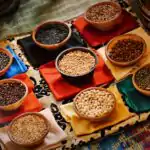
- Samples of various legumes (e.g., beans, groundnuts, lentils).
- Cooking utensils (e.g., pots, spoons, cutting board, knives).
- Heat source (e.g., gas cooker, kerosene stove).
- Water and seasonings (e.g., salt, pepper, onions, palm oil).
- Ingredients for a legume meal (e.g., beans, yam, palm oil for Beans and Yam Porridge).
Rationale for the Lesson
This lesson helps pupils understand the importance of legumes as a rich source of protein and other nutrients. It enables them to learn practical skills in preparing healthy legume-based meals, promoting good nutrition and self-sufficiency in food preparation.
Prerequisite/Previous Knowledge
Pupils have prior knowledge of different food groups and basic kitchen safety rules.
Lesson Content/Board Summary
Legumes: Cooking Methods, Preparation, and Hygiene
Definition of Legumes
Legumes are plants that bear their fruit in pods, such as beans, peas, groundnuts, and lentils. They are an important food source, especially for protein and fibre.
Nutritional Importance of Legumes
Legumes are highly nutritious. They provide:
- Protein (essential for growth and repair of body tissues).
- Dietary fibre (aids digestion and prevents constipation).
- Vitamins (e.g., B vitamins).
- Minerals (e.g., iron, zinc, magnesium).
- Complex carbohydrates (for energy).
Common Cooking Methods for Legumes
The following are common methods used to cook legumes:
- Boiling: Soaking legumes (like beans) overnight and then boiling them until tender.
- Steaming: Cooking legumes above boiling water, often after soaking.
- Frying: Legumes can be lightly fried, especially after being boiled or as part of a stew.
- Baking: Some legumes, like baked beans, are cooked in an oven.
- Pressure Cooking: This method significantly reduces cooking time for hard legumes.
Hygiene and Safety During Cooking
Maintaining hygiene and safety in the kitchen is important to prevent food contamination and accidents. Key practices include:
- Washing hands thoroughly with soap and water before and during food preparation.
- Washing all ingredients (vegetables, legumes) before use.
- Using clean cooking utensils and equipment.
- Keeping the cooking area clean and tidy.
- Handling sharp objects (knives) carefully.
- Monitoring heat sources to prevent burns and fires.
- Storing food properly to prevent spoilage.
Practical Preparation of a Legume Meal (e.g., Beans and Yam Porridge)
The following are general steps for preparing a legume meal:
- Sort and wash the legumes thoroughly.
- Soak hard legumes (like beans) for several hours or overnight to reduce cooking time.
- Parboil and rinse legumes to remove gas-producing compounds.
- Chop vegetables (onions, pepper) and other ingredients.
- Heat oil in a pot, then sauté onions and other spices.
- Add legumes, water, and seasonings; cook until almost tender.
- Add other ingredients like yam or plantain and continue cooking until everything is soft and well-cooked.
- Stir well and serve hot.
Teaching Methods/Instructional Techniques
Discussion, Lecture, Demonstration, Question and Answer, Visual Aids
Instructional Procedures
Step 1: Introduction
Time: 5 minutes
Teaching Skill: Set Induction
Teacher’s Activity: The teacher greets the pupils and asks them to mention some common food items they eat that grow in pods. The teacher then introduces the topic “Legumes” and states the lesson objectives.
Pupils’ Activity: Pupils respond by mentioning foods like beans, groundnuts, and peas. They listen attentively to the teacher.
Learning Point: Pupils are introduced to the topic and its relevance.
Step 2: Definition and Nutritional Importance of Legumes
Time: 10 minutes
Teaching Skill: Explanation/Discussion
Teacher’s Activity: The teacher defines legumes, shows samples, and explains their nutritional importance, emphasizing their protein and fibre content. The teacher encourages pupils to discuss how legumes contribute to a healthy diet.
Pupils’ Activity: Pupils observe the samples, listen to the explanation, and contribute to the discussion on the benefits of eating legumes.
Learning Point: Pupils understand what legumes are and why they are important for health.
Step 3: Cooking Methods for Legumes
Time: 7 minutes
Teaching Skill: Explanation/Listing
Teacher’s Activity: The teacher explains and lists various cooking methods suitable for legumes, such as boiling, steaming, and pressure cooking, explaining the benefits of each.
Pupils’ Activity: Pupils listen, take notes, and ask questions for clarification regarding the cooking methods.
Learning Point: Pupils learn different ways to prepare legumes effectively.
Step 4: Hygiene and Safety During Cooking
Time: 5 minutes
Teaching Skill: Explanation/Emphasizing
Teacher’s Activity: The teacher discusses the importance of hygiene and safety in the kitchen, listing key practices like handwashing, using clean utensils, and safe handling of heat and sharp objects.
Pupils’ Activity: Pupils listen and note the hygiene and safety rules. They may share their own experiences or observations.
Learning Point: Pupils understand the need for cleanliness and caution while cooking.
Step 5: Practical Demonstration of a Legume Meal
Time: 10 minutes
Teaching Skill: Demonstration
Teacher’s Activity: The teacher practically demonstrates the preparation of a simple legume meal (e.g., Beans and Yam Porridge), highlighting each step and explaining the cooking methods and hygiene practices applied.
Pupils’ Activity: Pupils observe the demonstration carefully, asking questions where necessary.
Learning Point: Pupils see the practical application of cooking methods and hygiene rules.
Step 6: Group Cooking Practice (Observation)
Time: (This step would typically require more time than a single 45-minute lesson, so it’s noted as observation/preparation for future longer practicals)
Teaching Skill: Facilitation/Observation
Teacher’s Activity: The teacher divides pupils into groups and assigns them to observe ingredients and utensils, or to begin preliminary steps for a future practical session, ensuring they apply hygiene rules. (Note: A full practical session would require extended time beyond this lesson.)
Pupils’ Activity: Pupils move into groups, discuss, and observe the provided ingredients and utensils, or begin preliminary tasks under the teacher’s guidance.
Learning Point: Pupils begin to practice teamwork and apply theoretical knowledge to practical scenarios.
Step 7: Evaluation/Review
Time: 5 minutes
Teaching Skill: Questioning/Assessment
Teacher’s Activity: The teacher evaluates the learning by asking the following questions:
- Define legumes and give two examples.
- Mention three common cooking methods for legumes.
- State two important hygiene practices to observe during cooking.
- Why is it important to include legumes in our diet?
Pupils’ Activity: Pupils answer orally and in writing.
Learning Point: Pupils demonstrate understanding of the lesson.
Step 8: Conclusion
Time: 3 minutes
Teaching Skill: Summarization/Consolidation
Teacher’s Activity: The teacher summarizes the key points of the lesson, reiterating the importance of legumes, proper cooking methods, and kitchen hygiene. The teacher assigns homework: research other legume-based meals common in Nigeria.
Pupils’ Activity: Pupils listen to the summary and copy the homework assignment.
Learning Point: Pupils consolidate their learning and are encouraged to explore further.
Lesson Keywords
- Legumes – Plants that bear their fruit in pods, rich in protein and fibre.
- Boiling – A cooking method involving cooking food in hot liquid.
- Steaming – A cooking method that uses steam from boiling water to cook food.
- Hygiene – Practices performed to maintain health and prevent disease, especially through cleanliness.
- Protein – A macronutrient essential for building and repairing body tissues.
Differentiation
For pupils who grasp concepts quickly, the teacher will encourage them to research and present on different types of legumes and their regional uses. For those who require more support, the teacher will provide simplified instructions and closer supervision during the practical observation, pairing them with more capable peers.
Note for teachers using this lesson plan
Ensure all cooking equipment is safe and in good working condition. Emphasize safety precautions consistently. For the practical session, adjust the scope based on available time and resources. Consider preparing some pre-cooked legume samples to save time during demonstration if a full cooking process is not feasible within 45 minutes.
Community Join the conversation Open discussion +