

Class: Senior Secondary School 1 (SS1, SS 1, SSS1, SSS 1)
Term: 3rd Term
Week: 9
Age: 15 years
Duration: 45 minutes
Subject: Food and Nutrition
Curriculum Theme: Food and Nutrition
Previous Lesson: Vegetables.
Topic: Fruits
Subject Matter: Types of fruits, nutritive value of fruits, factors affecting choice of fruits, preparation and serving of fruits, fruit drinks and juice, fruit salad and jam, practical fruit handling.
Specific Objectives
By the end of the lesson, pupils should be able to:
Cognitive Domain:
- Define fruits.
- List different types of fruits.
- State the nutritive value of fruits.
- Identify factors affecting the choice of fruits.
Affective Domain:
- Appreciate the importance of fruits in a healthy diet.
- Develop an interest in preparing and serving fruits hygienically.
Psychomotor Domain:
- Demonstrate proper techniques for washing, peeling, and cutting fruits.
- Prepare simple fruit dishes like fruit salad or juice.
Social Domain:
- Collaborate with peers during practical fruit handling activities.
- Share knowledge about healthy eating habits with family.
Reference Materials
The following resources were used in planning this lesson:
- 9 Years Basic Education Curriculum for Food and Nutrition.
- State Unified Scheme of Work for Senior Secondary Schools.
- Anyanwu, A.C. (2018). Comprehensive Food and Nutrition for Senior Secondary Schools. Learn Africa Plc.
- https://www.foodandnutrition.com/fruits
- https://www.healthline.com/nutrition/fruits-health-benefits
Instructional Materials
The teacher will teach this lesson with the aid of:
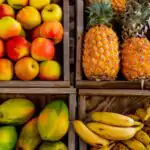
- Samples of different fruits (e.g., orange, banana, apple, mango).
- Chart showing various types of fruits and their nutritional content.
- Knives, bowls, and serving trays for practical demonstration.
Rationale for the Lesson
This lesson helps pupils understand the importance of fruits in a balanced diet. It enables them to identify different types of fruits, their nutritional benefits, and how to prepare and serve them hygienically for personal and family consumption.
Prerequisite/Previous Knowledge
Pupils have some basic knowledge of food groups and the importance of eating healthy foods from previous lessons on nutrition.
Lesson Content/Board Summary
Fruits
Definition of Fruits
Fruits are the mature ovaries of flowering plants, typically containing seeds. They are an important part of a healthy diet, providing essential vitamins, minerals, and fiber.
Types of Fruits
Fruits can be broadly classified based on their structure and characteristics. The following are types of fruits:
- Fleshy Fruits: These have a fleshy pericarp (fruit wall).
- Berries: Entire pericarp is fleshy or pulpy (e.g., tomato, grape, banana, date).
- Drupes: Fleshy outer part and a hard, stony inner part enclosing the seed (e.g., mango, plum, cherry, olive).
- Pomes: Fleshy part is derived from the receptacle, with the core containing seeds (e.g., apple, pear).
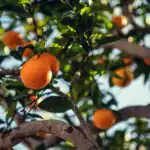
- Citrus Fruits: Characterized by a leathery rind and juicy segmented flesh (e.g., orange, lemon, grapefruit).
- Dry Fruits: These have a dry pericarp at maturity.
- Dehiscent Fruits: Split open at maturity to release seeds (e.g., beans, peas, groundnut).
- Indehiscent Fruits: Do not split open at maturity (e.g., maize, rice, sunflower seed).
Nutritive Value of Fruits
Fruits are rich sources of various nutrients essential for human health. The following are key nutritive values of fruits:
- Vitamins:
- Vitamin C (Ascorbic Acid): Found in citrus fruits, guava, pineapple. Important for immune function, skin health, and wound healing.
- Vitamin A (Carotene): Found in yellow and orange fruits like mango, papaya. Important for good vision and skin.
- Minerals:
- Potassium: Found in bananas, oranges. Important for blood pressure regulation and muscle function.
- Iron: Present in small amounts in some fruits.
- Dietary Fiber: Helps in digestion, prevents constipation, and can help manage blood sugar levels.
- Water: Fruits have high water content, contributing to hydration.
- Antioxidants: Protect body cells from damage.
Factors Affecting Choice of Fruits
When selecting fruits, several factors influence the choice. The following are factors affecting choice of fruits:
- Seasonality: Fruits are usually cheaper and fresher when in season.
- Cost: Budget constraints can influence the choice of fruits.
- Availability: What is locally available in the market.
- Freshness and Quality: Ripe, firm, unblemished fruits are preferred.
- Personal Preference: Individual taste and liking.
- Dietary Needs/Health Conditions: Specific fruits may be chosen based on nutritional requirements or health concerns (e.g., low sugar for diabetics).
Preparation and Serving of Fruits
Proper preparation and serving ensure fruits are safe and appealing to eat. The following are steps for preparation and serving of fruits:
- Washing: Always wash fruits thoroughly under running water, even if they are to be peeled.
- Peeling: Peel fruits where necessary (e.g., banana, orange, mango).
- Cutting: Cut fruits into desired shapes and sizes, removing seeds or cores.
- Arranging: Arrange cut fruits attractively on a plate or in a bowl.
- Serving: Serve immediately to preserve freshness and nutrient content.
Fruit Drinks and Juice
Fruit Juice: This is the natural liquid extracted from fruits. Fresh fruit juice is made directly from whole fruits with no added sugar or preservatives. It is a good source of vitamins but lacks the fiber of whole fruits.
Fruit Salad and Jam
Fruit Salad: A dish consisting of various kinds of fruit, sometimes served in a liquid, either their own juices or a syrup. It is a refreshing and nutritious dessert or snack.
Fruit Jam: A fruit preserve made from whole fruit or pieces of fruit, sugar, and sometimes pectin. The mixture is cooked until it reaches a thick consistency suitable for spreading.
Practical Fruit Handling
Safe and hygienic handling of fruits is essential to prevent contamination and spoilage. The following are tips for practical fruit handling:
- Wash hands thoroughly before handling fruits.
- Use clean utensils, cutting boards, and bowls.
- Store fruits properly: some require refrigeration, others room temperature.
- Avoid cross-contamination by keeping fruits separate from raw meats.
- Handle fruits gently to avoid bruising, which can lead to spoilage.
Teaching Methods/Instructional Techniques
Discussion, Lecture, Demonstration, Question and Answer, Visual Aids
Instructional Procedures
Step 1: Introduction
Time: 5 minutes
Teaching Skill: Set Induction
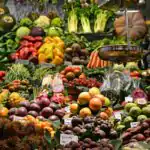
Teacher’s Activity: The teacher displays various fruits in season (e.g., oranges, bananas, mangoes) and asks pupils to identify them. The teacher then asks them about the importance of eating fruits.
Pupils’ Activity: Pupils identify the fruits and share their ideas on why fruits are important.
Learning Point: Pupils recall prior knowledge about fruits and their importance.
Step 2: Explanation of Types of Fruits
Time: 10 minutes
Teaching Skill: Explanation/Illustration
Teacher’s Activity: The teacher explains the definition of fruits and discusses the different types of fruits, using the chart and samples for illustration. The teacher will ask pupils to give examples for each type.
Pupils’ Activity: Pupils listen, observe the chart and samples, and contribute examples of fruits for each category.
Learning Point: Pupils learn to define fruits and identify their various types.
Step 3: Discussion on Nutritive Value and Factors Affecting Choice
Time: 8 minutes
Teaching Skill: Discussion/Questioning
Teacher’s Activity: The teacher leads a discussion on the nutritive value of fruits, highlighting key vitamins, minerals, and fiber. The teacher also discusses factors affecting the choice of fruits.
Pupils’ Activity: Pupils participate in the discussion, ask questions, and contribute their knowledge on the health benefits of fruits and factors they consider when buying fruits.
Learning Point: Pupils understand the nutritional benefits of fruits and factors influencing fruit selection.
Step 4: Demonstration of Preparation and Serving
Time: 7 minutes
Teaching Skill: Demonstration/Practical
Teacher’s Activity: The teacher demonstrates the hygienic preparation and serving of fruits, showing how to wash, peel, and cut different fruits using the provided materials. The teacher emphasizes cleanliness.
Pupils’ Activity: Pupils observe the teacher’s demonstration carefully, paying attention to the techniques and hygiene practices.
Learning Point: Pupils learn the practical steps for hygienic preparation and serving of fruits.
Step 5: Explanation of Fruit Drinks, Juices, Salads, and Jams
Time: 5 minutes
Teaching Skill: Explanation
Teacher’s Activity: The teacher explains what fruit drinks and juices are, differentiating between fresh juice and processed ones. The teacher also defines fruit salad and jam, briefly mentioning their preparation.
Pupils’ Activity: Pupils listen and ask questions for clarification.
Learning Point: Pupils understand different forms of fruit consumption beyond eating whole fruits.
Step 6: Practical Fruit Handling Tips
Time: 5 minutes
Teaching Skill: Illustration
Teacher’s Activity: The teacher provides practical tips for handling fruits safely and hygienically, including storage and avoiding spoilage.
Pupils’ Activity: Pupils take notes and discuss how these tips can be applied at home.
Learning Point: Pupils learn best practices for storing and handling fruits to maintain quality and safety.
Step 7: Evaluation/Review
Time: 5 minutes
Teaching Skill: Questioning/Assessment
Teacher’s Activity: The teacher evaluates the learning by asking the following questions:
- Define fruits.
- List three types of fleshy fruits with examples.
- State two nutritive values of fruits.
- Mention three factors that affect the choice of fruits.
- Describe the basic steps for preparing and serving fruits hygienically.
Pupils’ Activity: Pupils answer orally and in writing.
Learning Point: Pupils demonstrate understanding of the lesson.
Step 8: Conclusion
Time: 2 minutes
Teaching Skill: Wrap-up
Teacher’s Activity: The teacher summarizes the key points of the lesson, reiterating the importance of incorporating fruits into daily meals for good health. The teacher assigns homework: “List five fruits common in your locality and state their peak season.”
Pupils’ Activity: Pupils listen to the summary and copy down the homework.
Learning Point: Pupils consolidate their learning and are encouraged to apply the knowledge.
Lesson Keywords
- Fruits – The sweet, fleshy product of a tree or other plant that contains seed and can be eaten as food.
- Fleshy Fruits – Fruits where the pericarp (fruit wall) is fleshy or pulpy at maturity.
- Dry Fruits – Fruits where the pericarp is dry at maturity.
- Nutritive Value – The content of essential nutrients (vitamins, minerals, fiber) in food.
- Fruit Salad – A dish made from a mixture of various fruits.
- Fruit Jam – A fruit preserve made by cooking whole or pieces of fruit with sugar until thick.
Differentiation
For pupils who grasp concepts quickly, the teacher can encourage them to research and present on exotic fruits or advanced fruit preservation methods. For those needing more support, the teacher will provide simplified definitions, more visual aids, and one-on-one guidance during practical demonstrations.
Note for teachers using this lesson plan
Teachers should ensure all instructional materials, especially fresh fruit samples, knives, and bowls, are available and clean before the lesson. Emphasize hygiene throughout the practical demonstration. Encourage pupils to ask questions and share their experiences with fruits from their homes and communities.

Community Join the conversation Open discussion +