

Class: Senior Secondary School 1 (SS1, SS 1, SSS1, SSS 1)
Term: 2nd Term
Week: 1
Age: 15 years
Duration: 45 minutes
Subject: Food and Nutrition
Curriculum Theme: Food and Nutrition
Previous Lesson: .
Topic: Digestive System
Subject Matter: Meaning of digestion, definition of absorption, metabolic terms such as enzymes, digestion and absorption of carbohydrates and protein in the mouth and stomach.
Specific Objectives
By the end of the lesson, pupils should be able to:
Cognitive Domain:
- Define digestion and absorption.
- Explain the role of enzymes in digestion.
- Describe the digestion of carbohydrates in the mouth and stomach.
- Describe the digestion of protein in the mouth and stomach.
Affective Domain:
- Participate actively in class discussions.
- Appreciate the importance of the digestive process in the body.
Psychomotor Domain:
- Accurately copy the summary of the digestive process.
- Identify parts of the digestive system on a chart.
Social Domain:
- Collaborate with peers during group activities.
Reference Materials
The following resources were used in planning this lesson:
- 9 Years Basic Education Curriculum for Senior Secondary Schools.
- State Unified Scheme of Work for Food and Nutrition SSS 1.
- Adamu, M. A. (2018). Food and Nutrition for Senior Secondary Schools. University Press PLC.
Instructional Materials
The teacher will teach this lesson with the aid of:
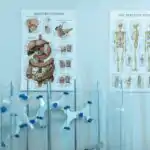
- A chart showing a summary of the digestive process.
- Textbooks on Food and Nutrition.
- Whiteboard/Chalkboard and markers/chalk.
Rationale for the Lesson
Understanding the digestive system helps pupils learn how their bodies break down food to get energy and nutrients. This knowledge is important for making healthy food choices and understanding common digestive issues, which contributes to their overall well-being.
Prerequisite/Previous Knowledge
Pupils are expected to have basic knowledge of food classes and their importance from their junior secondary school studies.
Lesson Content/Board Summary
The Digestive System
Meaning of Digestion
Digestion is the process by which large, complex, insoluble food molecules are broken down into smaller, simpler, soluble molecules that can be absorbed into the bloodstream and used by the body.
Definition of Absorption
Absorption is the process by which digested food molecules pass from the digestive tract into the bloodstream or lymphatic system to be transported to various parts of the body for use.
Metabolic Terms (Enzymes)
Enzymes are biological catalysts, which are protein molecules that speed up the rate of biochemical reactions in the body without being used up in the process. They are specific in their action, meaning each enzyme acts on a specific substrate.
Examples of enzymes involved in digestion include:
- Amylase (e.g., salivary amylase)
- Pepsin
- Trypsin
- Lipase
Digestion of Carbohydrates in the Mouth and Stomach
The digestion of carbohydrates begins in the mouth.
- In the Mouth: Saliva contains an enzyme called salivary amylase (or ptyalin). This enzyme begins to break down complex carbohydrates (starches) into simpler sugars (maltose). The food is chewed and mixed with saliva, forming a bolus.
- In the Stomach: The acidic environment of the stomach (due to hydrochloric acid) inactivates salivary amylase. Therefore, no significant carbohydrate digestion occurs in the stomach.
Digestion of Protein in the Mouth and Stomach
The digestion of protein begins in the stomach.
- In the Mouth: No protein digestion occurs in the mouth as there are no protein-digesting enzymes present in saliva.
- In the Stomach: The stomach secretes gastric juice, which contains hydrochloric acid and the enzyme pepsin.
The following are the roles of these substances in protein digestion:
- Hydrochloric Acid (HCl): Denatures proteins, making them easier for enzymes to act on. It also provides the acidic environment necessary for pepsin to function.
- Pepsin: Breaks down large protein molecules into smaller polypeptide chains.
Teaching Methods/Instructional Techniques
Discussion, Lecture, Demonstration, Question and Answer, Visual Aids
Instructional Procedures
Step 1: Introduction
Time: 5 minutes
Teaching Skill: Set Induction
Teacher’s Activity: The teacher greets the pupils and asks them to recall what happens to the food they eat after swallowing. The teacher then introduces the topic: The Digestive System.
Pupils’ Activity: Pupils respond to the questions and listen attentively.
Learning Point: Pupils connect prior knowledge to the new topic and are introduced to the lesson.
Step 2: Meaning of Digestion
Time: 7 minutes
Teaching Skill: Explanation/Definition
Teacher’s Activity: The teacher defines digestion and explains why it is an important process for the body. The teacher writes the definition on the board.
Pupils’ Activity: Pupils listen, ask questions for clarity, and copy the definition.
Learning Point: Pupils understand the meaning and significance of digestion.
Step 3: Definition of Absorption and Metabolic Terms (Enzymes)
Time: 7 minutes
Teaching Skill: Explanation/Definition
Teacher’s Activity: The teacher defines absorption and introduces metabolic terms, specifically explaining what enzymes are and their general role in digestion. The teacher provides examples of digestive enzymes.
Pupils’ Activity: Pupils listen, take notes, and ask questions.
Learning Point: Pupils learn the definitions of absorption and enzymes and understand their functions.
Step 4: Digestion of Carbohydrates in the Mouth and Stomach
Time: 8 minutes
Teaching Skill: Explanation/Discussion
Teacher’s Activity: The teacher explains the process of carbohydrate digestion, detailing what happens in the mouth (salivary amylase) and why no significant digestion occurs in the stomach. The teacher encourages pupils to contribute to the discussion.
Pupils’ Activity: Pupils listen, participate in the discussion, and take notes.
Learning Point: Pupils understand how carbohydrates are digested in the initial stages of the digestive tract.
Step 5: Digestion of Protein in the Mouth and Stomach
Time: 8 minutes
Teaching Skill: Explanation/Discussion
Teacher’s Activity: The teacher explains the process of protein digestion, stating that it begins in the stomach. The teacher describes the roles of hydrochloric acid and pepsin in the stomach. The teacher clarifies that no protein digestion occurs in the mouth.
Pupils’ Activity: Pupils listen, contribute to the discussion, and write down key points.
Learning Point: Pupils understand the initial stages of protein digestion in the stomach.
Step 6: Use of Instructional Materials
Time: 5 minutes
Teaching Skill: Demonstration/Visual Aid
Teacher’s Activity: The teacher displays the chart showing the summary of the digestive process and uses it to recap the processes discussed, highlighting the mouth and stomach.
Pupils’ Activity: Pupils observe the chart and relate it to the lesson content.
Learning Point: Pupils visually reinforce their understanding of the digestive processes.
Step 7: Evaluation/Review
Time: 5 minutes
Teaching Skill: Questioning/Assessment
Teacher’s Activity: The teacher evaluates the learning by asking the following questions:
- Define digestion and absorption.
- Mention one enzyme involved in carbohydrate digestion and where it acts.
- State the role of hydrochloric acid in protein digestion in the stomach.
- Explain why protein digestion does not occur in the mouth.
Pupils’ Activity: Pupils answer orally and in writing.
Learning Point: Pupils demonstrate understanding of the lesson.
Step 8: Conclusion
Time: 5 minutes
Teaching Skill: Recap/Homework
Teacher’s Activity: The teacher summarises the key points of the lesson. The teacher then gives pupils homework: “List other enzymes involved in digestion and state their functions.”
Pupils’ Activity: Pupils listen to the summary and copy the homework.
Learning Point: Pupils consolidate their learning and prepare for future topics.
Lesson Keywords
- Digestion – The process of breaking down food into smaller, absorbable molecules.
- Absorption – The process of taking digested food into the bloodstream.
- Enzymes – Biological catalysts that speed up chemical reactions in the body.
- Salivary Amylase – An enzyme in saliva that begins carbohydrate digestion.
- Pepsin – An enzyme in the stomach that begins protein digestion.
- Hydrochloric Acid – Acid in the stomach that aids protein digestion and kills microbes.
Differentiation
For pupils who grasp concepts quickly, the teacher can challenge them to research other organs involved in digestion. For pupils needing more support, the teacher will provide simplified explanations and visual aids, ensuring they understand the basic definitions and processes.
Note for teachers using this lesson plan
Encourage active participation by asking open-ended questions. Use the chart effectively to illustrate the concepts. Ensure pupils understand the specific roles of enzymes and acids in different parts of the digestive system. Emphasise the practical relevance of understanding digestion to their health.


Community Join the conversation Open discussion +